
Constanta between Histria and protected areas
Accommodation in Constanta
Culture and history
The Histria Museum Complex consists of the Museum of the Histria Fortress and the ruins of the Greek-Roman city dating from the 7th century BC to the 7th century AD. The museum displays Greek, Roman and Byzantine archaeological finds from Histria and its surroundings. The ruins include the Romano-Byzantine defensive wall, ancient streets and squares, basilica foundations, Roman baths and ancient temples.
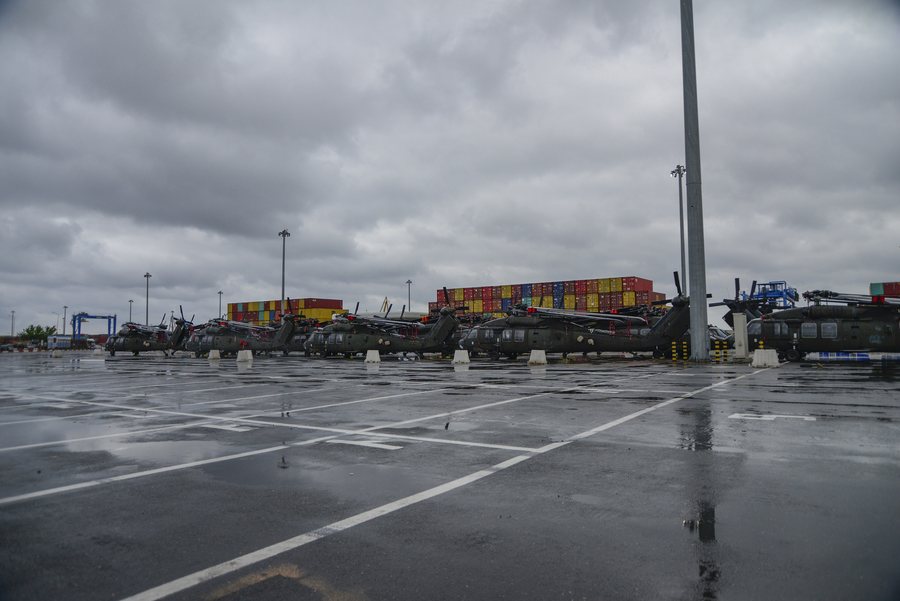 File:Upload Port Constanta, Romania (5927787).jpg
Photo: U.S. Army TSAE by Georgios Moumoulidis via Wikimedia Commons, Public domain
File:Upload Port Constanta, Romania (5927787).jpg
Photo: U.S. Army TSAE by Georgios Moumoulidis via Wikimedia Commons, Public domain
The archaeological site of Histria can be reached via the DN 2A to Ovidiu, the DN22 to Tariverde and the DJ 22A to the fortress. The National Museum of History and Archaeology in Constanța displays prehistoric, Greek, Roman, Byzantine and medieval archaeology, as well as the Tomis sculpture hoard discovered in 1962.
In Capidava, you can see the defensive wall, the Roman street plan, administrative buildings, an Early Christian basilica, harbour facilities and a thermal building. Under Emperor Trajan, Capidava was part of the Roman defence system along the Danube Limes. Near Adamclisi, the triumphal monument Tropaeum Traiani was erected in 109 under Emperor Trajan (98–117). Its 54 metopes made of Deleni limestone depict war scenes in relief; 48 of the original 54 metopes have survived. The complex of the rock churches of Basarabi is also located in Murfatlar.
Nature between the coast and lagoons
The Agigea Coastal Dunes Nature Reserve is located about 50 metres from the Black Sea coast and covers approximately 25 hectares. Inland, Fântânița-Murfatlar is a national IUCN Category IV protected area for flora and fauna covering 19.70 hectares. Rare plants such as Dobruja flax, peony and Murfatlar thorn grow there; Fântânița-Murfatlar is also home to the Dobrujan tortoise.
The Corbu-Nuntași-Histria ornithological reserve is a mixed scientific nature reserve within the Danube Delta Biosphere Reserve and covers more than 1,610 hectares. Its shallow, nutrient-rich waters provide favourable conditions for observing many bird species. Grindul Chituc is a nationally protected coastal sandbank that separates Lake Sinoe, or the Razim-Sinoe lagoon system, from the Black Sea. 315 bird species have been recorded in this area; it is an important stopover for migratory birds.
Lake Istria lies east of the village of Istria and is connected to Lake Sinoe by the Histria Canal. A geological perspective is offered by the Locul fosilifer Cernavodă fossil site: it is a national IUCN Category III palaeontological reserve covering 3 hectares. The site contains fossils from the Lower Cretaceous, including corals, snails, bivalves and brachiopods.
Routes and regional themes
The tourist route „In the footsteps of Dionysus between the Danube and the Black Sea“ is a certified wine route in Constanța County. In addition, the multicultural ecotourism route in Constanța County is approximately 184 kilometres long. A cycling duration of approximately 10 hours and 24 minutes is specified for this route. The separately stated route length and cycling duration represent different factors for personal planning. One designated section of the multicultural ecotourism route includes the Danube Delta Biosphere Reserve in Constanța County.
Other places in the region
The regional overview also includes Techirghiol, Mangalia, Mamaia, Constanţa, Eforie Nord, Navodari, Costineşti, Vama Veche, Ovidiu, 2 Mai, Arsa, Crișan, Venus, Olimp, Cap Aurora, Murfatlar, Agigea, Peştera, Tuzla, Cumpăna, Seimeni, 23 August, Corbu, Lipnița, Ostrov, Municipiul Mangalia, Eforie, Lazu, Valu lui Traian, Lumina and Sibioara.
For the overarching travel overview: Romania.

.jpg)