
Greaca: Archaeology, Viticulture and Churches
Accommodation in Greaca
Greaca offers several approaches to travel planning: archaeology, viticulture, churches and landscape can be considered separately by clearly named locations or combined with one another. These topics provide different perspectives on the town and its surroundings.
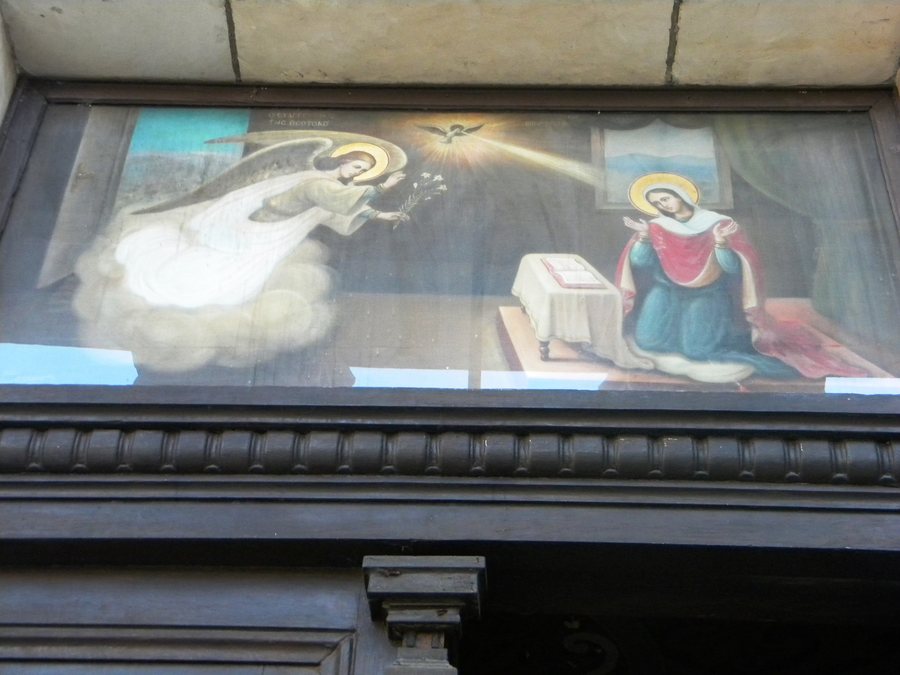 File:Bucuresti, Romania, Biserica Greaca (Buna Vestire), Pache Protopopescu nr. 1-3; B-II-m-A-19472 (detaliu 2).JPG
Photo: Britchi Mirela via Source, CC BY-SA 3.0 ro
File:Bucuresti, Romania, Biserica Greaca (Buna Vestire), Pache Protopopescu nr. 1-3; B-II-m-A-19472 (detaliu 2).JPG
Photo: Britchi Mirela via Source, CC BY-SA 3.0 ro
Culture
The “Valea Fântânilor” archaeological site is located on the grounds of the wine-growing station. It includes an early medieval settlement dating from the 8th to 9th century. The “La Cruţescu” archaeological site lies on the neighbouring terrace north of the former Lake Greaca. It comprises an Iron Age settlement. The “La Slom” archaeological site contains settlement remains from the Early and Middle Hallstatt periods.
The listed Conacul Gorski is another building, dating from 1900 to 1916. Today, Conacul Gorski is used as a wine-growing station. Domeniul Greaca covers 12 hectares and is located very close to the entrance to Greaca.
Greaca is home to the “Sfinții 40 de Mucenici” Church, which was built at the beginning of the 20th century. It is under the protection of the Holy 40 Martyrs of Sebaste. Following restoration work, the church’s interior paintings were reconsecrated on the day of its patronal feast. The surrounding area of Greaca is also home to Parohia Căscioarele Church, Parohia Crivăţ Church, Biserica Puieni Church and Biserica Adormirea Maicii Domnului Church.
Nature
The surroundings of Greaca include Dealul Gheilor hill, Golyam Brashlen Island and the La Fântânele spring. In the wider regional surroundings of Greaca lies Ostrovul Lungu Island. The different landscape names can be considered separately from the cultural sites and arranged according to their respective spatial level.
Geographical Classification
The “Traseu Comana – Calarasi – DanubeOn2Wheels” route runs from Prundu via Greaca to Căscioarele. To prepare, you can consider the historical classifications of the three archaeological sites alongside the churches, landscape locations and the route. A fixed order is not required; the different topics can be weighted according to your own travel interests.
The place names and their respective connections provide a clear basis for considering several interests side by side when planning. Preparation remains particularly clear if the archaeological sites, religious buildings, landscape locations and the route are noted as separate topic blocks. The information about the surroundings and the wider regional surroundings marks different spatial levels.
When comparing a hotel in Greaca, travel dates, room category and cancellation policy are three useful details on the offers page. You can check these fields side by side and make different priorities visible when planning with a focus on costs. In Greaca, this comparison can be made alongside thematic planning: Those who assign different weights to the archaeological sites, the listed Conacul Gorski, the churches or the landscape locations can compare the same three details against their own focus. The travel dates, room category and cancellation policy remain the specific points of comparison.
Other places in the same destination:Varlaam, Malu, Izvoarele, Daia, Călugăreni, Comana, Giurgiu, Banesti
To the higher-level travel overview: Giurgiu.

,_Pache_Protopopescu_nr._1-3;_B-II-m-A-19472_(detaliu_2).JPG)