
Dănești: Black Pottery, Culture and Nature
Accommodation in Dănești
Dănești combines traditional black pottery with distinctive buildings and a landscape between the Olt Plain and the mountains. The village is considered a traditional centre of this pottery in the surrounding area. It is also known for handmade wool textiles such as the Cerga, a museum collection on local history and ethnography, and buildings from various historical periods. In Dănești, craft, historical and landscape themes thus come together directly.
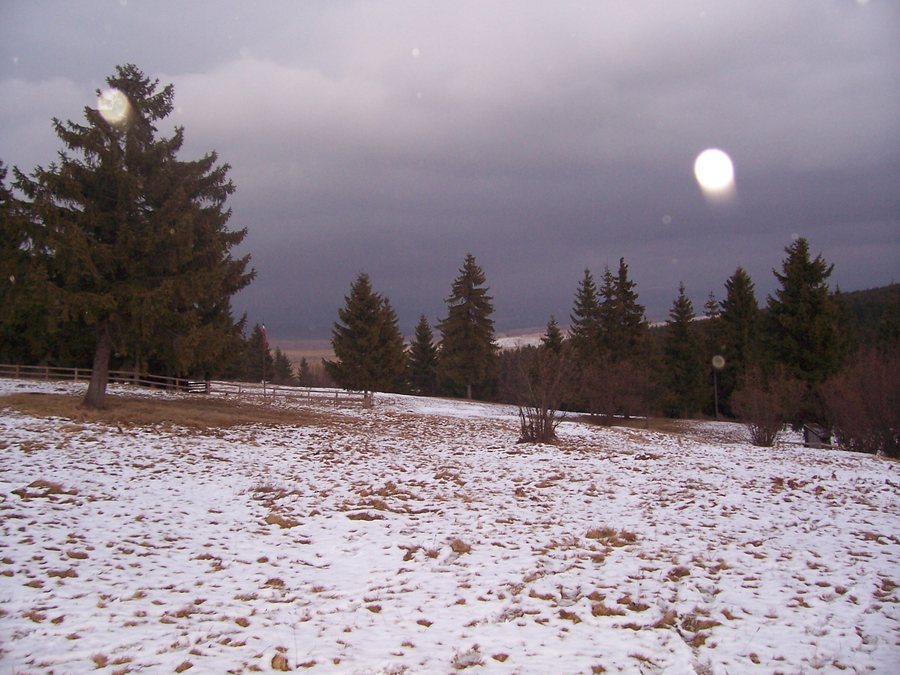 File:Csikdanfalva - Danesti - 2007 - full moon - panoramio.jpg
Photo: jeffwarder via Wikimedia Commons, CC BY-SA 3.0
File:Csikdanfalva - Danesti - 2007 - full moon - panoramio.jpg
Photo: jeffwarder via Wikimedia Commons, CC BY-SA 3.0
Culture and Craftsmanship
The black pottery from Dănești is made using a special firing tradition. The vessels are fired once in the absence of oxygen, giving them their metallic-black colour. Firing takes place in a closed kiln; the smoke gives the vessels their black colour. Alongside the pottery vessels, handmade wool textiles such as the Cerga are among the products for which Dănești is known. The pottery and the Cerga represent different materials and production methods within local craftsmanship.
The exhibits in the Dăneşti Village Museum Collection illustrate local history and ethnography. The Dănești Cultural Centre has a façade with a non-figurative mosaic created by the local painter and graphic artist Zsigmond Márton. The pottery, wool textiles, museum objects and mosaic represent different forms of local craft and cultural history. The collection broadens the perspective on craftsmanship to include historical and ethnographic themes, while the mosaic constitutes a distinct artistic element of the cultural centre.
Villagescape and History
The Roman Catholic Church of Biserica Sfânta Maria Mare was built in the Neo-Gothic style and handed over on 8 December 1935. The building of Liceul Tehnologic “Petőfi Sándor” was constructed between 1935 and 1937. Both buildings are historical landmarks in Dănești’s villagescape, while the town hall occupies a special position. The church, school building and town hall thus bring together religious, educational and municipal architecture in the village centre.
Dănești Town Hall is the oldest and most distinctive building in the village. It is considered to have significant historical and architectural value. Together with the church, school building and cultural centre, it shows the diversity of the historical and cultural references found in the village centre.
Landscape and Location
The centre of Dănești lies in the Olt floodplain. The protected snake’s-head fritillary (Fritillaria meleagris) grows in the floodplain of the Madicea stream. The village is surrounded by the Harghita Mountains to the west and the Ciuc Mountains to the east. The Olt and Madicea shape the plains, while Harghita and Ciuc border the village on its western and eastern sides.
Dănești is located on European route E578. The road complements the village’s geographical setting between the Olt Plain and the two aforementioned mountain landscapes. For those interested in culture, Dănești’s black pottery, Cerga, museum collection and historic buildings form a clearly recognisable local focus; nature enthusiasts will likewise find specific landscape features in Madicea, the snake’s-head fritillary and the mountain ranges.
Mineral Spring
Băile “Dugás” was established in 1929 around a natural carbonated mineral spring. The spring has a temperature of approximately 20 °C.
More Destinations
Other places featured on this page are Ciceu, Lacu Roșu, Valea Rece, Lunca De Jos, Borzont, Senetea, Vlăhița and Dittersdorf.
For the higher-level travel overview: Harghita.

