
Discover Toplița: Nature, Culture and Winter Sports
Accommodation in Toplița
There are six marked and officially approved mountain hiking trails in the administrative area of Toplița; two lead to the ridge of the Gurghiu Mountains, and four to the highlands of the Călimani Mountains. Organizing the trails by direction provides a clear initial basis for comparison.
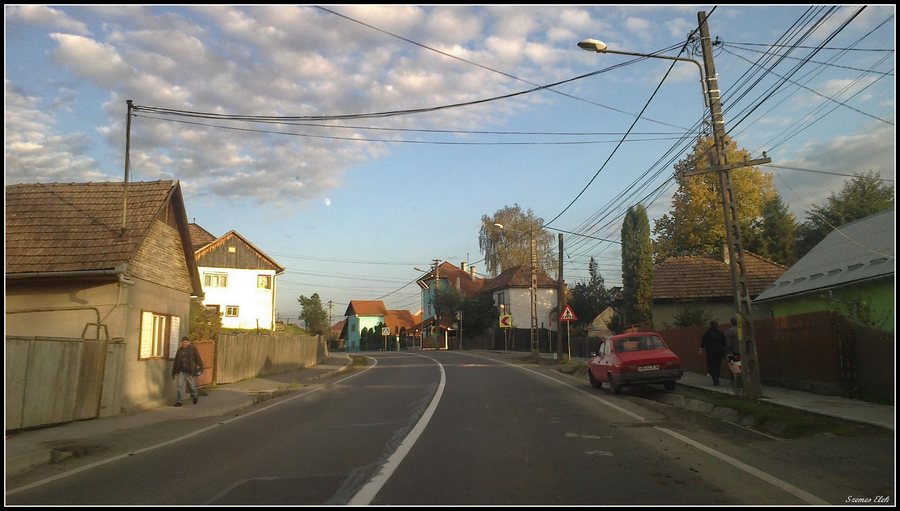 File:Toplița 535700, Romania - panoramio (1).jpg
Photo: Szemes Elek via Wikimedia Commons, CC BY-SA 3.0
File:Toplița 535700, Romania - panoramio (1).jpg
Photo: Szemes Elek via Wikimedia Commons, CC BY-SA 3.0
Nature and Trails
The Tarnița viewpoint offers an elevated panoramic view of Toplița and the Mureș Valley; it can be reached in about 45 minutes via marked trail 32, which has a red cross marking and is of moderate difficulty. The information on the trail marking, difficulty level and approximate duration can be considered separately when planning your day.
The Topliţa–Gălăuţaş route is 10.9 kilometers long and classified as moderately difficult. Its specific length adds another point of comparison to the time orientation provided by the viewpoint.
The Cascada Mezotermală Toplița is a natural monument, a nature reserve of national interest, as well as a biological and landscape nature reserve. It is located about 1 kilometer from Toplița Central Park and can be reached by car, bicycle or on foot.
Lacul Iezer is a mixed nature reserve of national interest in the administrative area of Toplița and covers 322 hectares. Different protection categories, area sizes and means of transport thus provide different ways of classifying the natural attractions.
Culture and History
The “Artă Murală Toplița” mural is 90 meters long and 4 to 5 meters high, located next to the thermal waterfall and permanently accessible to the public.
The Toplița Ethnographic Museum, originally called “Muzeul de Etnografie și Folclor”, opened in 1998. It displays peasant installations for processing textile fibers, agricultural products, wood, metals and ceramics.
Urmánczy Castle in Toplița was built between 1903 and 1906 based on designs by the Tyrolean architect Vigilio Giacomuzzi. It is an example of early 20th-century eclectic architecture and combines neoclassical elements with influences from Austro-Hungarian architecture.
The wooden church of the “Sfântul Proroc Ilie” Monastery was built from spruce wood in 1847. In 1910, Patriarch Miron Cristea brought the wooden church to Toplița and rebuilt it with the aim of founding a monastery.
Measurements, materials, construction periods and architectural classification provide different factual approaches to Toplița’s culture, without requiring any ranking among the sites.
Winter and Information
Toplița has three ski slopes with easy and moderate difficulty levels. The ski slopes have snowmaking systems and night lighting; the beginner slope also has a conveyor belt.
Difficulty levels, snowmaking, night lighting and the conveyor belt are different details that can be read separately when planning the timing and content of your visit.
The National Centre for Tourist Information and Promotion in Toplița provides information about local attractions. The Toplița Tourist Information Centre provides information about reserving transport tickets and about local and specialized tour guides.
More destinations
More destinations for research: Lunca De Jos, Valea Rece, Corund, Lacu Roșu, Vlăhița, Sub Cetate, Sâncrăieni, Tulgheş
For the overarching travel overview: Harghita.

.jpg)