
Corund: Ceramics, Church and Mineral Springs
Accommodation in Corund
Ceramics are characteristic of the village of Corund in Harghita County. The pottery tradition in Corund is regarded as a craft tradition dating back to the Middle Ages; the first pottery workshops date from the beginning of the 15th century.
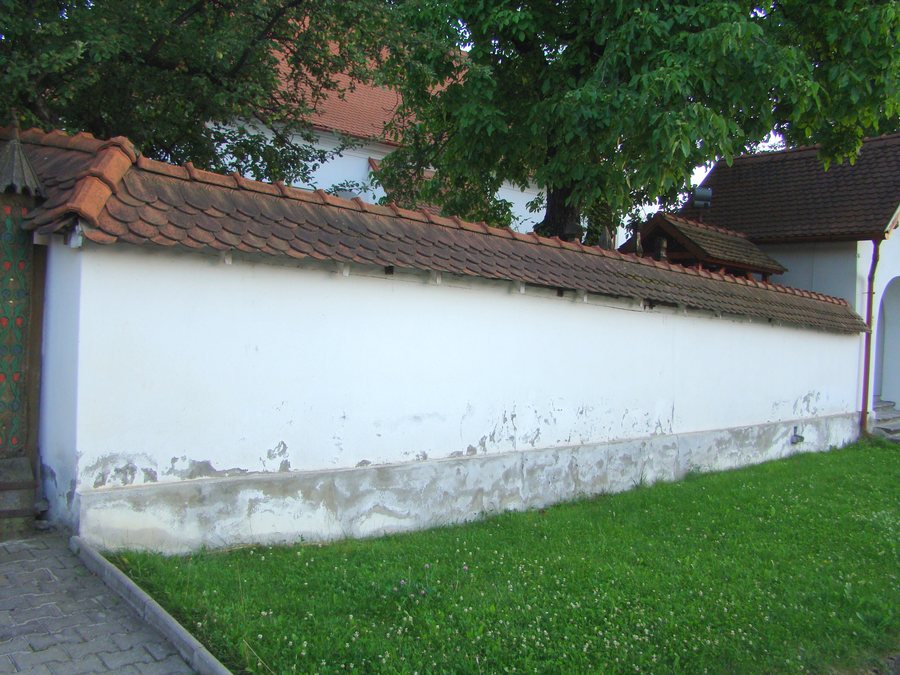 File:RO HR Biserica unitariană din Corund (108).jpg
Photo: Țetcu Mircea Rareș via Wikimedia Commons, CC BY-SA 4.0
File:RO HR Biserica unitariană din Corund (108).jpg
Photo: Țetcu Mircea Rareș via Wikimedia Commons, CC BY-SA 4.0
Culture
The ceramic vessels from Corund are painted by folk artisans with floral and stylized zoomorphic motifs. Corund ceramics are produced in white, brown, cobalt blue and multicoloured versions. During production, the clay is shaped on a potter’s wheel and fired after drying for several days. The stated colours, motifs and work steps can be perceived separately when observing the craft.
The Unitarian Church of Corund was rebuilt between 1720 and 1750 and has an organ dating from 1822. The church cemetery contains carved wooden grave markers known as kopjafa. Their motifs indicate whether a man, a woman or a child is buried at the foot of the marker. The church stands east of the main road on a small hill within a fortified stone wall.
The processing of Iască is known as a traditional craft in Corund; it is used to make utilitarian and decorative items.
The “Promenada din Corund” programme includes transport by horse-drawn carriage, four presentations and a guided tour. It visits pottery, Iască-processing and weaving workshops, as well as a beekeeper where hive products can be sampled. A reservation at least one day in advance is required for the “Promenada din Corund” tour.
A hand-painted ceramics workshop in Corund can be visited by appointment arranged by telephone or email. The Aragonite Museum is open from 1 May to 1 November; during the winter season, when it is closed from 1 November 2025 to 1 May 2026, it can only be visited by appointment. For planning a day, fixed seasonal opening dates, advance reservations and individual appointments can be distinguished from one another.
Nature
The Dealul Melcului Geological Reserve covers 8 hectares and has been under national protection since 1980. The “Cseredombi” and “Erzsébet” springs lie east of the aragonite mine, 800 metres from the national road, and contain salty, iron-rich water. The “Diómáli” mineral spring lies at the eastern exit of Corund, next to Road 13A. Different highlights such as ceramics, the church interior, workshops, the museum and the springs can be explored in any order you choose.
For a hotel comparison in Corund, you can compare travel dates, room categories and cancellation policies on the offer pages. These three details provide an objective basis for your own planning, while the ceramic, church and nature themes can be considered independently.
Other destinations
Băile Homorod, Sândominic, Praid, Voşlăbeni, Odorhellen, Niklasmarkt, Lacu Roșu, Tulgheş
The potters’ houses and workshops are located along Corund’s main road.
To the higher-level travel overview: Harghita.

.jpg)