
Diemrich – History, Architecture and Water Recreation
Accommodation in Diemrich
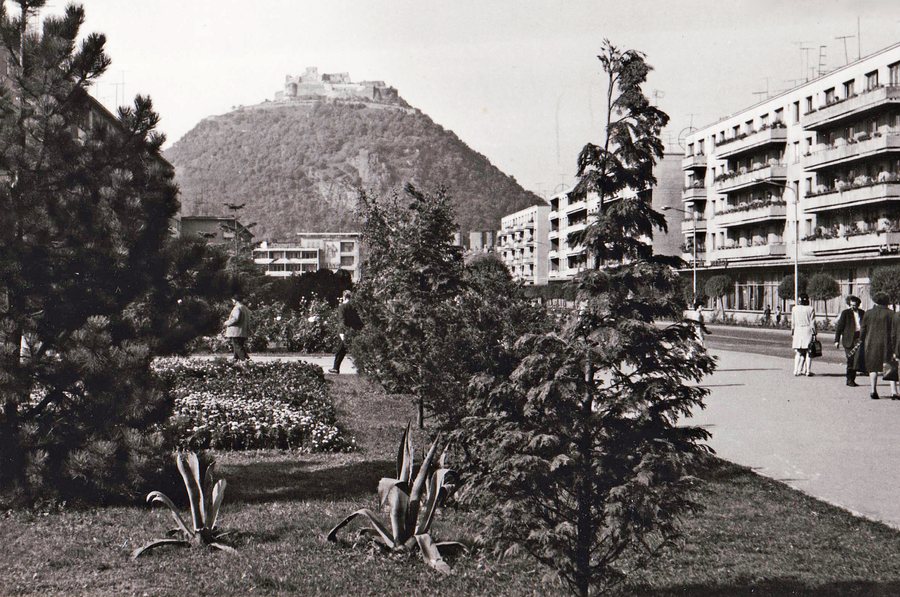
History, architecture and water recreation can be experienced at specific locations in Diemrich. The most striking feature is Deva Fortress: it was first mentioned in written records in 1269 and stands on a 378-metre-high volcanic cone. This rises at the point where the Mureș forms a gorge between the Metaliferi Mountains and the Poiana Ruscă Mountains.
Nature and Trails
The restored Deva Fortress can be reached via tourist trails and a funicular railway. From the summit, the view extends across the Mureș Valley. The funicular to the fortress has a 278-metre-long route, overcomes an elevation difference of 158 metres and has a capacity of 16 people. The two aforementioned access options can be considered side by side when planning a visit, while the route and elevation difference provide a concrete impression of the journey.
History
Historic buildings include Magna Curia. The building was expanded after 1615 under Prince Gabriel Bethlen and remodelled in the Renaissance style; the work was led by the architect Giacomo Resti da Verna. Magna Curia houses the Muzeul Civilizației Dacice și Romane, with collections covering prehistoric, Dacian, Roman, early medieval and medieval archaeology, as well as numismatics, history and art. These are complemented by ethnographic and natural history collections, including holdings relating to botany, palaeontology, mineralogy and other natural science disciplines. The historic centre of Deva encompasses the area around Magna Curia.
The Mănăstirea Franciscană complex consists of a church and a cloister and was founded around 1712 by Bulgarian Franciscan monks.
Architecture and Cityscape
The present-day Teatrul de artă dramatică Deva was completed in 1911 and designed by the Austro-Hungarian architects Marcell Komor and Jakab Deszo. Its main façade features elements of the Secession style, including floral motifs and bands with garlands. Casa Dr. Petru Groza was designed in 1927–1929 at the studio of the architect Horia Creangă in Bucharest; Creangă is regarded as a representative of the Cubist movement. Construction of the building was completed at the end of 1930 by a company from Arad.
The Horia, Cloșca și Crișan statue ensemble consists of bronze busts created by the sculptor Ion Vlasiu. In the park below Deva Fortress stands the statue of King Decebal, created by Professor Radu Moga (1905–1950) of Liceul Avram Iancu in Brad and unveiled on 6 August 1937. Its pedestal bears four bronze bas-reliefs. Deva’s city park was laid out between 1886 and 1893 as a public urban space.
The tower of Deva’s old Orthodox church was built in 1727. It is the only completely preserved part of a church built between 1640 and 1645. The predecessor of Deva’s present-day Reformed church was documented as a town church in 1332; the current Reformed church was consecrated in 1910.
Culture
Casina Română is a registered historic monument at Piața Unirii 9. It was built between 1847 and 1856 and extended in 1903. The building served as the headquarters of the Casina Națională Maghiară din Deva, a cultural association open to intellectuals from Hunedoara County.
Leisure
Aqualand Deva is a fully covered water recreation complex with an area of 11,220 m², which can be used year-round. The facility includes seven leisure pools and a 1,500 m² area with loungers and heated flooring, creating the impression of a beach.
Other Places
Simeria, Hateg, Orăştie, Câmpu Lui Neag, Cib, Sălaşu De Sus, Peșteana, Hărău
To the higher-level travel overview: Eisenmarkt.

