
Bârsana: Monastery, Nature and Wooden Architecture in Maramureș
Accommodation in Bârsana
Bârsana is home to the wooden church “Intrarea Maicii Domnului în Biserică”, which was built as a monastery church in 1720 and moved to its present location around 1800.
 File:Mănăstirea Bârsana Maramures Romania - vedere interioara.JPG
Photo: The Traveller LB via Wikimedia Commons, CC BY-SA 3.0
File:Mănăstirea Bârsana Maramures Romania - vedere interioara.JPG
Photo: The Traveller LB via Wikimedia Commons, CC BY-SA 3.0
Culture
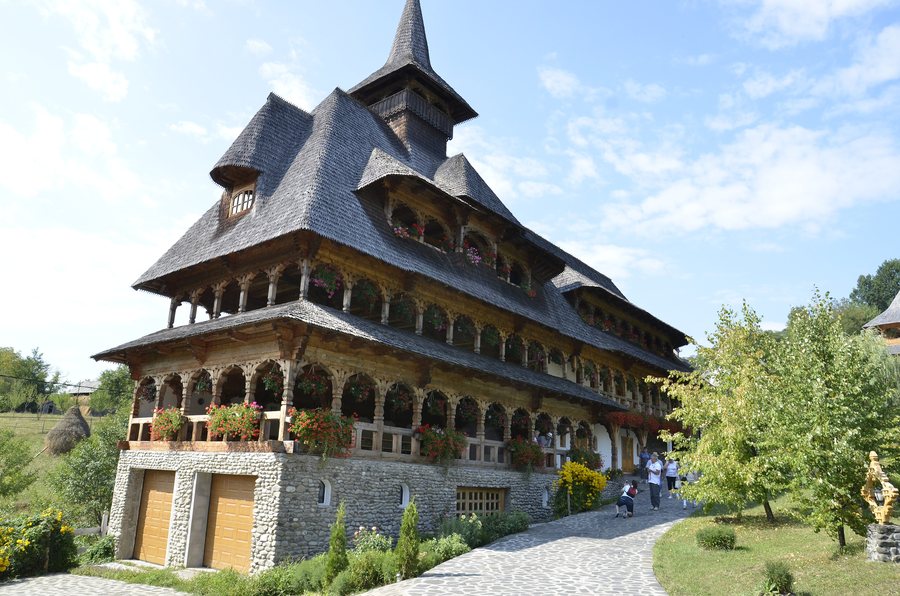
The wooden church is made of oak beams. Its floor plan is rectangular; it also has a two-storey porch, a recessed five-sided polygonal apse and a roof with a double eave. The Bârsana monastery complex also includes a church in the Maramureș style, a summer altar and the Aghiasmatarul.
The monastery museum “Muzeul de icoane și carte veche Gavril de Bârsana” preserves religious manuscripts and sacred books from the 16th to the 19th century, old icons and an extensive collection of local folk-art objects. It extends over three levels; its upper floor is made of wood, and its architectural concept is based on the historical building tradition of Maramureș.
The “Muzeul Şcolar” house was built in the first half of the 18th century and housed a Greek Catholic denominational school. The traditional Bârsana costume “bărsănesc” is still very much alive and is worn especially on religious holidays. The house of folk craftsman Toader Bârsan is associated with woodcarving, traditional trades and handicrafts.
This gives you several clearly distinct perspectives: culture, nature, the religious calendar, crafts and getting there. You can organize these focuses independently and assign them different importance for your own travel planning, depending on whether architecture, landscape, history or practical routes are the priority.
To compare hotels in Bârsana, you can check travel dates, room category and cancellation conditions side by side on the respective offer page. Your choice will then depend on the specific conditions displayed; culture, nature, festival dates and getting there remain separate aspects of planning your stay in the area.
Nature
In the Bârsana area, the Iza River, parts of its terraces and the surrounding hills are included in the Natura 2000 site “Valea Izei – Dealul Solovan”. The area included covers 1,097 ha, or 15% of the administrative area of Bârsana. A lake formed in the Valea Slatinii Valley in 2004 after a landslide blocked the valley.
History
The monument commemorating the resistance against the Tatar invasion of 1717 is considered a named historical sight in Bârsana. The annual patronal festival of Bârsana Monastery takes place on 30 June, on the feast of Soborul celor 12 Apostoli, and attracts tens of thousands of worshippers.
Getting There
The Baia Mare–Cavnic–Călinești–Văleni–Bârsana tourist route passes through the Iza Valley to Bârsana Monastery. Bus connections between Baia Mare and Borșa via the Iza Valley, as well as travelling by car, are designated options for getting to Bârsana.
More destinations
Other destinations you can discover on poezdka.de include Remeţi, Târgu Lăpuș, Săpânța, Coruia, Staţiunea Borşa, Săcălaşeni, Desești and Vișeu De Sus.
For the overarching travel overview: Maramureş.

