
Feleag: History, Nature and Traditions
Accommodation in Feleag
Feleag brings together traces of history, living traditions and paths through a hilly landscape.
Nature
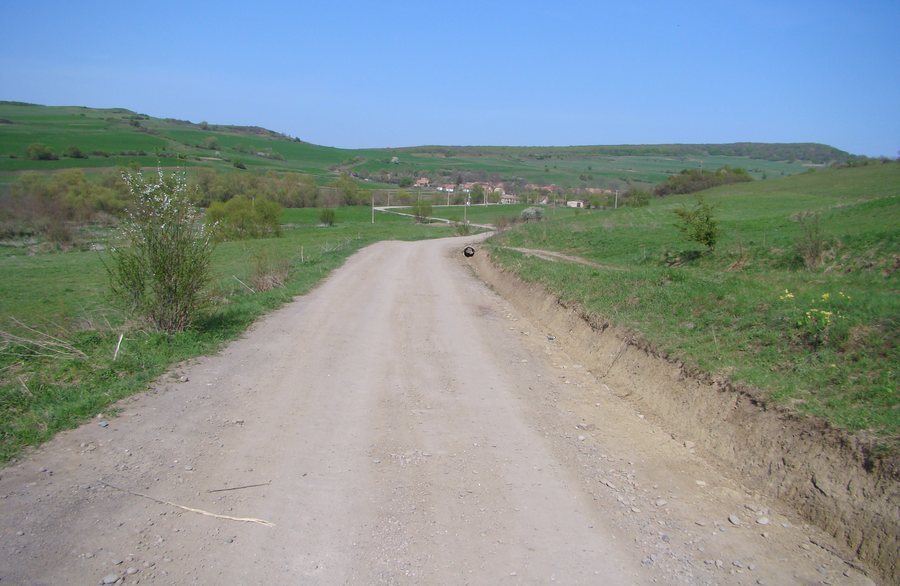
The hills around Feleag reach elevations of up to 855 metres. At the access route between Mureni and Feleag lies a pasture with old oak, beech and wild apple trees. With its open pasture and mature trees, it forms a landscape feature shaped by its area and the variety of tree species.
On the route between Mureni and Feleag, travellers can rest in the shade of a stand of beech trees and drink from a spring located approximately halfway along the route. The route therefore connects two specific options: a break under the trees and a drinking-water point roughly in its middle. Both options remain tied to the route between the two places. When there is a spring along the way, bringing your own drinking water is also part of the usual preparation.
The municipal road DC52 leads from the junction with DJ133 to Feleag over a distance of approximately 2.5 kilometres. For routes with a spring and a rest area, checking current route conditions is part of the usual preparation, especially if a section is planned on foot. For travel via a municipal road, current traffic information and transport times can be checked before departure; the stated distance remains approximate.
History
Another historical trace is the Feleag fortification on Nucului Peak, 3 kilometres southeast of Feleag. The peak is therefore a separate site alongside the village.
Feleag has been documented since 1393. In the past, Feleag was a village of Romanian serfs who worked for a Hungarian landowner. The former village society was thus characterised by a specific connection between labour and landownership.
The Buna Vestire Church was built between 1860 and 1862. Its stone foundation and brick walls form part of its architectural character. It was built on the site of an older wooden church that had since been demolished. The existing building and the former wooden structure thus belong to a shared history of the site, in which one building succeeded the other over time. For church visits, current opening hours can be checked if the interior is to be visited; the building history remains independent of the date of the visit.
Other destinations in the same selection: Răstolița, Gheorghe Doja, Săcalu De Pădure, Sowata, Reen, Weichseldorf, Saschiz, Schaas.
Traditions
The New Year’s custom “Zooritul” was still practised in Feleag in January 2025. During Zooritul, the young men would sneak into the yards of households with girls at midnight and swap their gates.
The Feleag village festival also generally takes place annually on Whit Monday. For customs and village festivals, dates and times should be checked before travelling, because a festival day scheduled annually does not replace a day-specific event schedule.
For the overarching travel overview: Mures.

.jpg)