
Gheorghe Doja – Niraj Valley and Regional Culture
Accommodation in Gheorghe Doja
Gheorghe Doja is located in the Lower Niraj Valley on the Niraj River. Anyone looking for accommodation for a trip involving rural landscapes, regional history, and cultural impressions will find several points of interest here for their own planning. The road connection to Târgu Mureș makes it easier to include the village in an individual travel itinerary.
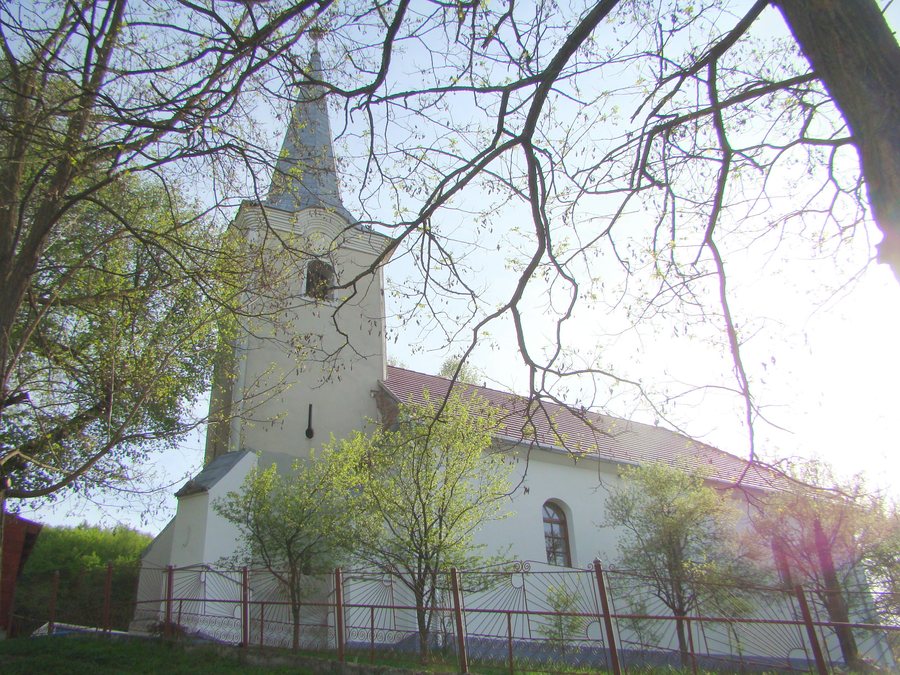 File:RO MS Satu Nou (Gheorghe Doja) (4).jpg
Photo: Țetcu Mircea Rareș via Wikimedia Commons, CC BY-SA 4.0
File:RO MS Satu Nou (Gheorghe Doja) (4).jpg
Photo: Țetcu Mircea Rareș via Wikimedia Commons, CC BY-SA 4.0
Key facts about Gheorghe Doja
- Gheorghe Doja is located in the Lower Niraj Valley and on the Niraj River.
- County road DJ151D runs through the village and connects it to Târgu Mureș via DN15.
- The regional cultural history includes the Reformed Church of Gheorghe Doja, founded in 1820, as well as the ruins of Bethlen Castle in Tirimia.
- The municipality is called “Țara Morcovilor,” or “Land of Carrots,” because of its predominant vegetable cultivation.
What characterizes the location in the Niraj Valley?
Its location in the Lower Niraj Valley and on the Niraj gives Gheorghe Doja a clear connection to the surrounding landscape. For your travel planning, this classification is more helpful than a general description of the area: You can consider the village as a destination associated with a river valley and then decide how much space you want to give to landscape and culture during your trip. The nickname “Țara Morcovilor” also refers to the municipality’s predominant vegetable cultivation. It is therefore part of the local identity and makes it clear that agriculture is an important component of the village’s character.
Those who want to learn about regional characteristics not only through individual buildings can include this agricultural connection in their choice of themes. The name “Land of Carrots” is not an indication of a particular gastronomic offering, but refers to the vegetable cultivation for which the municipality is known.
Which cultural traces can you include in your plans?
A prominent historical point of reference is the ruins of Bethlen Castle in Tirimia, within the municipality of Gheorghe Doja. The castle remained in the possession of the Bethlen family until the end of the Second World War. After the First World War, it fell into disrepair; only a small building remained of the complex. This sequence of events is part of the building’s history and should be taken into account when assessing the site: the focus is on a preserved historical trace, not on the idea of a completely preserved castle complex.
The Reformed Church in Gheorghe Doja is also mentioned as a tourist attraction. Its foundation in 1820 places it in a specific historical period and provides a concrete point of interest for travelers interested in sacred buildings and the history of regional communities. Another historical trace was located between Lukafalva and Ilencfalva: there was a school there with two large classrooms and a teachers’ residence.
What tradition exists in Teremiújfalu?
In Teremiújfalu, Betlehemezés is part of the Reformed tradition. It was traditionally performed by adolescent boys and has been performed every year since the mid-1970s. Thus, in addition to the buildings, a living tradition is also available for cultural exploration. If you are interested in regional customs, you can treat Betlehemezés as a separate thematic focus alongside the local history of Gheorghe Doja and Tirimia.
How can you incorporate arrival into your planning?
County road DJ151D runs through Gheorghe Doja and connects the village to Târgu Mureș via DN15. This road route is a concrete point of reference for your journey and for deciding how you want to connect Gheorghe Doja with other stops. Therefore, when making your personal plans, consider which places you want to combine and how long you want to stay at each stop.
Which accommodation suits your travel plans?
When looking for a hotel or other accommodation in Gheorghe Doja, your travel interests should be the first factor in your decision. If you primarily want to take the location in the Niraj Valley and its connection to the Niraj River into account, it is important to view the village as a starting point for your planning. If the Reformed Church, the Bethlen ruins, or regional cultural history are the main focus, you can set the desired length of your stay and the order of your destinations accordingly.
The connection via DJ151D and DN15 can also be a selection criterion if you want to remain flexible during your journey or incorporate Gheorghe Doja into an individual route. When searching for accommodation, therefore, compare not only the type of accommodation but also the location that suits your planned travel arrangements. For further comparisons, you can also view Răstolița, Târnăveni, Eremitu, Sighișoara, Saschiz, Reghin, Daneș and Șaeș.
FAQ
Where is Gheorghe Doja located?
Gheorghe Doja is located in the Lower Niraj Valley on the Niraj River.
What historical attraction is there in Tirimia?
The ruins of Bethlen Castle in Tirimia are mentioned as an attraction within the municipality. The castle remained in the possession of the Bethlen family until the end of the Second World War. After the First World War, it fell into disrepair; only a small building survived.
How old is the Reformed Church in Gheorghe Doja?
The Reformed Church in Gheorghe Doja was founded in 1820 and is mentioned as a tourist attraction.
What is Betlehemezés in Teremiújfalu?
Betlehemezés is part of the Reformed tradition there. It was traditionally performed by adolescent boys and has been performed every year since the mid-1970s.
How is Gheorghe Doja connected by road?
County road DJ151D runs through Gheorghe Doja and connects the village to Târgu Mureș via DN15.
To the higher-level travel overview: Mures.

_(4).jpg)