
Maia: Mária Way, churches and village character
Accommodation in Maia
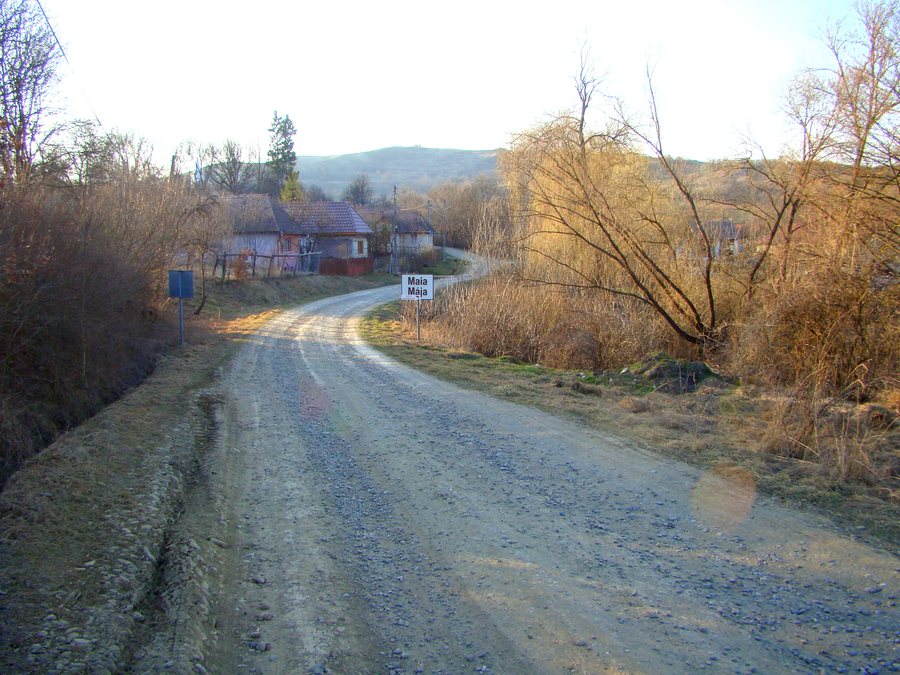
The Mária Way passes through Maia. The M01-Ms section is approximately 25.5 kilometres long and takes around eight hours. The route through Maia crosses a bridge and leads to a triangular square with the so-called village well. The trail section and the square are therefore part of a tour through Maia that connects the route and the village square. For a hike of this length, current trail conditions and traffic information are part of the usual preparation. The stated duration is an approximate time estimate; for day planning, it should be checked against breaks and your own schedule.
Other destinations in the same selection: Chibed, Gorneşti, Daneș, Rohrdachen, Weichseldorf, Lunca Bradului, Trei Sate and Târnăveni.
Routes
The alternative M01-MsC route of the Mária Way branches off at the watershed. At this point, the main route descends towards Maia. M01-MsC runs via Mikháza and the Bekecs and reconnects with the main route at Farkas-tető. At this point, the main route and the alternative route initially diverge and meet again at Farkas-tető.
Archaeology
Archaeological finds from the Copper Age and Neolithic are recorded for Maia in the commune of Bereni in Mureş County. The National Archaeological Record lists isolated artefacts discovered at Maia in the commune of Bereni from the Copper Age. Copper Age finds therefore appear both together with Neolithic finds and in the form of isolated artefacts.
Buildings
The Lovász Chapel was brought to the village of Maia in 1763 with 28 teams of oxen and the help of 84 strong men. The Reformed Church in Maia was built around 1863 and is visible on the Mária Way behind the houses along the main road. A wooden chapel near Maia was built by Lovász Márton. Approximately a century lies between the transport of the Lovász Chapel and the construction of the Reformed Church. The wooden chapel adds another building near Maia to this ecclesiastical context. When visiting churches and chapels, it is advisable to check the current opening hours before planning an interior visit.
Village character
House no. 17 in Maia is part of the village character. Its gable is decorated with sawn boards and radially arranged wooden elements. The single gable thus combines sawn boards with a radial arrangement of wooden elements.
Landscape
The Dealul Călugărului hill lies in the vicinity of Maia. The Firtos-tető summit lies in the wider regional surroundings of Maia. The Dealul Sântana hill is also located in the wider regional surroundings of Maia. The spatial references therefore range from the vicinity to the wider regional surroundings: Dealul Călugărului lies in the vicinity, while Firtos-tető and Dealul Sântana lie in the wider regional surroundings. Farmsteads grouped together are common in Maia among the hilly villages in the upper Nyárád region. When hiking to hills and summits, current route conditions should be checked before setting out.
For the higher-level travel overview: Mures.

.jpg)