
Târnăveni Among Churches and the “Corona” Forest
Accommodation in Târnăveni
Culture and History
Târnăveni brings together several clearly distinct historical points of reference. The Unitarian church is listed as a historic monument and is dated to the late 13th to 16th centuries as well as the 18th to 19th centuries. Its Gothic style and the redesign carried out in 1599 are among the notable details of its construction history. The two periods and the later alteration can be considered separately, without reducing the development of the building to a single era.
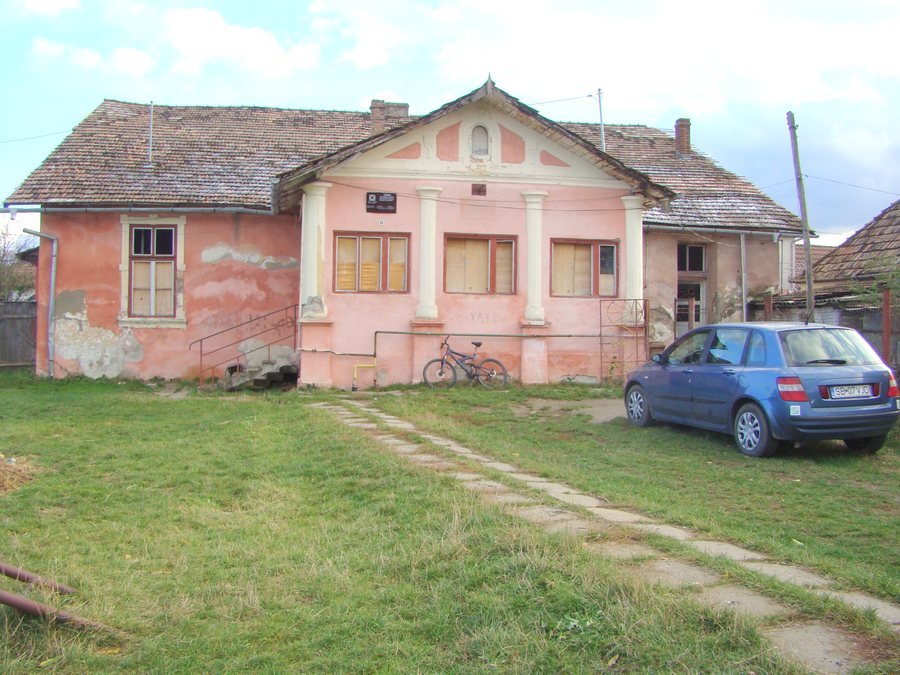 File:RO MS Tarnaveni Mihai Eminescu nr (1).jpg
Photo: Țetcu Mircea Rareș via Wikimedia Commons, CC BY-SA 4.0
File:RO MS Tarnaveni Mihai Eminescu nr (1).jpg
Photo: Țetcu Mircea Rareș via Wikimedia Commons, CC BY-SA 4.0
The furnishings of the Unitarian church also preserve specific dates and individual items, including a silver glass from 1636, a silver tray and a bell from 1678. The historic architecture also includes the wooden church dedicated to Saint Nicholas. It is listed as a historic monument under code MS-II-m-A-15647. The two entrances with keyhole-shaped frames are considered a very rare form. Thus, monument protection, the church’s dedication and an unusual architectural detail are found side by side in this building.
Nature and Landscape
The “Corona” Forest is one of Târnăveni’s tourist destinations and lies in the interfluve between the Mureș and Târnava Mică rivers. Its name refers to the forest as a distinct landscape element, while its location between the two rivers provides an additional geographical reference. For classification purposes, these two details remain separate: the name describes the destination, while the river landscape describes its location.
In the vicinity of Târnăveni, Fruntea Dealului is recorded as a named peak. The nearby area also includes the named hills Dealul Gorga, Dealul Telec and La Spânzurătoare. The different designations are relevant when considering the landscape because they do not combine peaks and hills into a single type of terrain. Anyone organizing the surroundings by specific names can identify these landforms separately.
Geographical Setting
The Blaj–Praid railway line passes through Târnăveni. In addition, Târnăveni is the starting point for road connections to Blaj, Iernut, Târgu Mureș, Sovata and Mediaș. The railway line and the road directions describe different transport connections and should therefore not be understood as the same route. The places named indicate several directions, while the railway line marks a separate route through Târnăveni.
For practical orientation, cultural destinations, landscape names and transport connections can be set out separately alongside one another. This keeps it clear whether a detail describes a monument, a landscape element, a geographical location or a direction of travel.
Cultural Surroundings
Several named religious buildings are located in the immediate vicinity of Târnăveni. Fosta Sinagoga is a synagogue. Catedrala Ortodoxă Sfânta Treime is a church. Biserica Romano-Catolică Sfântul Martin is also a church, as is Biserica Ortodoxă Sfântul Gheorghe. The four names distinguish different religious buildings in the nearby area and complement the Unitarian church and the wooden church of Saint Nicholas as additional cultural points of reference.
Other Places
Other places: Hetiur, Săcalu De Pădure, Weissenkirch, Burgfeld, Maia, Ugern, Reen, Daneș
To the main travel overview: Mures.

.jpg)