
Chibed: Roman Fort, Village Museum and Forest Surroundings
Accommodation in Chibed
Chibed combines Roman traces with ecclesiastical architectural history, traditional crafts, festival culture and rural household life. At the Csombodhatja site are the remains of a Roman fort from the 1st century AD.
 File:RO MS Biserica reformata din Chibed (12).jpg
Photo: Țetcu Mircea Rareș via Wikimedia Commons, CC BY-SA 4.0
File:RO MS Biserica reformata din Chibed (12).jpg
Photo: Țetcu Mircea Rareș via Wikimedia Commons, CC BY-SA 4.0
History
The Csombod Roman fort was part of the Roman Limes. Its walls and the access road to the fort are still visible today. The combination of its Roman date, its affiliation with the Limes and its preserved structural remains makes Chibed’s early history visible at a specific location.
In Chibed, the Roman traces stand alongside ecclesiastical architectural history, traditional crafts, festival culture and rural household life. This creates different cultural accents without conflating the particular features of the individual testimonies.
Culture
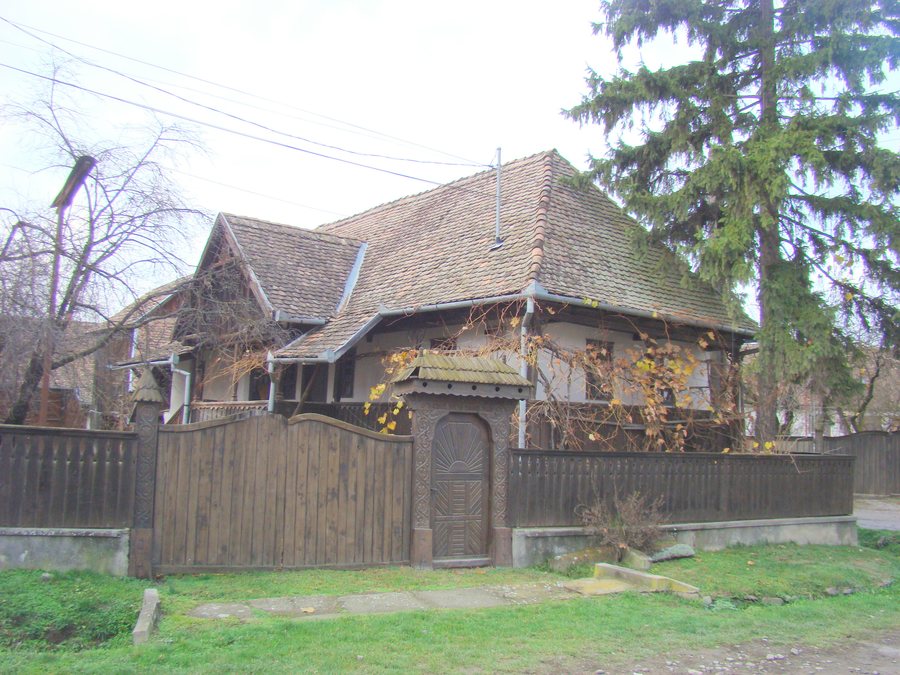
After renovation in 1826, the Reformed Church of Chibed acquired its present form. It has an organ built by Bodor Peter in 1847, which is still in operation today. In Chibed, local craftspeople make bricks and roof tiles (solzi) by hand and fire them in traditional wood-fired kilns. The church and the crafts represent different forms of tangible heritage: historical architectural and furnishing history, as well as the artisanal production of bricks and roof tiles.
Traditions
The local Farşang tradition includes a folk theatre performance in the streets of Chibed, performed by young people from the village in traditional dress. The traditional dress of Chibed combines the style of the Mureş region with distinctive local characteristics. During the festivities, the street performance and the regional clothing with its local features come together.
The village museum of Chibed preserves tangible evidence of traditional rural household life. It is named after the musicologist and folklorist János Seprődi (1874 in Chibed–1923 in Cluj-Napoca); he played an important role in preserving the local folk music heritage. The village museum of Chibed can be visited during village festivals and events organised by the village. Outside these times, an appointment is required at least 12 hours in advance. The museum brings together evidence of rural household life and the memory of Chibed’s folk music heritage.
Landscape
The area of the Târnava Mică River is part of the surroundings of Chibed. The extensive deciduous and mixed forests around Chibed are used by locals and visitors as excursion areas. Around Chibed, the river area and the forest landscape stand alongside each other as distinct natural settings. In addition to the river area, the forests give the landscape a second, clearly different character.
When choosing a hotel in Chibed, travel dates, room category and cancellation conditions can provide different points of comparison. The price range and length of stay can also be considered separately. The preferred focus among historical heritage, village culture and landscape can complement the personal assessment. This provides an objective basis for comparing different offers without anticipating the characteristics of individual accommodations.
Other Places
Other destination pages: Bistra Mureşului, Gheorghe Doja, Rohrdachen, Saschiz, Hetiur, Daneș, Sângeorgiu De Mureş, Feleag
To the overarching travel overview: Mures.

.jpg)