
Frumosu among mountain trails and Bukovinian craftsmanship
Accommodation in Frumosu
Frumosu lies in the lower basin of the Moldovița River in the mountain region of the Obcinele Bucovinei and on the tourist route to Moldovița Monastery, a UNESCO monument. The Romanian government has recognized the commune as a spa resort of local interest.
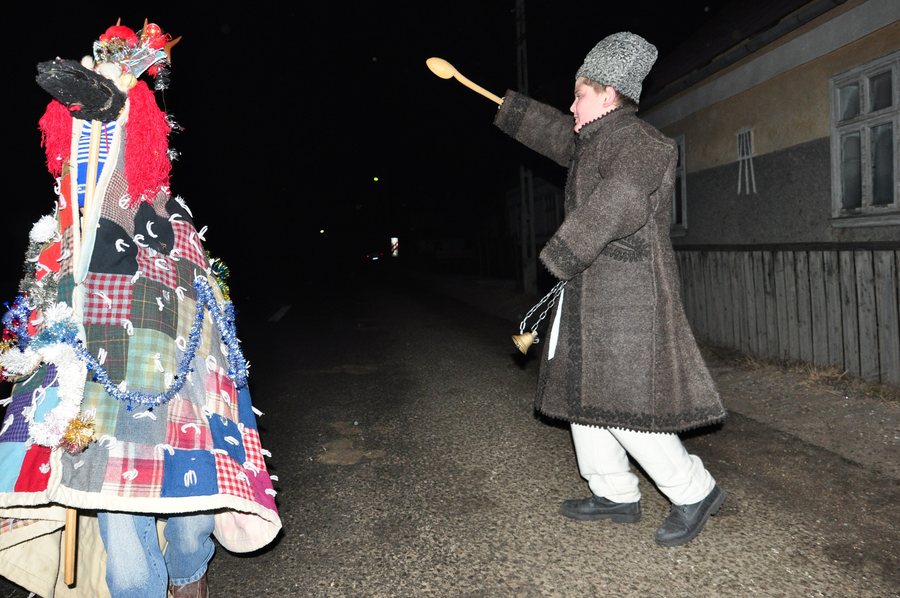 File:Frumosu, Suceava, 31.12.2011 - Capra (1).jpg
Photo: Heinrich Mayer via Wikimedia Commons, CC BY-SA 4.0
File:Frumosu, Suceava, 31.12.2011 - Capra (1).jpg
Photo: Heinrich Mayer via Wikimedia Commons, CC BY-SA 4.0
Landscape
The commune’s territory is crossed by the Moldovița River, a tributary of the Moldova River, as well as by the Dragoșa, Frumosu and Deia streams. The commune contains 7,286 ha of deciduous and coniferous forest. To the west, it is bordered by the Obcina Feredeului, with elevations of 1,300 to 1,400 m; to the east, the Obcina Mare reaches up to 1,200 m.
At La Borți in the commune of Frumosu, there is a former sulfur mine that has been modernized and converted into a tourist mine. White, mostly round or conical stalactites measuring 1 to 40 cm have formed in the western gallery.
Hiking Trails
One hiking route leads from Frumosu via Vatra Moldoviței, Vârful Palmania at 1,059 m, Dealul Fusa at 1,162 m, Dealul Lupoaia at 1,161 m, Vârful Poiana Prislop at 1,180 m, Pasul Ciumârna at 1,100 m and the Sucevița Valley to Sucevița. Other described hiking routes lead along the Deia stream to Obcina Feredeu and Vârful Deia at 1,200 m, as well as, on another route, to Vârful Tomnatecu at 1,302 m and Prisaca Dornei. The various destinations and elevation figures help compare routes and topographical differences.
The commune can be reached via the road along the Moldovița Valley on DJ 176 between Vama and Moldovița.
Other places: Crucea, Vama, Ciocănești, Cacica, Văleni-Stânișoara, Vatra Dornei, Şaru Dornei, Podu Coșnei
Culture and Crafts
The commune’s central church, dedicated to the Nativity of the Mother of God, dates from 1866 and was restored through 2005. In Deia in the commune of Frumosu stands the Church of Saint Dimitri the Great Martyr, built of wood on a stone foundation. Traditional architecture includes decorative woodwork on porches, doors, window frames, wells, gates and fences.
Weaving, sewing, decorating Easter eggs and making traditional costumes with bead and marten-fur embroidery are preserved as elements of Bukovinian folk art. Local crafts in the commune of Frumosu include blacksmithing, weaving, shirt-making, decorating Easter eggs, making leather belts, wood carving and wickerwork.
The “Brăduțul” ensemble from Frumosu performs Christmas traditions such as caroling, Urături, the “Jocul caprei” and the “Jocul ursului”, as well as vocal performances and regional folk dances. Măsura oilor, also known as driving the sheep up to the summer pastures, is a pastoral festival in the commune of Frumosu held at the beginning of May for the formation of the sheepfolds or the departure of the herds to the summer grazing areas.
To the main travel overview: Suceava.

.jpg)