
Şcheia: Archaeology, Churches and Medieval Traces
Accommodation in Şcheia
Şcheia brings together archaeological traces, ecclesiastical sites and medieval history. For travel planning, religious architecture, craft traditions, historic fortifications and the landscape along the Șcheia stream can be considered separately.
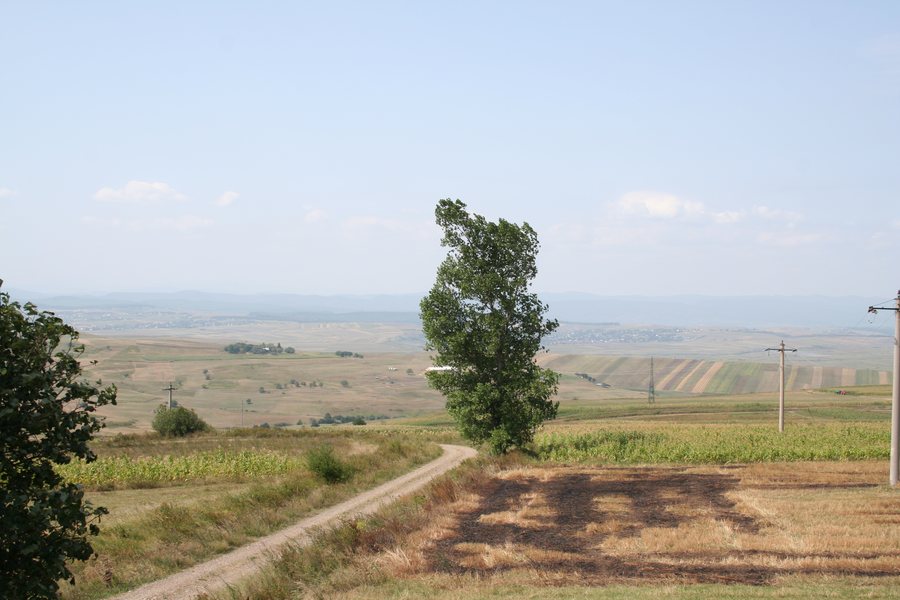 File:Dealul Teiusoara, comuna Scheia, Suceava - panoramio.jpg
Photo: Sorin Craciun via Wikimedia Commons, CC BY-SA 3.0
File:Dealul Teiusoara, comuna Scheia, Suceava - panoramio.jpg
Photo: Sorin Craciun via Wikimedia Commons, CC BY-SA 3.0
The relief of Șcheia is regarded as an amphitheater opening onto the valley of the Șcheia stream. Rather than perceiving Şcheia only through individual buildings, this also makes it possible to read the place as a landscape whose form opens toward the valley.
The early inhabitants of Șcheia are regarded as stonemasons and builders of fortifications. The “șcheieni” stonemasons were widespread across all three Romanian principalities. They built numerous defensive fortresses, princely courts, churches and monasteries.
Which cultural sites shape travel planning?
The pronaos of the Mănăstirea „Sfântul Ilie” Șcheia Monastery contains 24 painted scenes from the life of the prophet Elijah. The defined number and clearly outlined subject make the interior an independent theme within a cultural trip. Those interested in religious visual language can specifically look here for depictions of the prophet’s life, without limiting the site to its exterior architecture.
Sfântu Ilie, Șcheia, also broadens the architectural spectrum. There, the large church dedicated to the “Martyrs and Confessors of Christ from the Communist Period” was built between 2009 and 2020. The parish church of the Parohia Sfânta Ecaterina in Sfântu-Ilie, Șcheia, is a wooden church.
Which religious references can be placed in a chronological context?
A pastoral meeting of priests took place at Parohia Buna Vestire Șcheia on January 20, 2025, at 4:00 p.m. This specific date is one of the more recent religious references associated with the place. For your planning, it is particularly interesting if you want to trace Şcheia’s contemporary ecclesiastical life chronologically or consider religious themes beyond older architectural history alone. A regular series of events cannot be inferred from a single date.
Other travel destinations include Fălticeni, Frasin, Pojorâta, Moldova-Sulița, Frumosu, Cacica, Crucea and Prisaca Dornei.
FAQ
What is known about the archaeological site Situl arheologic de la Şcheia - Silişte?
The archaeological site Situl arheologic de la Şcheia - Silişte is associated with the heritage protection code LMI SV-I-s-B-05438. It is located approximately 100 meters southeast of the railway station.
When was the Mănăstirea „Sfântul Ilie” Șcheia Monastery re-established?
The Mănăstirea „Sfântul Ilie” Șcheia Monastery was re-established in 2022, 237 years after its closure following the occupation of Bukovina.
What is known about the Biserica Buna Vestire in Șcheia?
The Biserica Buna Vestire in Șcheia was consecrated on April 24, 2005. Between 2006 and 2013, it received an oak-carved iconostasis with painted icons.
Where are the ruins of Cetatea Șcheia located?
In the vicinity of Șcheia, the ruins of Cetatea Șcheia lie northwest of the city of Suceava, on Dealul Șeptilici at an elevation of 384 meters. Cetatea Șcheia was built at the end of the 14th century during the reign of Petru Mușat and was considered one of the early stone fortresses of the medieval Moldavian region.
Back to the travel overview: Suceava.

