
Prisaca Dornei: Mountain Hiking Trail, Churches and Eisenau
Accommodation in Prisaca Dornei
Mountain Hiking Trail and Peaks
Prisaca Dornei combines a marked mountain hiking trail with a landscape of valleys, peaks and named mountains. The trail begins at an altitude of 570 metres and leads over the summit of Runcul Prisăcii, which reaches 1,141 metres. On marked mountain hiking trails, checking current information on trail conditions and seasonal closures is part of the usual preparation before setting out on the specific planned tour.
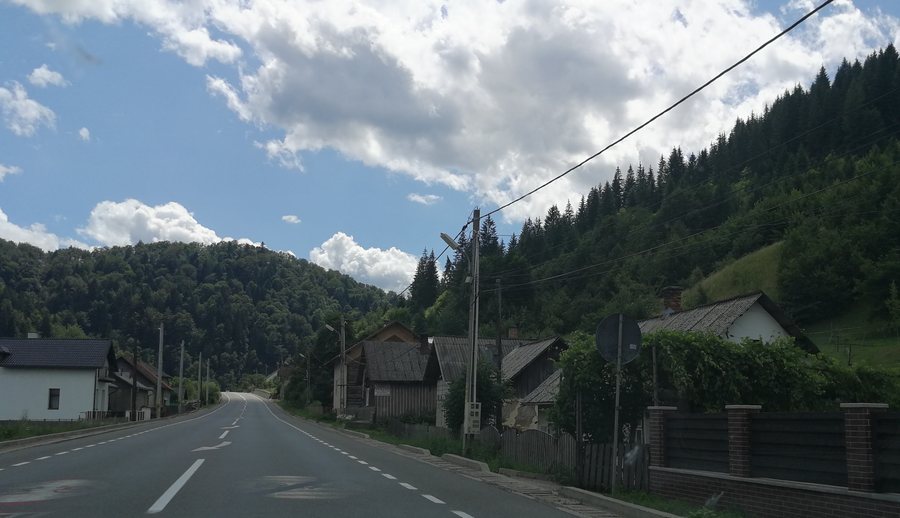
The peaks Vârful Runcul Sandului, Vârful Runcul Dei and Vârful Negureşti, as well as the mountain Dealul Socilor, are also located in the area around Prisaca Dornei. These four elevations complement Runcul Prisăcii with additional named landscape features in the immediate vicinity.
Obcina Feredeului Natural Area
The southern boundary of the Obcina Feredeului Natura 2000 site largely follows the Moldova Valley between Pojorâta and Prisaca Dornei. The lower valley of the Sadova River up to its confluence with the Moldova is excluded.
The eastern boundary of the Natura 2000 site also extends from Prisaca Dornei in the Moldova Valley. It runs in a south-southeasterly to north-northwesterly direction as far as west of Brodina in the Suceava Valley and follows an irregular course.
Stop on the CFR Railway Line
The Prisaca Dornei stop is located on line 511 between Vama Hm. and Câmpulung Est Hm. For rail journeys, the specific connection, including its current departure and arrival times, should be checked before travelling.
Churches and Monasteries
Prisaca Dornei is home to two churches built at different times. The Church of Sfinții Arhangheli Mihai și Gavriil was built between 1821 and 1825. The Roman Catholic church dates from 1911. The two dates belong to different historical periods and represent two distinct aspects of the village’s ecclesiastical history.
The area around Prisaca Dornei also includes the Schitul Rarău monastery, Mânăstirea Moldoviţa monastery, Moldoviţa Monastery and the Biserica Ortodoxă Deia church. Alongside the churches in the village, those interested in culture can therefore find additional specifically named religious destinations in the immediate vicinity. The opening hours and dates of religious institutions should be checked for current information before visiting.
Eisenau and the Ironworks
Prisaca Dornei was first mentioned in 1808 under the name Eisenau. Eisenau was a colony of settlers from the Zips region of Germany. The former name is therefore part of the village’s history and also points to the origins of the settlers at that time.
In 1858, ten finery forges, or ironworks, in Prisaca Dornei (Eisenau) belonged to Manz’s mining empire. Vama (Prisaca Dornei) also had a blast furnace owned by Wolf Kleinberg. The history of the village thus encompasses both the history of the name Eisenau and specific iron-processing facilities and ownership structures.
More Destinations
Other destinations in the same broader context include Moldova-Sulița, Dragomirna Monastery, Şcheia, Pojorâta, Fălticeni, Ciocănești, Suceava and Căsoi.
For the broader travel overview: Suczawa.

