
Modra: Museums, Majolica and Wine Tradition
Accommodation in Modra
The Ľudovít Štúr Museum is a central place in Modra, bringing together several aspects of the town and its surroundings. The collections focus on Ľudovít Štúr as well as the history and cultural and ethnographic traditions of Modra and the surrounding region. The museum presents four permanent exhibitions to visitors. It is housed in Emresz House, where Štúr died in 1856.
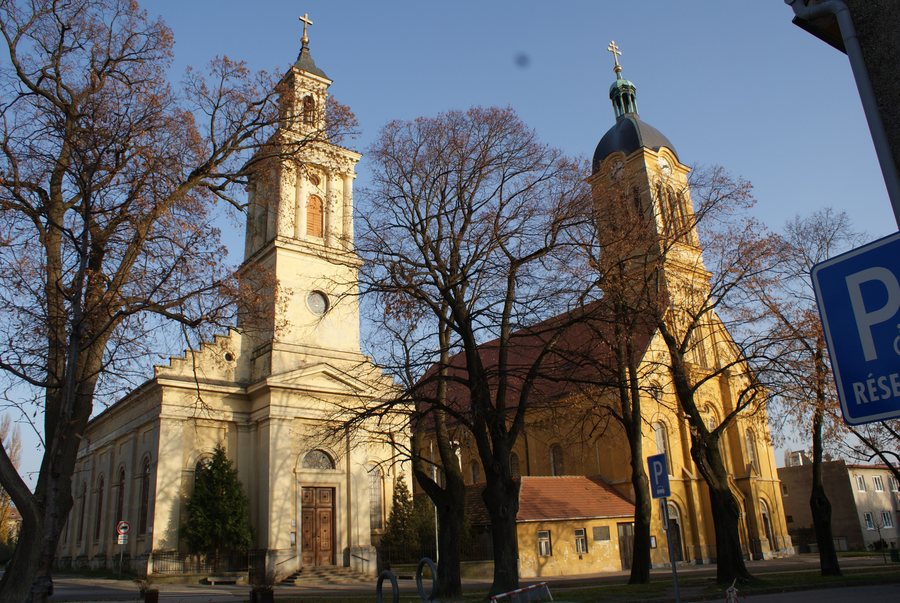 File:Modra German and Slovak Lutheran Church 01.jpg
Photo: feťour via Wikimedia Commons, Public domain
File:Modra German and Slovak Lutheran Church 01.jpg
Photo: feťour via Wikimedia Commons, Public domain
Culture and Ceramics
The history of ceramics is represented at several independent sites. The Museum of Slovak Ceramic Sculpture presents the history of Modra ceramics and traditions connected with life in the guild organisation. The Majolica tradition dates back to the founding of a vocational school for the ceramics industry in 1833. Slovenská ľudová majolika Modra offers workshops for visitors. The Ignác Bizmayer Gallery displays, among other things, figurative ceramic works by Ignác Bizmayer, Jozef Franko and Marián Liška. Its exhibition venue is located in a historic structure that was part of a defensive bastion.
Historical Traces
Evidence of the town’s history can also be encountered outside the museums. Horná brána is the only one of Modra’s three town gates that has survived to this day. The gate is occasionally open to visitors during exhibitions and events. Zámčisko is an archaeological site with the remains of a Slavic hillfort dating from the late 9th century. Below Zámčisko there is also a 200 m long mining tunnel that is freely accessible.
Wine Tradition
The local history also includes Pivnica u Pradeda. The historic wine cellar is located in the centre of Modra and has a tradition spanning more than 500 years. Guided wine tastings are offered there. At this site, both the historic character of the cellar and the accompanied tasting are therefore central.
Nature and Views
Natural attractions include Tisové skaly, a natural monument with the fifth level of protection. Another distinctive landmark is the observation tower. It was built in 2018 on the site of an older observation tower and offers an excellent view of the wider surroundings. The two places thus represent different aspects of the landscape: in one case, the protection classification defines the natural monument; in the other, the history of the structure and the view across the surrounding area are central.
Cycling Path
Cyclists can use a 4.96 km long cycling path that is mostly paved. Rest areas and bicycle repair stations are located along the cycling path. Its length, surface characteristics and available stations are therefore an integral part of the route description.
During a stay in Modra, hotels can be considered in connection with different personal travel priorities: culture and ceramics, historical traces, wine tradition, nature and views, or cycling. You can view and compare hotel offers for Modra. It is up to you which of these aspects of the town is most important for your trip.

