
Hotels in Suchá Hora: Cycling Route, Goral Culture and Nature
Accommodation in Suchá Hora
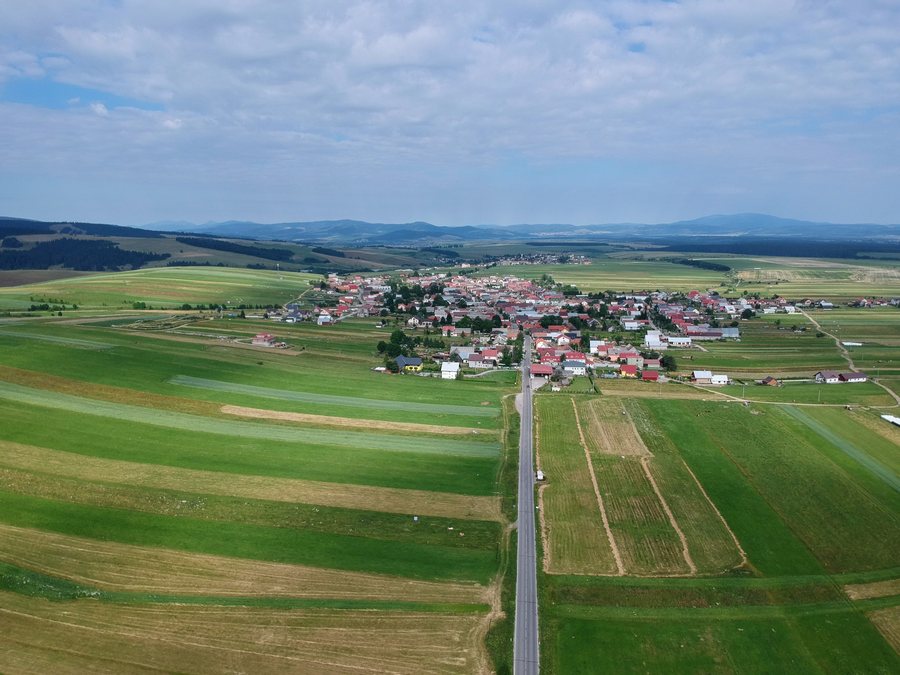
Suchá Hora represents a close connection between the cycling route, landscape and Goral culture. The signposted cycling route section between Trstená and Suchá Hora has new traffic signs and additional facilities. Rest areas with benches, tables, bicycle racks and rubbish bins accompany the route. There are also Tatra panoramas and bilingual information panels about the former railway and its history. In Suchá Hora, two cycling information panels are also located along the cross-border route.
Cycling
The historic transport line also remains present along the route: the former railway to Suchá Hora ran from Kraľovany and Trstená towards Nowy Targ and was extended to Poland in 1904. The cycling route Route Around the Tatras leads to the ruins of the former Suchá Hora railway station. From the former railway station, the main route continues for another 9 km through the green landscapes of Orava. The border crossing near Suchá Hora was reopened on 1 May 1991. After Slovakia joined the Schengen Area on 21 December 2007, border controls were completely abolished.
Nature
Near Suchá Hora lies the Rudné nature reserve, set in extensive forest wetlands with a taiga-like character; the wetlands continue seamlessly into Poland. The Rudné wetland is also nearby and is so far the only known site in Slovakia of the rare species skaliarka močiarna. Rudné is also an ecological and functional area for black grouse breeding grounds in the Horná Orava Protected Bird Area.
Suchá Hora is one of the cadastral areas of the protected Horná Orava Natura 2000 site. The northern part of the cadastral area contains a raised bog shaped by former surface peat extraction. North of Suchá Hora, the Horná Orava Protected Landscape Area, CHKO Horná Orava, extends to the Polish border.
History
Suchá Hora was established during the Wallachian colonisation; the first written record of the municipality dates from 1566. From 1920 to 1924 and for several months in 1939, Suchá Hora belonged to Poland. The Church of Christ the King was built in 1934, consecrated after reconstruction on 6 August 1995, and most recently renovated in 2021–2022. It belongs to the local parish, which provides current information about service times and church announcements.
Culture
Suchá Hora belongs to the Goral dialect area consisting of 24 municipalities in the western and northern part of upper Orava. The cultural identity of the Gorals is reflected in the continued use of the Goral dialect. Goral traditions that remain alive include songs, music, folk costume and customs.
The built environment includes wooden houses from the early 20th century. They have three rooms, a masonry base and outbuildings that are often located beneath a shared gable roof covered with shingles. The Goral variant of folk costume in Suchá Hora resembles the costume worn in Goral communities east of the Tatras and is still worn on major church holidays and special occasions. Traditional dances associated with Suchá Hora include do zvíjania, goralský, zbojecký, košíček, kresaný and odzvodný.
The Goral folklore group from Suchá Hora maintains a repertoire of singing, dancing and music from the Goral communities of Hladovka and Suchá Hora. In 2019, it organised the 12th Goralská nedeľa, at which local and visiting folklore ensembles performed. Goralská nedeľa is a recurring local folklore event; the 13th, 14th and 16th editions, among others, are documented. At the 14th edition, guests performed together with local dancers and musicians.
At traditional Goral Páračky in Suchá Hora, Goral music as well as mulled wine and šišky were offered.
Other places in the same travel area: Habovka, Vitanova, Nižná, Oravsky Biely Potok, Zuberec, Tvrdosin, Podbiel, Trstená
For the higher-level travel overview: Tvrdošín.

