
Idrija: Hotels and Accommodation
Accommodation in Idrija
The mercury heritage of Idrija, together with that of Almadén, has been inscribed on the UNESCO World Heritage List. The Idrija bobbin lace tradition, together with Slovenian bobbin lace-making, has also been included on the UNESCO Representative List of the Intangible Cultural Heritage of Humanity.
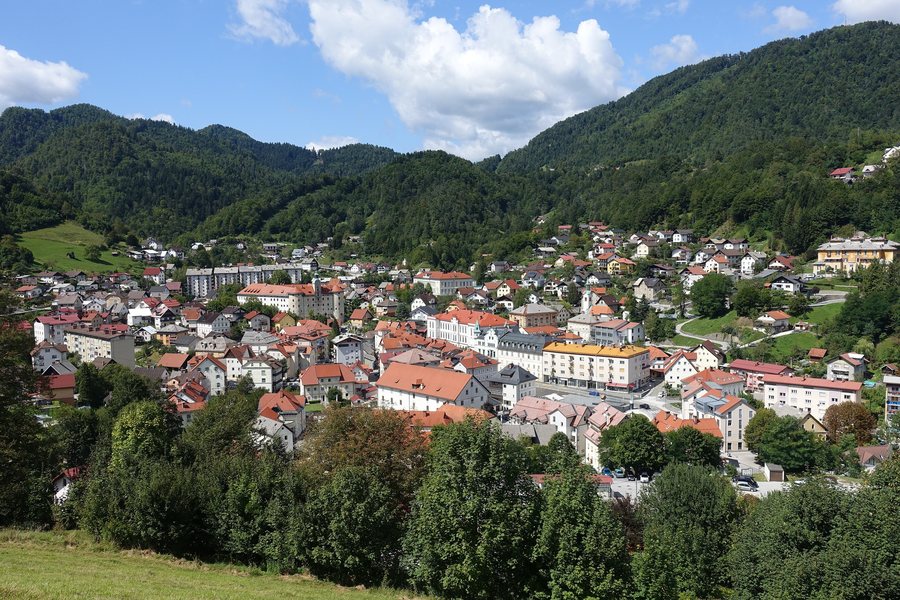
Those who choose Idrija as a travel destination often want to book a hotel there.
Geographical setting
The entire area of the Municipality of Idrija belongs to the UNESCO Global Geoparks network due to its exceptional geological and other natural features and attractions. The Zgornja Idrijca Landscape Park has been designated as a landscape park since 1993.
Divje jezero was protected as a natural monument in 1967 and has been open to visitors as Slovenia's first museum in nature since 1972. At 55 metres long, the Jezernica is the shortest river in Slovenia.
History
Anthony's Main Road is the oldest preserved entrance to a mine in Europe and was excavated in 1500. Guided tours through Anthony's Main Road include underground tunnels with cinnabar ore and drops of mercury, as well as a unique underground chapel.
The Hg Smelting Plant conveys the importance of mercury through experiments, animations, videos and mercury-based devices, and houses the world's largest rotary furnace for mercury extraction. The Klavže water barriers of Idrija are preserved structures of mercury mining, known as the “Slovenian pyramids”, and were inscribed on the UNESCO World Heritage List in 2012.
The Rake water channel was built at the end of the 16th century to supply the mine's large wooden waterwheels with water. Gewerkenegg Castle houses the Idrija Municipal Museum, whose exhibitions cover the 500-year history of mercury mining and the town of Idrija, as well as Idrija bobbin lace. The Idrija Municipal Museum's lace collection comprises more than 5,500 objects.
Culture
The Slovenija Partisan Printing Shop is a fully preserved cultural and historical monument from the Second World War. Visitors to the Slovenija Partisan Printing Shop can print their own leaflet with the assistance of a supervisor.
The Idrija Lace Festival takes place every summer and gives visitors the opportunity to experience the production of bobbin lace firsthand. The Written in Rocks exhibition offers an interactive journey into Idrija's geological past.
Nature
The Rake Path is a pleasant walking trail along the left bank of the Idrijca to Divje jezero. The Feldban is a marked hiking trail along the Godovič–Idrija section, which can be explored independently or with a guide.
The Strug Climbing Centre has 50-metre-high walls used for sport climbing. In suitable weather conditions, the 1,148-metre-high summit of Hudournik offers views from Kanin and Krn in the west, across Triglav, Porezen and Blegoš, to the Kamnik-Savinja Alps.
Cuisine
The Honey Circle is a nine-kilometre circular trail through Gorenja Kanomlja that passes the Kanomlja Water Barriers, Ovčjak Waterfall and Šturmajce Homestead. The Honey Circle offers opportunities to taste honey, honey products and other local dishes.
At the Idrija Žlikrofi Making Workshop, visitors learn to prepare and make the filled pasta; it is then tasted with traditional or modern sauces. The Idrija Žlikrofi Festival takes place every year in August.
Orientation
The Idrija Tourist Information Centre is located at Prelovčeva 5 and provides information about Idrija and the surrounding area. Idrija can be reached by car or bus; those arriving by train can continue by bus from Logatec.
Further entries: Zakriž, Srednja Kanomlja, Vojsko, Bukovo, Lome, Črni Vrh, Cerkno, Idrija.
To the main travel overview: Slovenia.

