
Kazantip: Crimea’s rave festival and its history
The “Kazantip” festival in Crimea is an unusual counterpart to the famous parties in Ibiza. Since 1992, thousands of young people from the former Soviet Union have come to Crimea every year in midsummer. Recently, the festival has also become popular with Western Europeans. You can often meet Swedes, Dutch people and Germans here. The idea behind “Kazantip” strongly recalls “Woodstock.” The difference is that the rock of “Woodstock” has been replaced here by the trans-techno-acid-house electronic music of the 21st century. There is another difference besides the music: “Kazantip” has none of the ideological content typical of every hippie event. Unlike Woodstock, “Kazantip” is light-hearted and sometimes even frivolous, with no political content.
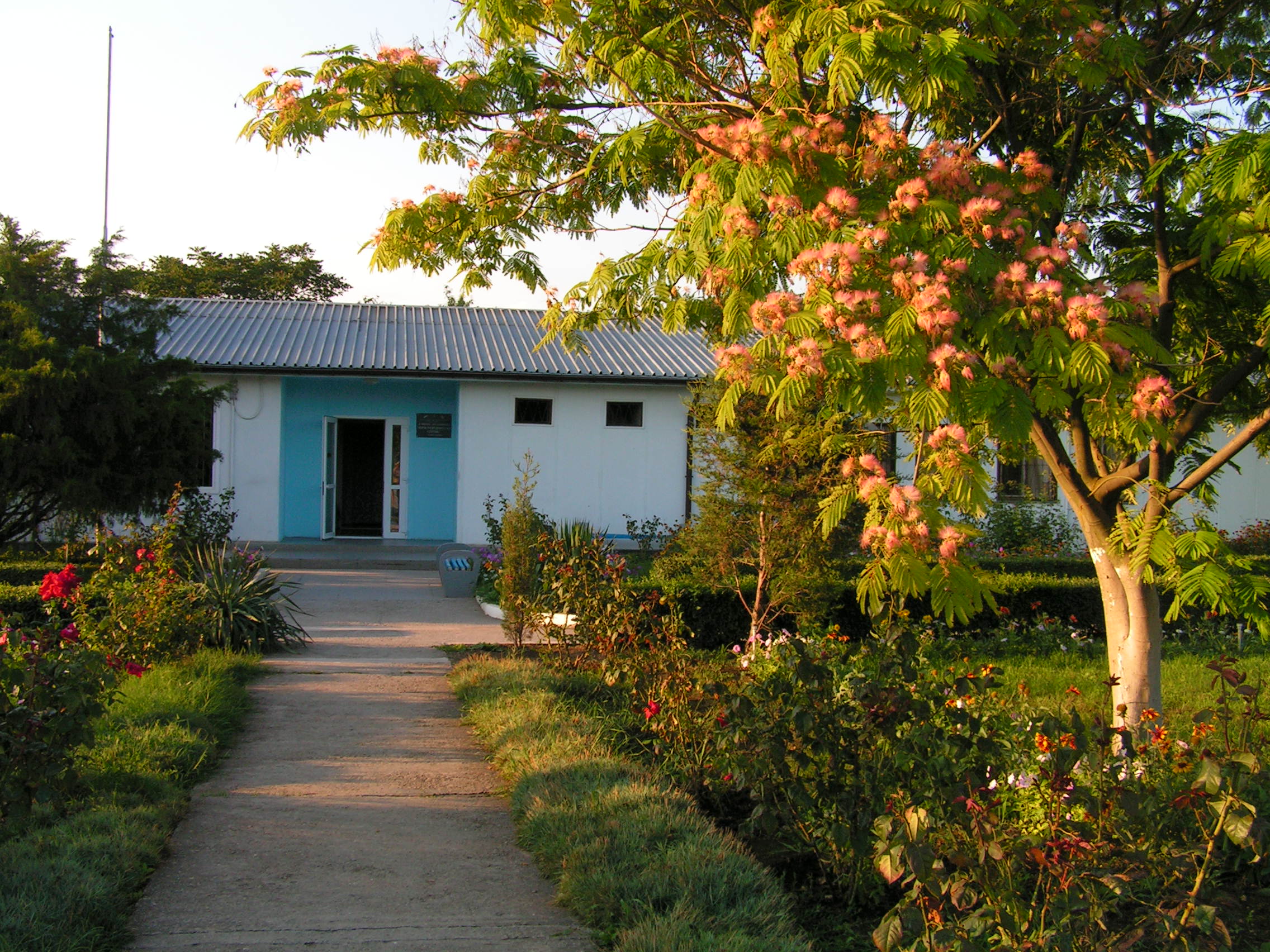 Weißes Gebäude mit blauem Eingang, umgeben von blühenden Bäumen und einem Gartenweg.
Photo: Ilya
Weißes Gebäude mit blauem Eingang, umgeben von blühenden Bäumen und einem Gartenweg.
Photo: Ilya
Kazantip is a state within a state. During the festival, it has its own parliament, police force and president, as well as ordinary citizens, who make up the majority. The festival was originally conceived as a huge party for surfers. It got the name “Kazantip” from the headland of the same name, near which the event takes place. Over time, the surfers and their friends forgot the original concept, and in the end, only the music remained. Initially, the festival’s dance floor was located not far from the settlement of Shchyolkino, on the grounds of an unfinished nuclear power plant. “Kazantip” reached the height of its popularity in 1997, during the heyday of rave culture. Interest in the festival then steadily declined, and in 2000 the organizers were forced to move it to a new site on Crimea’s western coast.
People go to “Kazantip” for more than just dancing. Anyone who is even somewhat familiar with rave culture knows that it is about more than music. The second component is drugs. Amphetamine, ecstasy and marijuana are as widely used at the festival as beer. Regular festivalgoers often tell the story of how, once in the late 1990s, the leader of a popular Russian rave group at the time opened a free drug bar for everyone for a day. Since then, drugs have been more strictly controlled at “Kazantip,” but nothing has changed radically. One of the websites devoted to “Kazantip” says:
“Kazantip” is not just a place for a wholesome family vacation, but also a wild event full of emotions and impressions, with a 24-hour beach party, the force of hundreds of kilowatts of loud music and lighting equipment that fill you with energy, love on the beach, port wine from plastic bottles and nights spent under the open sky.
In 2009, the Kazantip festival will take place from July 25 to August 21 in Popovka, Crimea, Ukraine.
How do you get there?
Europeans currently do not need a visa to enter Ukraine. The most convenient option is to fly to Crimea’s airport in Simferopol. From there, it takes about 1.5 hours by car or bus to reach Popovka in western Crimea.
Accommodation can be booked directly through the organizers (https://kazantip.com)
Quick facts: Kazantip rave festival
- Kazantip became known as a major rave and arts festival in the post-Soviet scene.
- The festival developed from the 1990s onward and became associated with Crimea.
- The venue, name, program and continuation of the festival must not be inferred from old reports.
- Koktebel, Sudak, Novy Svet and other Crimean destinations are geographic reference points, not confirmation that a festival will take place.
- Historical music and youth culture must be considered separately from current security, transport and access conditions.
- Check current travel advice and local conditions with the relevant authorities before every trip.
Understanding Kazantip as a historical festival
Kazantip belongs primarily to the history of major music and party scenes in Crimea. Dates, venues, organizers and travel routes from the past should not be treated as current festival information. Those interested in comparing the region’s cultural development can connect this historical topic with the Koktebel Jazz Festival or with Balaklava as another focal point in Crimea.
For travel today, confirmed information from organizers, access details, the security situation, entry requirements and transport conditions are essential. Without current confirmation, do not assume that festival dates, accommodation, admission, programming or safety arrangements are in place. Historical accounts of the parties may describe the atmosphere of the time, but they are no substitute for reliable travel planning. For major events in particular, a safe way back is just as important as the venue itself.
Keep festival history separate from travel to Crimea
Kazantip is part of the history of major rave events in the post-Soviet region. Kazantip is therefore treated as a historical cultural topic, not as an announcement of a current event. The historical overview of the festival provides further context on its development; its present-day location, program and continuation cannot be inferred from older accounts.
Crimea, Koktebel, Sudak, Novy Svet, festivals in Crimea and Crimean beaches each have distinct historical or scenic features. Yalta and Kerch should be planned as separate destinations.
Before any specific trip, check entry requirements and documents, arrival and transport, travel preparations, how to stay safe while travelling and contingency funds and a Plan B. Historical festival reports are no substitute for current security or access information.
FAQ about Kazantip
What was Kazantip?
Kazantip was a well-known rave and arts festival that became associated with Crimea and the post-Soviet music scene from the 1990s onward.
Does the festival still take place in the same form today?
That cannot be determined from historical accounts. Its name, location, program and continued existence must be checked directly and using current information.
Which places are part of its historical context?
Koktebel and other places in Crimea are mentioned in festival accounts. Each remains a separate destination requiring its own access and safety checks.
What should travelers check in advance?
Immediately before a specific trip, confirm entry requirements, the security situation, transport, access, information from organizers, accommodation and the return journey.
