
Pécs, Hungary: Culture, Architecture and Travel Planning
Pécs lies in southern Hungary at the foot of the Mecsek Mountains and brings together Roman, Christian, Ottoman and modern cultural history. The city is an excellent destination for travelers looking to combine architecture, museums and a varied walking tour. Many of its central attractions are within easy reach, while the hills north of the city offer a scenic contrast. Travelers wishing to combine Pécs with Budapest, Transdanubia or southern regions can compare destinations across Hungary to plan their route.
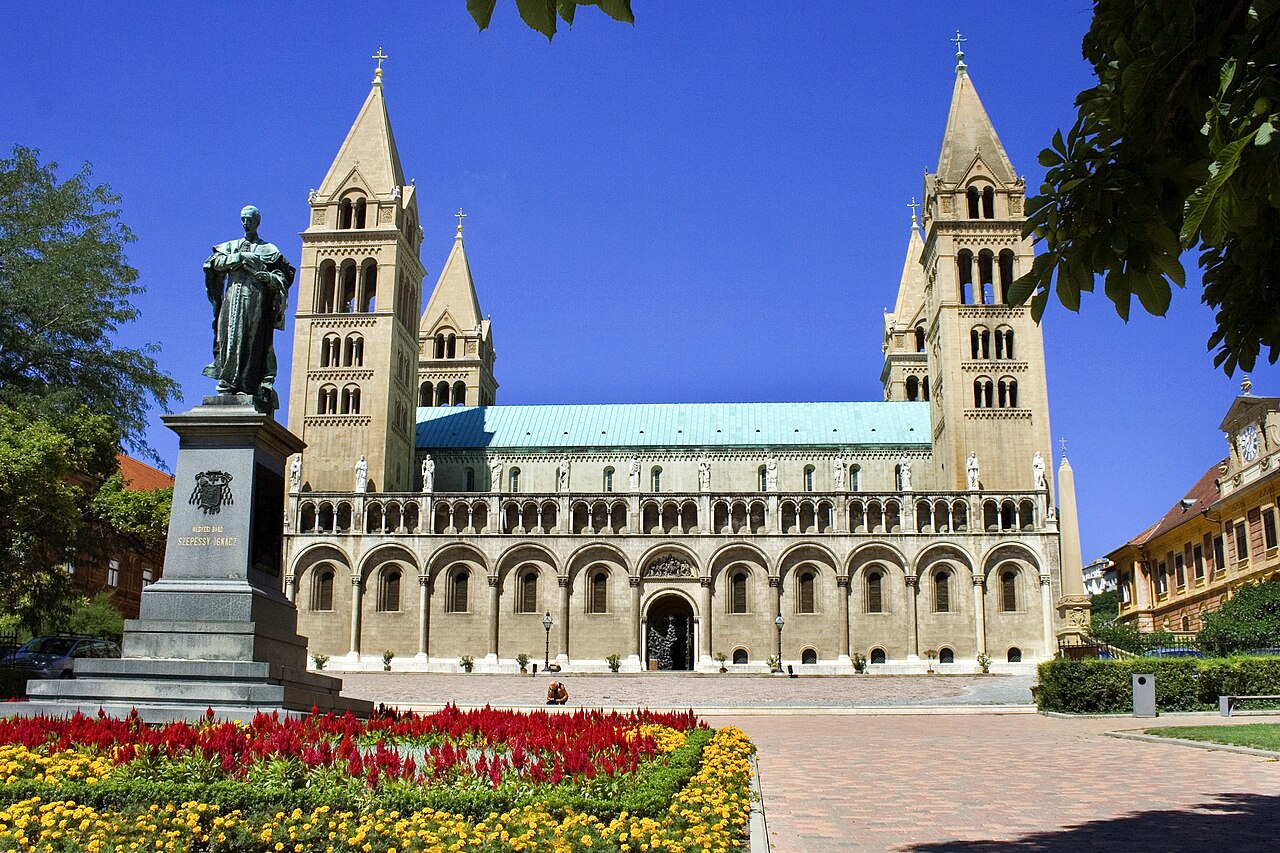 Die Kathedrale St. Peter und Paul steht mit ihren Türmen am Domplatz von Pécs in Südungarn.
Photo: Takkk / Wikimedia Commons, CC BY-SA 3.0
Die Kathedrale St. Peter und Paul steht mit ihren Türmen am Domplatz von Pécs in Südungarn.
Photo: Takkk / Wikimedia Commons, CC BY-SA 3.0
Pécs at a glance
- Pécs lies in southern Hungary at the foot of the wooded Mecsek Mountains.
- Cathedral Square, home to St. Peter and Paul Cathedral, is one of the defining places in the city center.
- The Early Christian Necropolis of Pécs is protected as part of a UNESCO World Heritage Site.
- Baroque cityscapes, Turkish architecture and contemporary urban life come together in Széchenyi Square.
- The Zsolnay Cultural Quarter adds art, design, exhibitions and venues to the historic city center.
- Check current opening hours and tour options before visiting museums, churches, the necropolis and the cultural quarter.
Cathedral Square and the historic city center
Cathedral Square is a good starting point for a first walking tour. St. Peter and Paul Cathedral dominates the square with its four towers and combines earlier architectural history with an extensive 19th-century renovation. Access may be affected by interior visits, services and events; check the latest information with the city tourist office or the relevant institution before your visit. The photo of the cathedral is by Takkk on Wikimedia Commons and is licensed under CC BY-SA 3.0.
Paths from Cathedral Square lead to the rest of the city center. Széchenyi Square, lined with imposing buildings, makes a useful next landmark. Particularly striking is the former mosque of Pasha Qasim, now used as a Catholic church. This layering of different eras makes Pécs an interesting city for a walking tour: a short stroll can take in Roman traces, medieval religious history and Ottoman forms. Other examples of cities, historic centers and architecture provide a useful comparison with other destinations.
Early Christian Necropolis and Roman traces
Beneath the modern city lie Early Christian burial chambers and burial grounds dating back to the Roman city of Sopianae. The UNESCO page on the Early Christian Necropolis of Pécs describes its significance and protected status. The necropolis is not an ordinary museum: its rooms, wall paintings, archaeological remains and underground setting call for a dedicated amount of time. Check opening hours, tours and access conditions in advance.
The archaeological sites pair well with Cathedral Square, but should not be squeezed between two tightly scheduled activities. During busy periods or a guided tour, a visit may take longer than a quick look from outside. History enthusiasts can round out their walk with other museums and exhibitions and then decide whether there is still time for the Zsolnay Quarter or the Mecsek Mountains.
Zsolnay Cultural Quarter and modern Pécs
The Zsolnay Cultural Quarter celebrates the ceramics and industrial heritage of the Zsolnay family and is home to exhibitions, venues and other cultural offerings. It adds a different kind of urban space to the old town, with a focus on design, craft and contemporary use. The official Zsolnay Quarter website provides information about current exhibitions, programs, tickets and opening hours. For planning your day, this information is more useful than older travel accounts.
The quarter is particularly well suited to a dedicated block of time. Those visiting the necropolis and Cathedral Square in the morning can spend the afternoon in the Zsolnay Quarter. Families and travelers with varied interests can enjoy its range of offerings, but should check in advance which areas will actually be open on their planned visit date. Taking a break between the historic interiors and the cultural quarter usually makes for a more enjoyable outing.
Mecsek Mountains and viewpoints
The Mecsek Mountains begin just north of Pécs. Woodlands, trails and viewpoints offer a chance to enjoy nature without leaving the city far behind. For a short outing, an easily accessible viewpoint may be enough; longer hikes require appropriate footwear, water, time to account for the weather and a realistic return time. Choose a route to suit the season, your fitness level and current trail conditions.
The Mecsek is not a substitute for the city center, but a worthwhile addition. In good weather, alternating between culture and scenery can add variety to your stay. In the rain or if mobility is limited, museums and central squares are more reliable options. Travelers wishing to explore the wider region can combine Pécs with a trip through Transdanubia or to Lake Balaton.
Getting there and how long to stay
Pécs can be reached from various directions by train, long-distance bus and car. The best connection depends on your starting point, how much flexibility you want and what excursions you have planned. Before setting off, check timetables, roadworks, parking options and the final leg to your accommodation. The information on getting there and local transport can help you prepare; consult the relevant transport operator for the latest details.
One full day is enough for a focused walk around the city center, including Cathedral Square, Széchenyi Square and one chosen museum. Two days allow more time to enjoy the necropolis, Zsolnay Quarter and Mecsek. Three nights make sense if you plan several indoor visits, a longer nature excursion or a trip to the surrounding area. Pécs can be visited on its own or included in a longer trip around Hungary with Budapest and other cities.
Plan your Pécs trip around your interests
Culture lovers are best off starting at Cathedral Square and setting aside a dedicated block of time for the necropolis. Architecture enthusiasts can link Széchenyi Square, churches and historic streets with the Zsolnay Quarter. Visitors with children can mix indoor visits with a short time outdoors and check for age-appropriate activities. For hikers, the Mecsek is the main draw, while museums and cultural centers become more important in bad weather. This way, you can create an itinerary that does not depend on a single attraction.
For wellness and relaxation, Pécs can also be compared with Hungary's thermal baths and spa towns. However, the city itself is best planned as a cultural and nature destination. Check for current events, admission requirements and seasonal changes shortly before your trip.
FAQ
What is Pécs known for?
Pécs is known for its historic city center, cathedral, Early Christian Necropolis, Turkish buildings, museums and Zsolnay Cultural Quarter.
How many days should you plan for Pécs?
One day is enough for an overview. Two days are better if you want to visit the necropolis, cultural quarter and Mecsek without feeling rushed.
What makes the Necropolis of Pécs special?
The Early Christian burial chambers and burial grounds lie beneath the modern city and are part of a UNESCO World Heritage Site. Check access and tour availability in advance.
What does the Zsolnay Cultural Quarter offer?
The quarter brings together ceramics history, exhibitions, events and other cultural offerings. Current programs and opening hours are listed on the official website.
Can you travel from Pécs to the Mecsek Mountains?
Yes, the Mecsek lies directly north of the city. Take the weather, your fitness level, footwear and return time into account when planning walks and visits to viewpoints.

