
Krka National Park in Dalmatia: Waterfalls and Visiting
Krka National Park lies in the Dalmatian hinterland and protects a varied river landscape of waterfalls, lakes, gorges and traces of culture. Many travellers visit the park on a day trip from Šibenik, Split, Zadar or a coastal resort. Skradinski buk is its most famous setting; for practical planning, however, the entrance, visitor numbers, trail length and current park rules are also important.
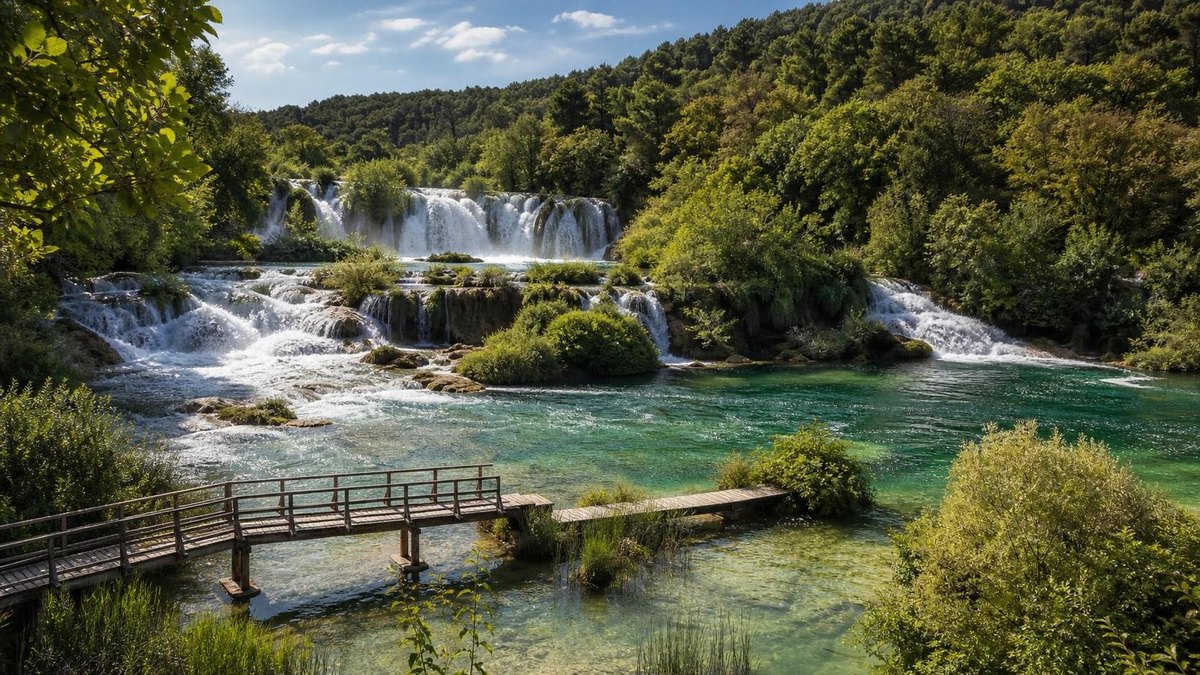 Wasserfälle, türkisfarbener Fluss und Holzsteg in einer bewaldeten Landschaft; KI-generiertes Symbolbild für den Nationalpark Krka.
Photo: KI-generiert für Max-TD
Wasserfälle, türkisfarbener Fluss und Holzsteg in einer bewaldeten Landschaft; KI-generiertes Symbolbild für den Nationalpark Krka.
Photo: KI-generiert für Max-TD
Quick facts: Krka National Park
- Krka National Park protects a river and karst landscape in Dalmatia.
- Skradinski buk is the best-known waterfall area and only one part of the large protected area.
- Entrances, trails, boats, shuttle services and visitor rules can vary by season.
- Swimming is not automatically allowed everywhere; current park notices take precedence.
- Šibenik, Zadar, Split and other Dalmatian destinations should be planned as separate legs of a trip.
- Check tickets, opening times, weather, sun protection, accessibility and the last return service before your visit.
Skradinski buk and the river landscape
Skradinski buk is especially well known for its cascades, wooden walkways and viewpoints. The loop trail gives visitors a good impression of the power of the water and the tufa landscape typical of the Krka. The popular paths can get crowded in high season. Starting early, bringing enough drinking water and allowing realistic walking times make the visit more enjoyable.
The national park is more than just a photo opportunity. Quieter stretches, plants, riverbanks and the sounds of the river are also part of the experience. Visitors should stay on marked paths and observe barriers. Swimming is not permitted everywhere; the park’s current rules take precedence over older travel accounts or assumptions made on the spot.
Other entrances, boats and culture
Depending on how much time you have, your visit can include other areas of the park, viewpoints or a boat trip. Islands, monasteries and historic fortifications are also part of the Krka area. Not every service is available every day or in every season. If you want to combine several areas, first check travel times between entrances and the last return service.
A good base is Dalmatia, with its coastal towns and islands. Split and Zadar lie in different directions, so plan a visit to Krka based on the actual route, not just the straight-line distance. For a trip through Croatia, the park can be a nature stop between the coast and the hinterland; those who prefer longer routes can find additional advice on equipment and planning realistic stages in hiking and trekking.
Getting there and choosing when to visit
Plan the journey by checking your transport, parking, entrance and, where relevant, shuttle or boat services separately. In high season, traffic and waiting times can add considerably to your schedule. If you only have a few hours, choose one entrance and a short loop. A full day is more realistic for an in-depth visit covering several areas.
Comfortable, non-slip shoes are useful on walkways and uneven ground. In hot weather, pack water, a hat and sun protection; wooden paths can become slippery in the rain. Families should plan breaks and check which sections are suitable for pushchairs or visitors with limited mobility. General travel planning and a travel checklist can help you prepare, but they do not replace the latest information from the park.
Krka National Park is a good fit for travellers looking to combine a river landscape, short nature walks and an easy-to-plan day trip. If you expect complete tranquillity, spontaneous swimming everywhere or an empty park in high season, take the park’s conservation rules and visitor numbers into account. Respecting nature, paths and other visitors is part of a successful visit.
For photography, consider the light and time of day, not just the best-known viewpoint. After a rain shower, walkways and rocks can be slippery, while strong sun can make exposed sections of trail tiring. A small daypack, a water break and a meeting point for the return journey help prevent minor issues from spoiling the trip. With children or older companions, the longest sections need not automatically be part of the plan.
Skradinski buk, entrances and park trails
Krka National Park cannot be summed up by a single waterfall. The official visitor information for Krka National Park is the authoritative source for entrances, tickets, trails, boats and current conservation rules. To plan the day, first decide which access point and trail length suit the time available and your mobility.
The connection with Šibenik is close, but depending on the season and traffic, it still needs its own time slot. Dalmatia, Zadar, Split and Croatia can help guide your route choice; the park should not be squeezed in between several long drives along the coast.
Before setting out, check hiking and trekking, getting there and transport, travel preparation and the specific park information. Water, a hat, sturdy shoes and extra time for possible waits are useful in hot weather. Plan swimming, photography and drone use only in accordance with the current rules.
FAQ about Krka National Park
What is Krka National Park best known for?
Skradinski buk is the best-known area. The river, waterfalls, trails and other sites of cultural and historical interest are part of a larger protected area with several visitor options.
How much time should I allow for Krka?
A half or full day may be enough, depending on the entrance, route, boat trip and season. Remember to allow extra time for traffic, waiting and the return journey.
Can you swim in the park?
Do not assume that swimming is permitted everywhere. Check the national park’s current information for designated areas, water conditions and conservation rules.
Which entrance is best for a short visit?
That depends on the area you want to see, your route and the time available. Compare tickets, opening times, shuttle or boat connections and trail lengths in advance.
