
Novigrad in Istria: Old Town, Harbor and Beach Holiday
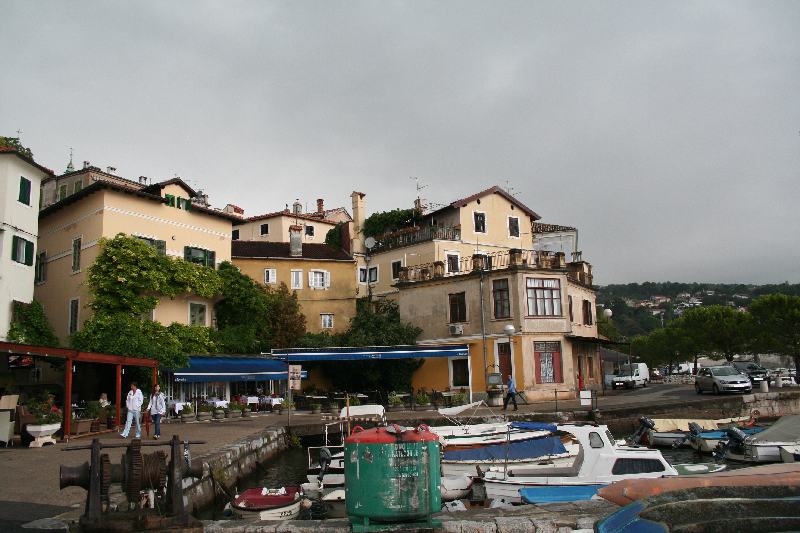 Kleiner Hafen mit Booten und Häusern am Ufer
Photo: Dago
Novigrad at a glance
- Remains of the medieval town walls and Renaissance round towers have been preserved.
- The Lapidarium displays stone fragments dating from the 1st to the 18th century; a late-8th-century ciborium of Mauritius is a highlight.
- The Church of St. Pelagius and St. Maximus dates in origin to the 5th–6th centuries.
- City Beach is in the center beside the town walls; Rivarela adjoins the old town and promenade.
- Karpinjan lies about one kilometer north, is around 500 meters long and is mostly pebbly.
Old town, fortifications and Lapidarium
Novigrad’s historic peninsula was surrounded by a town wall. After Venice took control in the 13th century, the fortifications were expanded on older foundations. Today, sections of the wall and Renaissance round towers remain. A walk around the old town brings this history of construction together with its lanes and harborfront.
The Lapidarium adds architectural and ecclesiastical history to a city walk. Its collection includes architectural elements and liturgical objects from the 1st to the 18th century, many from the nearby Church of St. Pelagius and St. Maximus. A highlight is the late-8th-century ciborium of Mauritius, a rare example of early Carolingian art in the region.
The Church of St. Pelagius and St. Maximus dates in origin to the 5th and 6th centuries. The church, Lapidarium and town wall are all in the historic center and can be visited on one walk. City Beach and Rivarela are within walking distance of the center.
City Beach, Rivarela and Karpinjan
City Beach is right in the center, immediately beside the old town walls. Paved areas provide space for sunbathing, with lanes, restaurants and bars nearby. It’s a convenient spot for a swim between exploring the old town and heading out to dinner.
Rivarela stretches alongside the historic center and its promenade. Stone and concrete platforms, stepped water access and handrails in the water characterize the beach. Here, the beach, old town and local life are all close together. The fortified waterfront is quite different from a natural pebble cove.
Karpinjan lies about one kilometer north of the center, along a cove roughly 500 meters long. The beach is mostly pebbly, with a small section offering rocky access to the water. A lit walking and cycling path connects the area to town. Karpinjan has a longer stretch of beach and some pine-tree shade, while City Beach and Rivarela are closer to sights and restaurants.
Where to stay and how to plan your days
For easy walks to the Lapidarium, church, town wall and dinner, choose accommodation in or near the old town. If you plan to swim at Karpinjan often, consider staying north of the center; a walk along the waterfront leads there from the historic core. Choose accommodation in Croatia based on its distance from the old town, swimming access and bus connections. Bring water shoes and sun protection for a beach day. Rivarela has stepped access and handrails, while Karpinjan is a longer pebble cove set a little farther from the center.
Explore Novigrad and Istria
Novigrad is on the west coast of Istria. For more coastal towns, consider Poreč and Umag as separate stops. If you continue south, you can also plan separate day trips to Rovinj and Pula.
Motovun and Grožnjan are in Istria’s hill country and offer a different focus from the beaches. A walk around Motovun can be combined with exploring the hilly inland area; Grožnjan offers another historic town center. For longer stays, travelers can plan separate day trips to Motovun and Grožnjan.
The choice of additional coastal stops depends on the length of your stay and your route: Poreč and Umag are alternatives on the west coast; Medulin is farther south. If you’re visiting several places in Croatia, you can keep Novigrad as your base and choose day trips according to distance.
When planning your days, take driving times, parking and the return to your accommodation into account. Getting there and getting around and trip planning are part of planning your route. Preparing for your trip also means considering money and payments and staying safe while traveling.
If you’re combining the old town and the coast, you can make a trip to Istria part of a longer itinerary; a separate day is still a good idea for another visit to Rovinj or Pula.
Frequently asked questions about Novigrad
How do Rivarela and Karpinjan differ?
Rivarela is right beside the old town and promenade, with stone platforms and stepped access to the water with handrails. Karpinjan lies about one kilometer north and has a roughly 500-meter-long cove that is mostly pebbly.
Until when was the parish church a cathedral?
St. Pelagius and St. Maximus was a cathedral until 1831. Its origins date back to the 5th and 6th centuries.
What can you see at the Lapidarium?
The collection includes architectural and ecclesiastical fragments dating from the 1st to the 18th century. A notable exhibit is the late-8th-century ciborium of Mauritius.
How can you combine a day of culture with swimming?
The church, Lapidarium and town wall are in the historic center. City Beach and Rivarela are right nearby; Karpinjan is a separate walk about one kilometer to the north.
