
Lake Ladoga: Islands, Shoreline Towns and Nature in Karelia
Lake Ladoga is one of the major lakes of northwestern Russia, situated between Karelia, river routes and St. Petersburg. For a well-planned trip, first decide whether Lake Ladoga is meant to be a destination in its own right, a stop on a longer route or the main focus of the trip. In Russia and Central Asia in particular, distances, season, connections and local conditions strongly affect how much it is realistic to do on site.
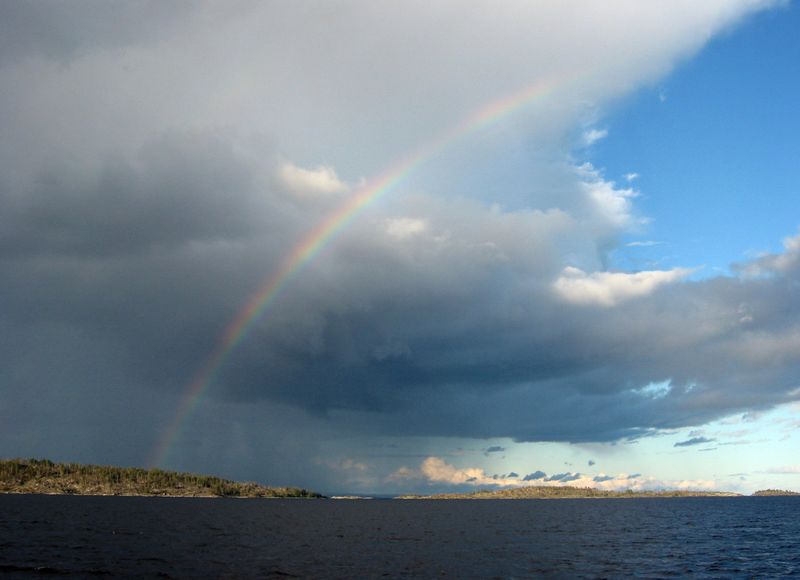 Regenbogen über den Ladogasee.
Photo: Dims (public Domain) / via wikipedia
Regenbogen über den Ladogasee.
Photo: Dims (public Domain) / via wikipedia
Key facts: Lake Ladoga
- Lake Ladoga lies between Karelia and the St. Petersburg area and is the largest lake in Europe.
- Shoreline towns, islands and skerry landscapes are spread over a wide area and cannot be reached by one short route.
- Valaam is a destination in its own right, with a separate journey and access conditions that should be checked before travel.
- Boat trips and shore routes depend on the weather, season, water levels and local services.
- Petrozavodsk is on Lake Onega and works as a separate stop in Karelia, not as a place right by Lake Ladoga.
- Transport, accommodation, weather, boat connections and safety conditions should be checked in advance using current information.
Overview and character of the trip
Vast expanses of water, islands, changeable weather, monasteries, lakeside towns and Karelian landscapes define the trip. What matters is not fitting in as many stops as possible, but choosing a route that suits your pace. If you are continuing by train, plane, bus or boat, allow plenty of time for arrivals, transfers and delays.
Lake Ladoga also illustrates how varied travel in Eastern Europe and Central Asia can be. Some places make good bases for museums and walks; others are defined by waterways, landscapes, religious sites or long distances. A relaxed itinerary makes these differences easier to appreciate.
What matters on site
Shoreline towns, islands, connections to Valaam, shipping routes, natural shorelines and viewpoints give a visit its structure. For a first visit, a clear shortlist is usually enough: one central area to get your bearings, one or two main interests, and enough time for getting around, breaks and changes in the weather. For nature and water-based destinations, check return options, the season and daylight hours particularly carefully.
Many older travel guides mention sights without providing up-to-date context. Before travelling, check opening hours, transport connections, ticket rules, the security situation and local guidance again. This is especially important in regions with long winters, border areas, limited connections or strongly seasonal services. For Lake Ladoga, departure points, transfers and the return journey should therefore be planned around the specific day’s itinerary.
Routes and combinations
The lake pairs well with Karelia, St. Petersburg, Petrozavodsk and other destinations in northwestern Russia. Choose connections that make sense both thematically and geographically: a city and its surroundings, a river and a port, a rail journey with a stop along the way, mountains and a capital, or cultural history and everyday life today. This keeps the trip coherent instead of turning it into a collection of far-flung names.
For more context, see related pages such as Karelia Valaam St. Petersburg. They provide the broader picture; for your own itinerary, the main considerations at each destination are how to get there, how long to stay and local conditions. If you are linking several stops, choose their order based on transport, length of stay and season.
Practical tips
Allow plenty of time for longer journeys. An extra evening at your arrival point may be more useful than another day trip. When travelling by train or plane, think about luggage, transfer times and where your accommodation is located well in advance. For river, lake and mountain destinations, the weather and season often matter more than the distance on the map. For Lake Ladoga, weigh the location of your accommodation against the main day trips and realistic breaks.
If you plan to take photographs, visit museums or enter religious sites, respect local rules. Clothing, conduct and permission to take photographs may be important in churches, monasteries, mosques and Buddhist sites. In markets, railway stations and remote regions, a low-key approach is usually the best way to ensure a relaxed visit. For Lake Ladoga, departure points, transfers and the return journey should therefore be planned around the specific day’s itinerary.
Who this destination is for
This destination is particularly suited to travellers who want more than to tick off well-known capitals and are interested in understanding how landscape, transport, history, everyday life and present-day uses fit together. Travelling with these expectations means less rushing and a closer appreciation of what makes a place distinctive. For Lake Ladoga, departure points, transfers and the return journey should therefore be planned around the specific day’s itinerary.
For a short stop, a focused walk combined with a museum or viewpoint may be enough. For a dedicated visit, two or three clear priorities are better than an overpacked schedule. On very long routes, every extra stop should have a good reason, so the trip does not become a string of transfers. For Lake Ladoga, departure points, transfers and the return journey should therefore be planned around the specific day’s itinerary.
Combine Lake Ladoga with Karelia and its islands
Lake Ladoga is one of the great natural landscapes of northwestern Russia and can be combined with Karelia, St. Petersburg and island destinations. Shoreline towns, waterways, monastic islands and expansive landscapes shape its character far more than traditional city sightseeing.
Distances, the season, boat connections and weather are especially important when planning. Those who see Lake Ladoga as a natural and cultural region can choose individual destinations sensibly and avoid an itinerary that looks shorter on the map than it is on the ground.
Planning shorelines, islands and waterways
At Lake Ladoga, start by choosing the stretch of shoreline or island destination you want to visit. Valaam, smaller islands and the Karelian coastline require different approaches; do not assume that boat services, weather and return options are interchangeable just because destinations seem close together. Pack sturdy shoes and allow extra time for nature walks.
For a regional overview, Karelia, Valaam, Petrozavodsk, Kizhi, Kivach and Solovki offer different experiences of waterways, culture and nature. Russia, Nature and landscapes and Getting there and transport can help with planning your stops.
Before travelling, check Travel preparation, Travel checklist and itinerary and the current travel and safety advice for the Russian Federation. Confirm timetables, boat trips, access, weather and accommodation for your specific travel dates.
Lake Ladoga FAQ
What makes Lake Ladoga special?
Vast expanses of water, islands, shoreline towns and the Karelian landscape define the area.
How can I plan a visit to Valaam?
Plan Valaam as an island destination in its own right, checking current boat connections and access, allowing for weather delays and arranging your return journey.
Is Petrozavodsk on Lake Ladoga?
Petrozavodsk is on Lake Onega and is an important stop in Karelia in its own right. Do not confuse Lake Ladoga with Lake Onega when planning your route.
What should I check before taking a boat trip?
Before setting off, confirm the timetable, weather, water conditions, ticket, departure point, return journey and current access rules.
