
Vladivostok Avia: History and successor airline Aurora
Vladivostok Avia was an airline serving Russia’s Far East. In 2013, Aeroflot established its successor, Aurora, based on Vladivostok Avia and SAT Airlines. Aeroflot described Aurora’s mission as providing regional passenger services and supporting the social and economic development of the Far East.
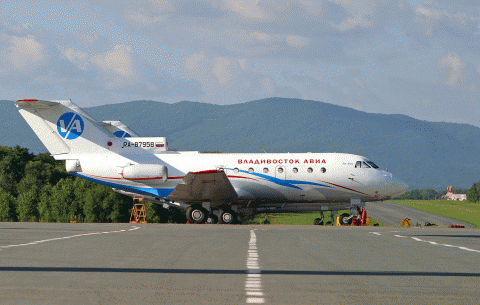 Flugzeug von Wladiwostok Avia auf einem Vorfeld vor einer Bergkulisse.
Photo: Wladiwostok Avia
Vladivostok Avia at a glance
- Vladivostok Avia was an airline serving Russia’s Far East.
- It became part of the Aeroflot Group in 2011.
- In 2013, Aeroflot established Aurora based on Vladivostok Avia and SAT Airlines.
- Aurora’s business plan focused on regional passenger services and the development of the Far East.
- Vladivostok lies on the Pacific coast; the region is characterized by long distances between cities and settlements.
From regional airline to Aurora
Vladivostok Avia developed as an airline serving a region far from the major centers of European Russia. Air connections are particularly important for many places in the Far East, where overland journeys are long. Aeroflot brought Vladivostok Avia into its group in 2011. Two years later, the group established Aurora based on Vladivostok Avia and SAT Airlines.
When introducing Aurora, Aeroflot explained the new company’s regional mission: more frequent and accessible passenger services were intended to contribute to the social and economic development of the Far East. Expanding the range of services and destinations was part of the business plan at the time. Aurora thus brought together the two Far Eastern airlines, Vladivostok Avia and SAT Airlines, under a single successor company.
The geographical setting extends from the Russian Far East to its port city of Vladivostok on the Pacific coast. The Port of Vladivostok reflects the city’s maritime location. In the regional context, Khabarovsk and Yakutia are also part of the Far East’s diverse settlement and landscape areas.
Vladivostok and the Far Eastern route
Vladivostok is the maritime and urban focal point associated with the former airline. Khabarovsk lies farther north, on the Amur River; Yakutia and Kamchatka encompass vast areas with their own climatic and geographical conditions. The Far Eastern region covers great distances, and Vladivostok is its Pacific port and urban center. The port defines its seaside setting, while Khabarovsk, Yakutia, and Kamchatka each serve as distinct regional reference points.
Aurora’s establishment brought Vladivostok Avia and SAT Airlines together in regional air transport. Russian airlines are part of the country’s national aviation market, while airports in Russia serve as arrival and departure points for connections between regions. Among regional destinations, Russia’s Far East, Vladivostok and its port are joined by Khabarovsk, Yakutia, and Kamchatka. The region’s vast scale makes travel segments and connections important parts of the journey.
The company’s history belongs to the broader context of Russian airlines and the country’s airports. For travel to the Far East today, getting there and local transport and travel preparation are part of planning routes and journey segments. The locations of destinations and the connections available determine how a trip between cities and remote regions is structured.
Travel considerations
German Visa and Mastercard cards and payment apps do not work in Russia; cash withdrawals and bank transfers are also restricted. These nationwide conditions are important when deciding whether to travel to Vladivostok.
For a stay in the port city, accommodation depends on location and itinerary. A city visit, onward travel, and airport access can be planned as separate journeys.
Frequently asked questions about Vladivostok Avia
When did Aeroflot introduce Aurora?
On November 6, 2013, Aeroflot introduced Aurora as a new company based on Vladivostok Avia and SAT Airlines.
