
Railway Stations in Saint Petersburg
The railway stations of Saint Petersburg differ in location, history, and present-day use. Moskovsky and Vitebsky stations are active departure points for different rail routes; Baltic Station serves suburban connections toward Peterhof and Oranienbaum. The former Warsaw Station has not served passenger trains since 2001. Before you travel, check which station is actually listed on your ticket.
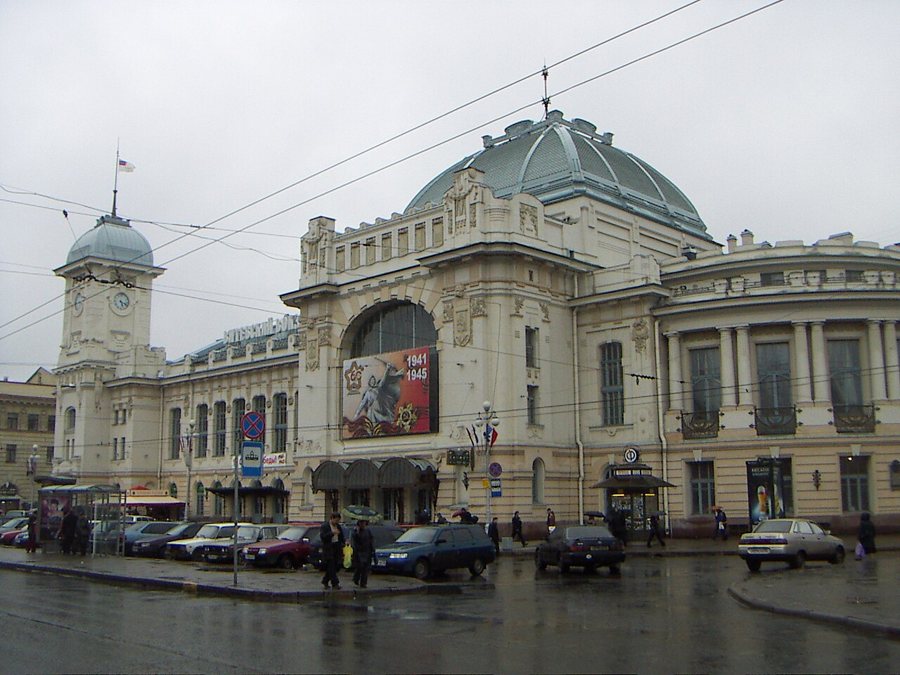 Historische Aufnahme: Witebsker Bahnhof. Foto: Sergei Barichev, gemeinfrei (PD-self); verkleinert.
Photo: Sergei Barichev
Quick facts about railway stations in Saint Petersburg
- Vitebsky Station is associated with Russia’s first railway: the line to Tsarskoye Selo began operating in 1837.
- The present-day Vitebsky Station building was constructed in the Art Nouveau style in 1904.
- The current Moskovsky Station building in Saint Petersburg was built to the same historical design as the St. Petersburg Station in Moscow.
- Baltic Station is an important departure point for suburban trips to Peterhof and Oranienbaum.
- The former Warsaw Station ceased train operations in 2001; since 2022, it has housed Vokzal 1853, an events and dining complex.
Choose a station based on your destination and route
The name “Saint Petersburg station” is not enough to identify your departure point. Suburban and long-distance trains operate from different stations. Moskovsky Station is on Nevsky Prospekt; trains to Moscow depart from here. For rail travelers, a stay in Saint Petersburg often begins at one of these separate arrival points.
Suburban electric train service toward Peterhof and Oranienbaum began at Baltic Station in 1933. Vitebsky Station developed from the first station on the line to Tsarskoye Selo, whose first train ran in 1837. When visiting the city, also consider the station’s location relative to your accommodation and your onward destination. Nevsky Prospekt is in the city center, while the stations are each located at their own transport hubs. During a stay in Saint Petersburg, city routes and transfers between stations therefore involve different parts of the city. Nevsky Prospekt is a useful landmark in the city center.
Vitebsky Station and the first railway line
The railway line from Saint Petersburg to Tsarskoye Selo opened in 1837. The first station building was a single-story wooden structure. The present-day Vitebsky building was designed by Stanislav Brzhozovsky and Sima Minash in the Art Nouveau style and completed in 1904. One distinctive feature is its elevated track layout: trains reach the platforms on the second floor.
The current station thus preserves a link to the early years of Russian railways while also showcasing a later period of architecture. For today’s departure, what matters is the station shown on your ticket and its current entrance.
Moskovsky and Baltic stations
Moskovsky Station in Saint Petersburg and St. Petersburg Station in Moscow were built to a shared design by Konstantin Thon, with the participation of Rudolf Zhelyazevich. Trains to Moscow depart from Moskovsky Station in Saint Petersburg; for your specific journey, check the station and stop listed on your ticket.
Baltic Station serves suburban connections toward the imperial residences of Peterhof and Oranienbaum. Traffic on this line grew considerably in the early 20th century; in 1933, it became the first line in what was then the Leningrad railway hub to be electrified. For a suburban trip, the destination station, departure station, and travel date are key.
The former Warsaw Station
Warsaw Station ceased passenger services in 2001, and trains were rerouted to other stations. The historic building was later converted. Since 2022, it has housed Vokzal 1853, a dining and events venue. The former station is therefore a destination for architecture and urban history, not a departure point for a current passenger train.
Nevsky Prospekt is a stop in the city center; for a meal afterward, restaurants in Saint Petersburg are located in various neighborhoods. In summer, the White Nights bring long, bright evenings. If you are planning seasonal activities in the city, you can combine the White Nights in Saint Petersburg with a later restaurant visit and plan your return to the hotel before your train departs.
Transfers, accommodation, and travel requirements
When changing stations, make sure your arrival time, luggage, and booked departure station all work together. Connections between stations vary depending on your destination; the key detail is the departure station for your next long-distance train. A transfer time allowance should account for the journey and your luggage; extra time gives you a margin to find your way. Public transport and transfers connect stations with accommodation and city destinations; when planning the journey between stations, location and the actual departure time are what matter.
For overnight stays, location relative to your booked station and city plans is key: accommodation based on your destination and location near your arrival station shortens the journey with luggage. For cross-border trips, passports and personal travel documents and entry requirements depend on your destination and transit route; the same applies to documents required for crossing the border and entry requirements for international train journeys. For getting around the city, offline maps and an offline map available for the return journey can provide your connecting address and route even without mobile service. German Visa and Mastercard cards and payment apps cannot be used in Russia; cash withdrawals with German cards and transfers to Russia are also not possible. The information about cards, cash, and payment options should be understood in light of these conditions. A longer stay can be combined with other destinations in Russia.
Frequently asked questions about railway stations in Saint Petersburg
Which station is associated with the history of Russia’s first railway?
Vitebsky Station dates back to the line to Tsarskoye Selo, which opened in 1837. Its present-day station building was constructed in 1904.
Can you catch a train from the former Warsaw Station?
No. Passenger services there ended in 2001. The building now houses Vokzal 1853, an events and dining complex.
Where is the former Warsaw Station located?
The historic building is at 118 Obvodny Canal; passenger services at the former Warsaw Station ended in 2001.

