
Prepare for safety on nature and outdoor trips
Nature and outdoor activities are safer and more enjoyable when the route, weather, equipment and your experience are a good match. A short trail can become challenging in wet, hot, snowy or low-visibility conditions. Before setting out, take an honest look at the plan: How much time do you have? How safe is the return route? Can everyone in the group manage the trail in the expected conditions?
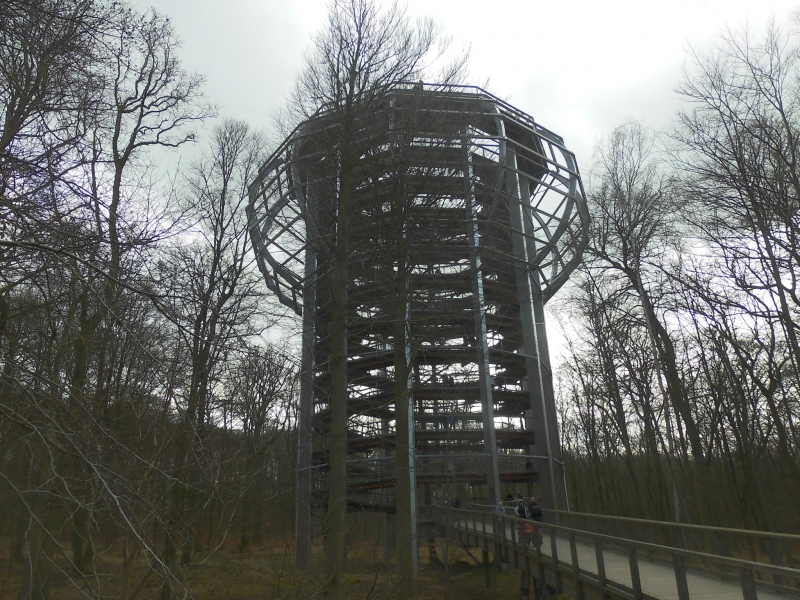 Holzturm eines Baumwipfelpfads mit Zugangssteg in einem laublosen Wald.
Photo: Bernd Hermann
Holzturm eines Baumwipfelpfads mit Zugangssteg in einem laublosen Wald.
Photo: Bernd Hermann
Key facts: Safety on nature and outdoor trips
- Choose your route and activity based on experience, fitness, time of day and weather conditions.
- Save the map, destination address and return route for offline use, and share the key stages with someone you trust.
- Suitable footwear and clothing, water, protection from sun or cold, and a charged phone are essential.
- Before setting out, check for trail closures, local rules and the realistic total time, including the return trip.
- Stick to suitable trails and turn back in good time if conditions or your energy levels are no longer right.
- In an immediate emergency, make sure your location can be found, give clear information and follow local emergency instructions.
Choose a route and difficulty that suit you
Don’t start with the longest or most spectacular route; start with the group’s actual abilities. Check the distance, elevation gain, terrain, exposed sections, steep slopes and whether there are ways to shorten the route. Children, older companions and people with little experience need a different plan from a well-practised sports group. Make sure the return trip also fits into the time available.
The basics of staying safe while out and about can help you build attentiveness, a time buffer and reachable contacts into your preparations. For specific routes and nature destinations, the information on Neringa, the Plitvice Lakes and the Danube Delta can serve as examples. Always follow the latest local information and the rules of the area in question.
Weather, daylight and the return trip
Check the weather shortly before setting out, and bear in mind that conditions at higher elevations, on the coast or in the forest may feel different from those at your starting point. Rain makes trails slippery, heat increases the need for water, and fog makes navigation harder. Set a firm turnaround time so the group doesn’t get caught out after dark. A route that seems easy in dry weather may require much more care after the weather changes.
Check with the relevant local authority for current notices about closures, construction work, wildfire risk or protected-area rules. Save your starting point and return journey in offline maps and saved addresses. Preparing your phone, data and internet access provides an additional backup, but does not replace offline resources.
Pack thoughtfully, but don’t leave out the essentials
Your basic equipment should suit the route and activity: sturdy footwear, weather-appropriate clothing, drinking water, sun protection or an extra layer for warmth, a small first-aid kit and a charged phone. For longer or more remote routes, a power bank, headlamp, emergency blanket and suitable navigation aid may be useful. Only bring equipment the group knows how to use safely.
Share essential items among several people so that everything isn’t lost if one backpack goes missing. Keep a copy of important information and an emergency contact somewhere separate from your main luggage. Advice on protecting valuables and documents also applies to day trips. For a longer journey to the starting point, offline travel information with the address, meeting point and return journey can be helpful.
Stay in touch as a group
Before setting out, agree on a meeting point, a latest return time and someone who will know your route and expected duration. Stick together in areas with poor visibility and at trail junctions. Anyone walking ahead should wait at agreed points; no one should continue alone out of frustration or because of time pressure.
If someone falls behind, gets injured or loses their bearings, stop somewhere safe and easy to find, then agree on what to do next. Preparing to communicate when things go wrong can help you briefly explain your location, the situation and what assistance you need. In an immediate emergency, follow local emergency guidance; within the European Union, 112 is the single emergency number.
Take care on trails and in protected areas
Stay on marked trails that are suitable for your activity, observe closures and show consideration for other people, wildlife and the landscape. Protected areas may have additional rules on taking shortcuts, lighting fires, flying drones, bringing dogs, swimming or staying overnight. These rules are more than formalities: they protect sensitive areas and help prevent situations where assistance may be difficult to reach.
Don’t overestimate your fitness or navigation skills. If trail markers disappear, the weather turns or your time buffer gets smaller, turning back is a sensible decision. Careful planning for routes and transport also helps you get from your vehicle, the train station or your transfer to the starting point of the trip. Have a Plan B with a time buffer and a contact ready in case of bad weather.
Frequently asked questions
What should I check before a nature trip?
The route, duration, weather, return journey, trail closures, your own experience, equipment and the rules of the area. Also plan a turnaround time and make sure someone can be reached.
When should I turn back?
If the weather, trail conditions, daylight or your energy levels are no longer right for the planned route. Turning back in good time prevents a minor concern from becoming a difficult problem.
What should I pack?
Suitable footwear and clothing, water, protection from sun or cold, a charged phone, a navigation aid and, depending on the route, a small first-aid kit.
How should I let others know about the trip?
Share your starting point, destination, expected return time and any major changes with someone you trust. If your plans change, check in as soon as you have a safe connection again.
