
Prepare to communicate when things go wrong
When a booking cannot be found, a connection is cancelled, or important information is missing, communication needs to be quick and clear. Long sentences aren’t necessary. What matters is giving a clear location, describing the specific problem, providing the relevant number, and asking what solution is possible next. If you prepare these details in advance, you can show them, read them aloud, or pass them on to someone who can help.
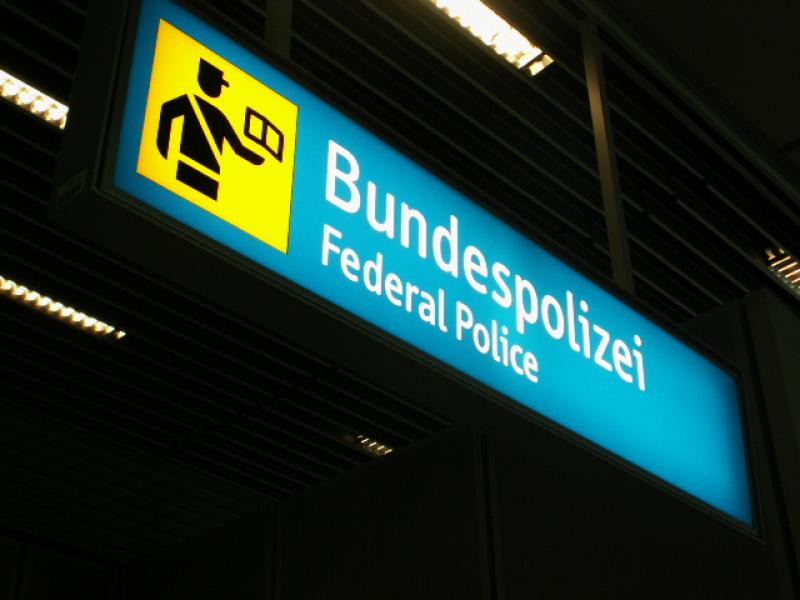 Blaues Hinweisschild der Bundespolizei mit gelbem Behördenzeichen im Flughafen.
Photo: Voyagemedia - RRinnau
Blaues Hinweisschild der Bundespolizei mit gelbem Behördenzeichen im Flughafen.
Photo: Voyagemedia - RRinnau
Quick facts: Communicating when things go wrong
- Start by describing the location, time, and specific problem.
- Keep your name, booking number, ticket, and phone number handy.
- Short sentences, numbers, and written information are often easier to understand.
- Save a note with your most important contacts and backup options.
- Check translation tools before your trip and download them for offline use.
- In an emergency, use the local emergency number; in the EU, 112 is the single emergency number.
Explain the problem with just a few details
Start with a simple sequence: Where am I, what happened, when did it happen, and what help do I need? If you have missed a connection, also give your ticket number, original destination, and preferred onward journey. The information on getting there and transport can help you organize the key details about your station, terminal, transfer, or vehicle.
For accommodation, the name, address, reservation number, and arrival date are particularly useful. Keep these details in your digitally backed-up travel documents and on paper as well. If a document is missing, passports and personal documents can make it easier to find a replacement or the right office to contact.
Show, rather than explain at length
A prepared card with your name, address, and phone number can be more helpful than a complicated explanation. Write the key details in the local writing system and in a readable transliteration. The information on other writing systems and place names can help you keep these details accessible and understandable without an internet connection.
For everyday situations, short phrases are often enough: I need help, please speak slowly, please write it down, where is the ticket office, my train has been cancelled, or I have this booking. Write down numbers, times, and names as well. The essential words for everyday situations can be a useful starting point. If you’re dealing with a different writing system, also save original names and place names.
If a connection or booking is cancelled
If something changes, note the new departure time, platform, or terminal straight away. Don’t just ask whether a service has been cancelled; also ask which connection you can take next and whether your ticket is still valid. On long-distance journeys, long-distance coaches and ferries often use different terminals or departure points. For the first leg at your destination, local transfers and public transport are important connection details to have.
Keep some money in reserve in case you need to pay for an extra night, a transfer, or a new ticket. Keeping your card, cash, and a second payment option separate means that one problem won’t block every way you can pay. Reserves, contacts, and a Plan B links this backup fund to someone you can reach for help.
Getting help if something is lost, you become ill, or you’re in danger
If something is lost or you become ill, don’t try to explain everything at once. First say what is missing or what symptoms you have, and give your current location. For a medical problem, include the medication name, any allergies, and an emergency contact in your prepared note, provided the information is safe to share and up to date. Staying safe while travelling provides the framework for preparing this information.
If you’re in immediate danger, call the local emergency number and give your location, describe the situation, and provide a number where you can be reached. For travel within the European Union, 112 is officially designated as the single emergency number; outside the EU, check the local number in advance. Don’t keep important documents and contact details on just one device. That way, you can still ask for help if your device is lost or its battery runs out.
Before departure, practise a short example phrase and check that the key details are legible. A calm, organized presentation makes it easier for others to ask follow-up questions and helps prevent mix-ups with a number, name, or place.
Frequently asked questions
What information do I need if a connection is cancelled?
The ticket number, original destination, current station or terminal, scheduled time, and the onward journey you want are usually the most important details.
What can I do if I don’t speak the language well?
Have short sentences, names, addresses, and numbers written down. An offline translation can make it easier to show someone what you need.
When should I call emergency services?
If you’re in immediate danger, there has been a serious accident, or there is an urgent medical situation. Give your location, describe the problem, and provide a number where you can be reached as clearly as possible.
How should I store emergency information?
Save it on two devices and on paper as well. Share your most important contact’s details with someone travelling with you.
