
Etropole
Accommodation in Etropole
Etropole offers a range of natural and cultural destinations to include in your travel plans: the tiered Varovitets Waterfall, protected rock complexes, marked trails, a History Museum and historic buildings. Which places you include depends on whether you mainly want to explore landscapes, hiking trails or history.
Etropole at a glance
- Varovitets Waterfall drops about 20 metres over several terraces into the Malak Iskar riverbed and is designated a protected natural landmark.
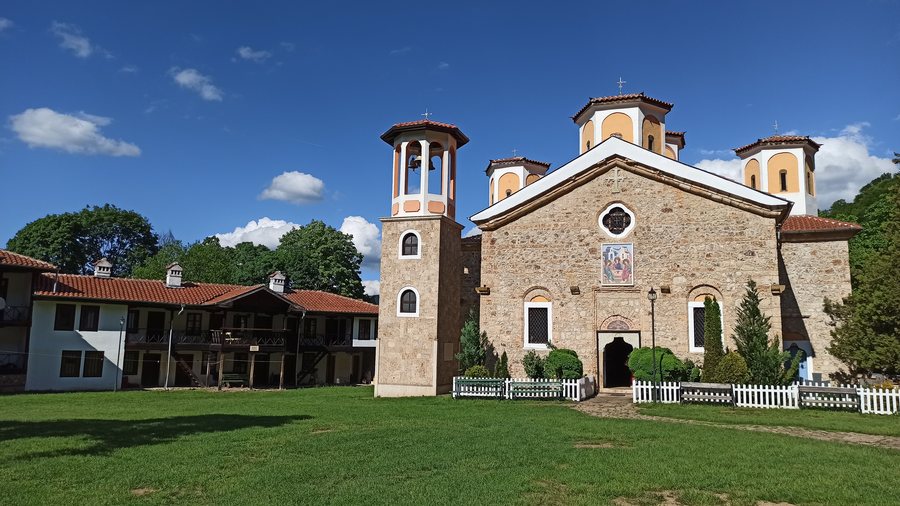
- The Holy Trinity Monastery lies 5 km east of the city of Etropole, on the northern slopes of the Balkan Mountains peak Cherni Vrah.
- The municipality publishes hiking trails with GPS coordinates available for download.
- A bus route between Sofia and Etropole is included in the regional transport plan.
What natural sites and trails are there?
Varovitets combines a distinctive landscape feature with a protected natural site: the water cascades down several terraces into the Malak Iskar. It is about 20 metres high. For travellers planning to visit natural sites, it offers a different kind of destination from the wooded rock complexes of Chertigrad Fortress or the Orlov Kamak–Chervenata Stena rock complex.
Chertigrad is a protected natural landmark consisting of wooded rocks inhabited by rare and endangered mammals and birds of prey. From Yamna, the marked “In the Footsteps of Benkovski” trail leads to the fortress in about two hours. Benkovska Cave can also be reached from Yamna via this marked trail; it is designated both a historical site and a protected natural landmark. These two destinations are therefore especially appealing to travellers who want to combine marked trails with natural and historical sites.
Orlov Kamak–Chervenata Stena is also a protected natural landmark. The rock complex is inhabited by numerous rare and endangered birds of prey. The Kuklite rock formations are another natural phenomenon. Both these formations and Orlov Kamak–Chervenata Stena can be reached via the paved road from Lopyan towards Yamna. The municipality provides GPS coordinates for the trails, available for download.
What does Etropole offer culture enthusiasts?
The History Museum in Etropole preserves and presents artefacts, documents and photographs relating to the municipality’s cultural and historical heritage. Its exhibition was completely renovated in 1992 and comprises 10 halls with more than 1,200 cultural artefacts. The museum also offers five themed educational programmes with 16 subtopics, museum lessons, role-playing activities, workshops and studios.
On the second floor of the Arnaudova House, a museum exhibition presents the furnishings of a home in Etropole during the Bulgarian National Revival. To visit the house, contact the History Museum. The Church of the Archangel Michael also offers a tangible connection to local cultural history: it was built in 1837 by the master craftsmen Hristo from Ohrid and Hristo from Etropole. Its openwork carved walnut iconostasis was later coated with gold bronze. The royal doors and bishop’s throne are considered examples of Bulgarian art from the National Revival.
The Holy Trinity Monastery was a scriptorium in the 16th and 17th centuries, where liturgical and biblical books were copied. In 1964, it was designated a cultural monument of architectural, historical and artistic significance. The Etropole Clock Tower was built in 1710 by master craftsman Todor; in 1821, it was fitted with a clock mechanism made by master craftsman Dido. The tower is also designated an architectural cultural monument.
Which dates and travel options should you plan for?
The Peene na Prastenite custom takes place every year on 13 and 14 January in Etropole. On 13 January, it includes the “Melting of the Rings” ritual in Zolyovets Square. Atanasovden is celebrated in the mountains on the last Sunday in January, with decorations of ivy and snowdrops, dancing and kebab skewers grilled over a fire. These events differ both in date and in the customs described.
The municipality’s regional transport plan includes a bus route between Sofia and Etropole. A municipal service connects Etropole, Brusen and Lopyan on a round trip; departures from Etropole are scheduled year-round on weekdays at 5:30 a.m. The Tourist Information Centre in Etropole provides information about the municipality’s sights and tourist attractions. For trails and destinations, you can also refer to the GPS coordinates provided by the municipality.
More destinations to compare: Gorna Malina, Botevgrad, Anton, Kostenets, Ihtiman and Dragoman.
FAQ
How long does the marked trail from Yamna to Chertigrad Fortress take?
The marked “In the Footsteps of Benkovski” trail from Yamna to Chertigrad Fortress is estimated to take about two hours.
When does Peene na Prastenite take place?
The custom takes place every year on 13 and 14 January. On 13 January, it includes the “Melting of the Rings” ritual in Zolyovets Square in Etropole.
How can you find out about sights in the municipality?
The Tourist Information Centre in Etropole provides information about the municipality’s sights and tourist attractions. To visit the Arnaudova House, contact the History Museum.
For the broader travel overview: Sofia Province / Sofia.

