
Municipality of Vrbnik
Accommodation in Municipality of Vrbnik
The Municipality of Vrbnik offers a range of options for your trip: a rocky cliff above the sea, beaches with different characteristics, marked hiking trails and a rich cultural history. When looking for accommodation, you can weigh up whether the coast, nature, wine or historic sites should be the focus of your stay.
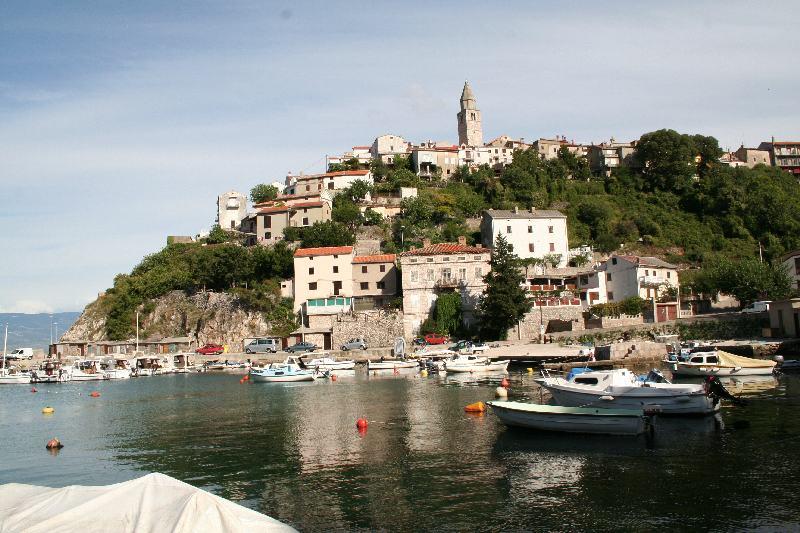
Key facts about the Municipality of Vrbnik
- Vrbnik is perched on a steep, 49-metre-high rocky cliff above the sea.
- The hiking trails form part of the marked trail network on the island of Krk.
- Sv. Marek is near Risika and six kilometres from Vrbnik.
- Vrbnička žlahtina is a white wine made from a grape variety considered indigenous to the Krk wine-growing region.
Which beaches and landscapes define the region?
The coastline offers several different types of beach. Sv. Marek is considered the only sandy beach on the island of Krk. It is near the village of Risika, six kilometres from Vrbnik, and has a car park, sanitary facilities and boat moorings. Pedal boats, sun loungers and parasols are available to rent. If you would like to combine a beach visit with a glimpse of local history, in Risika you can also visit the Church of St Jerome: it was built in 1940 on the site of an earlier church dating from 1861.
Melska is a pebble cove with a sandy seabed between the bays of Javna and Sv. Marek. It can be reached by car from Vrbnik or Sv. Marek. Potovošće is also a pebble beach with a sandy seabed; it has toilets and a car park, and parasols and sun loungers are available to rent. Zgribnica is Vrbnik’s central beach. Its facilities include showers and sanitary facilities; sun loungers, parasols and pedal boats are available to rent.
The inland area also offers a distinctive landscape: Vrbničko polje extends over 211 hectares in a depression northwest of Vrbnik. The Glavine–Mala luka protected area is accessible only on foot or by boat. This access restriction is important to bear in mind when planning a visit to the area.
What can you discover on hiking trails and through local culture?
Vrbnik’s hiking trails pass through hills and rocky landscapes dotted with dry-stone walls and the remains of small churches. They are part of the marked hiking trail network on the island of Krk. A circular route known as Trekking Route 17 runs through Vrbnik, Risika, Garica and Kampelje before returning to Vrbnik. From Garica walking paths lead to the early medieval Church of St Krševan and Gradec, considered the first Frankopan castle. Below the village, a bridge dating from the period of French rule crosses the valley of a small river.
Vrbnik has a history spanning more than 900 years and was an important Frankopan stronghold, as well as a Glagolitic and religious centre. The 30-metre-high Renaissance bell tower was built in 1527; its interior was converted into a museum of visual identity in 2000. The Vitezić family library preserves the legacy of brothers Ivan Josip and Dinko Vitezić, who came from Vrbnik. It was founded in 1898 and opened to the public in 1910. The memorial printing house of Blaž Baromić and Dragutin Parčić opened in 2003. It contains a replica of the printing presses used in the 16th century, complete with equipment.
At the “Baćin dvor” visitor centre, permanent exhibitions present the history, traditions and cultural heritage of the region. The ethnographic collection of Neda Trinajstić includes, among other things, the traditional costume of Vrbnik. The Church of St Peter in the centre of Garica was built in 1793. Together with the church in Risika and the historic sites around Garica, these offer a variety of cultural topics to explore independently.
What role do wine and local produce play?
Vrbnička žlahtina is a white wine made from a grape variety considered indigenous to the Krk wine-growing region. Wine tastings and cellar tours are offered at the Ivan Katunar Wine House in Vrbnik. If you are interested in wine as well as the coast and culture, this theme can help guide your choice of where to stay, without requiring you to choose accommodation in any particular location.
To compare other destinations in the municipality, you can also visit the pages for the Municipality of Dobrinj, the Municipality of Krk, the Municipality of Malinska-Dubašnica, the Municipality of Omišalj and the Municipality of Baška.
FAQ
How can you reach the Glavine–Mala luka protected area?
The protected area is accessible only on foot or by boat.
Which places does Trekking Route 17 include?
The circular route passes through Vrbnik, Risika, Garica and Kampelje before returning to Vrbnik.
What makes Melska distinctive?
Melska is a pebble cove with a sandy seabed between Javna and Sv. Marek. It can be reached by car from Vrbnik or Sv. Marek.
For the broader travel overview: Krk.
