
Vlkov Pod Oškobrhem: Hotels and Accommodation
Accommodation in Vlkov Pod Oškobrhem
Vlkov pod Oškobrhem has a comparatively well-preserved historic village green layout along the main road. The settlement is centered around an elongated village green. In its central section, set back from the main road, stands a chapel, a folk Baroque rural religious building from the early 19th century. The chapel and the associated plot are protected.
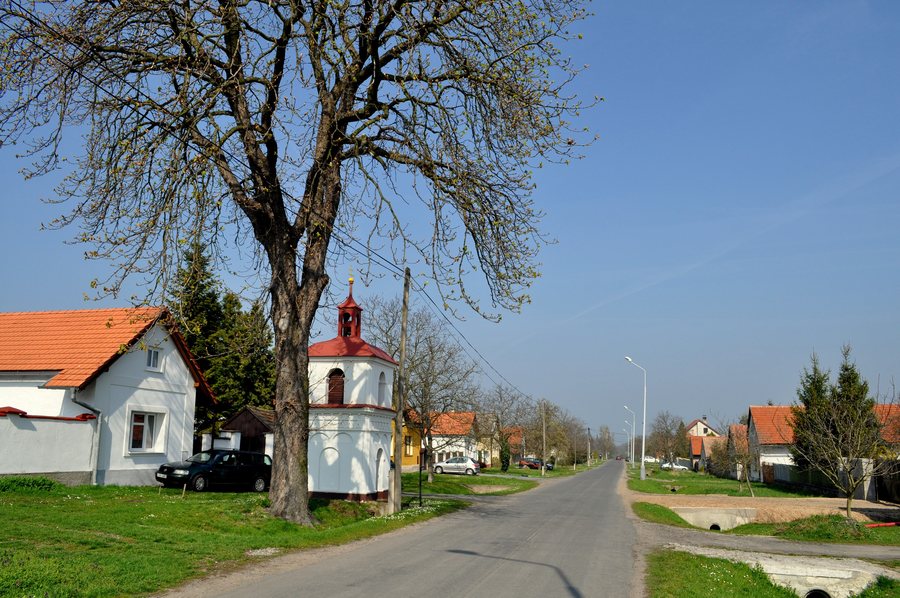 File:Vlkov pod Oškobrhem with Sts. Peter and Paul Chapel.JPG
Photo: Pechristener via Wikimedia Commons, CC BY-SA 3.0
File:Vlkov pod Oškobrhem with Sts. Peter and Paul Chapel.JPG
Photo: Pechristener via Wikimedia Commons, CC BY-SA 3.0
History and Culture
The Oškobrh and Hřebínek archaeological area also extends into the cadastral territory of Vlkov pod Oškobrhem and is designated as a significant archaeological site. A hilltop settlement and a hillfort from several prehistoric periods have been documented in the summit area of Oškobrh. The vanished medieval settlement of Oškobrhy is evidenced by archaeological traces that are indistinct today.
At the Kostelíček site are the remains of the vanished Church of Saints Peter and Paul. Archaeological investigations at this site identified three construction phases of the church dating from the 14th to the 16th century.
Nature and Landscape
In the wider regional surroundings, the Oškobrh Nature Monument protects a population of the stag beetle, thermophilous steppe grasslands, exposed marl outcrops, and species dependent on these habitats.
On Site
Among mature birch trees in Vlkov pod Oškobrhem stands a monument to the victims of the First World War. Commemorative ceremonies are regularly held at the monument. The historic 1903 fire engine from Vlkov pod Oškobrhem is regularly used during the local Children's Day. There is a children's playground next to the local pond.
An educational trail with nine stops leads visitors through the area around Oškobrh. Opposite the roadside restaurant, a yellow-marked turnoff at a monument to the Hussite warriors leads to a viewpoint below Oškobrh.
For the higher-level travel overview: Nymburk District.
More Destinations
Other places under the same destination:

