
Liebauthal: Hotels and accommodations
Accommodation in Liebauthal
The history of Libavské Údolí dates back to the 9th century. At that time, the historic Slavic hillfort of Kolová was located on the hill of the same name above the confluence of the Malá Libava and Velká Libava rivers.
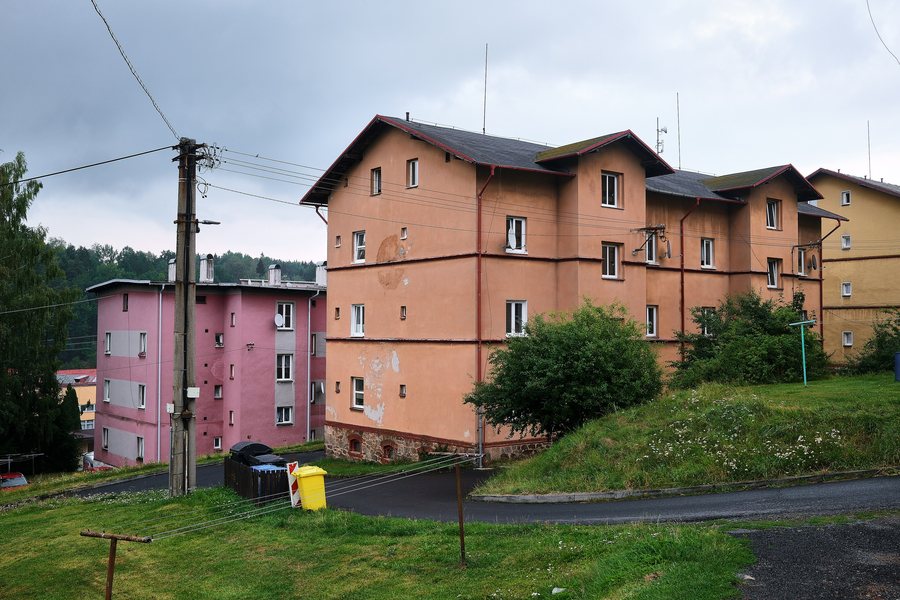
Nature and landscape
Libavské Údolí is named after the Libava stream, which flows through the valley. The mountains of Lobezský vrch, Chrudim, Lysina, and Špičák are located in the vicinity of Libavské Údolí.
Culture and history
The fortified hilltop settlement of Kolová in Libavské Údolí is listed as an immovable cultural monument in the central heritage register. It features an outer and an inner ditch. The municipality's origins date back to 1824, when Baron Lenek founded a textile factory in the Libava valley.
The Čertův mlýn Inn (Devil's Mill) had already been attracting many day-trippers and summer visitors since the beginning of the 20th century. The former Čertův mlýn mill stood on the edge of the Kolová settlement, not far from today's Kynšperk prison.
Getting around
Cycle route 2246 runs between Kolová and Kynšperk. Its section from Penzion u Čertova mlýna to Libavské Údolí is part of this route and is difficult and suitable only for mountain bikes.
Public bus route 480207 connects Sokolov, Šabina, Libavské Údolí, and Kynšperk nad Ohří.
Geographical location
The wider regional surroundings of Libavské Údolí include the Monument Center of Europe and St. Michaelis Church in Bad Brambach.
Other places
Daßnitz, Königsberg A. D. Eger, Maria Kulm, Falkenau An Der Eger, Unterneugrün, Elbogen, Podstrani, Teschwitz
To the higher-level travel overview: Falkenau An Der Eger District.

.jpg)