
Nabočany: History, Castle and Cycling Routes
Accommodation in Nabočany
Nabočany combines historical points of interest with an agricultural event and several cycling routes.
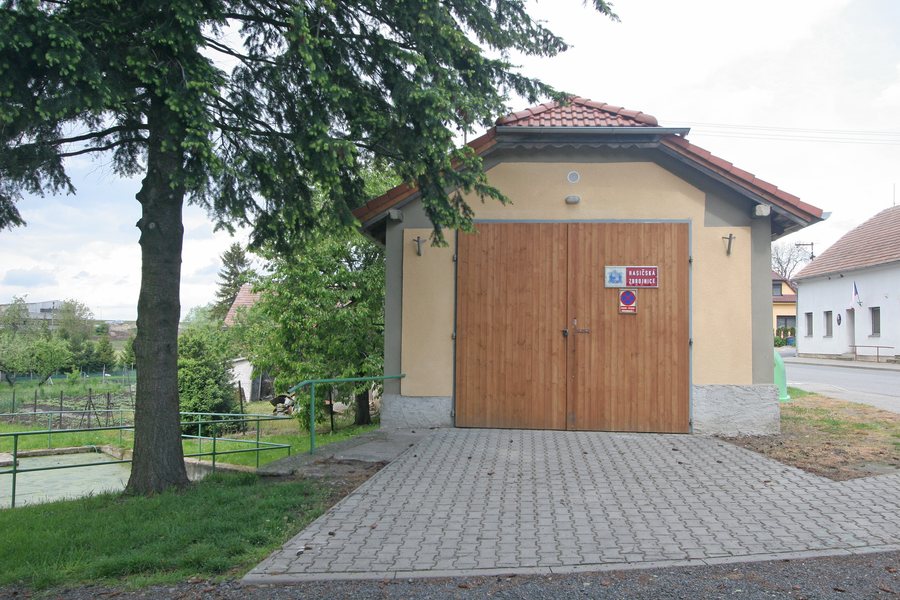
Nabočany offers several different points of interest for a stay. The local history includes the Louka Parkán site, Nabočany Castle and various features in the village center. This historical framework is complemented by the “Naše pole” event, a 62-kilometer cycling route and signposted local routes.
This combination is particularly helpful when choosing accommodation if you already know which topic you would like to focus on during your trip. Nabočany can be explored through both historical buildings and local features as well as agriculture and cycling. A general classification is therefore less informative than planning according to a specific interest.
Which historical points of interest are relevant to your plans?
The Louka Parkán site includes the location of a fortress. A designation documented for the year 1259 confirms this connection. Louka Parkán is therefore one of the historical topics that make Nabočany interesting beyond its medieval development, without this automatically implying any particular present-day use of the site.
The dilapidated Nabočany Castle was converted into a Baroque castle in 1692. Its current status is markedly different: the castle, together with the adjacent farmyard, currently belongs to an agricultural enterprise and is used as residential space. For orientation, it is therefore useful to consider the building’s history and its current use together.
These two aspects give the local history different accents. Louka Parkán represents the historical connection with the fortress, while the castle reflects a later Baroque conversion phase and a present-day connection with agriculture and residential use.
What shapes the appearance of Nabočany?
The park on the village square in Nabočany brings together several elements of the local townscape. There is a bell tower, as well as a statue of Saint John of Nepomuk. A chapel also stands in the center of Nabočany. These features make the village interesting for travelers who would like to notice smaller historical and religious points of interest in a municipality.
These structures and the castle do not represent the same topic. The bell tower, statue and chapel help orient visitors within the local townscape, while the castle and Louka Parkán are more closely connected with the development and history of the village. For a quiet cultural stay, this distinction can be helpful because you can focus on specific individual features rather than on a general list of attractions.
The chronological range of the historical topics is also relevant when assessing Nabočany. The connection with the fortress, Baroque architecture, religious symbols and surviving buildings point to different layers of the village’s history.
What role does the “Naše pole” event play?
Nabočany once again hosted the agricultural event “Naše pole” for two days. The event presented the latest results from breeding and research to the agricultural community. These included varieties and new technological methods. As a result, Nabočany has a professional and economic connection in addition to its historical topics.
For visitors interested in agriculture, research or technological developments, “Naše pole” is an independent consideration when planning a trip. The event format broadens the view of Nabočany beyond buildings and local history. “Naše pole” referred to being held again over two days, not to a permanent institution or a year-round offering.
How can Nabočany be planned into a cycling trip?
The “Krajinou Ležáku, Žejbra a Krounky” route is a 62-kilometer cycling route. Its length makes it an independent planning consideration among the topics associated with Nabočany. In addition, several signposted local cycling routes run through Nabočany and cross there. Thus, in relation to the village, there is both a specifically named 62-kilometer route and several local connections.
According to the route information, the “Krajinou Ležáku, Žejbra a Krounky” route is probably best tackled by train. This assessment refers to the specific route and should not be understood as a general statement about traveling to Nabočany. For your planning, it is therefore useful to consider these separately: the route itself has its own transport recommendation, while the village is additionally listed as a crossing point for local cycling routes.
Cyclists can therefore include Nabočany in their plans according to the desired scope. The 62-kilometer route and the local signposted routes do not serve the same function in planning. When choosing a hotel, the personal focus therefore remains decisive: historical local features, the “Naše pole” event or cycling plans.
Which accommodation decision is right for Nabočany?
A hotel for a trip to Nabočany can most clearly be considered in the context of the planned stay. Visitors interested in culture can use the castle, Louka Parkán and the features of the village center as a thematic basis. Those more interested in agriculture and research can include “Naše pole” in their considerations. For cycling travelers, the 62-kilometer cycling route and the local routes are the main focus.
This perspective helps prevent accommodation types and the purpose of a trip from being confused with one another. The local facts explain which topics shape Nabočany; they do not automatically establish any particular hotel facilities, availability or specific location. Couples and families comparing destinations independently can therefore make a clear decision: first determine the desired focus, then check the accommodation that suits their own plans.
If you would like to compare Nabočany with other places, you can find additional destinations at Zaječice, Mýtka, Bořice, Rostejn, Vejvanovice, Nasavrky, Liboměřice and Pokřikov.
FAQ
When does the first mention of Nabočany date back to?
The first mention of Nabočany dates from 1275. In this context, a certain Dluhomil from Nabočany appears.
Which building is considered the oldest surviving building in Nabočany?
The oldest surviving building in Nabočany is House No. 1, dating from 1701.
Which features are located in the park on the village square?
The park on the village square in Nabočany contains a bell tower and a statue of Saint John of Nepomuk.
Which religious building stands in the center of Nabočany?
A chapel stands in the center of Nabočany.
To the main travel overview: Chrudim District.

