
Dlouhá Třebová: Churches, Monuments and Cycle Path
Accommodation in Dlouhá Třebová
Dlouhá Třebová can be explored through sacred architecture, commemorative culture and cycling. The character of the place is particularly tangible in buildings, statues and memorial sites with clear names, dates and different materials. Those who appreciate specific, calmly comparable content will find several thematic approaches without prematurely equating religious sites, public commemoration and transport.
Culture and History
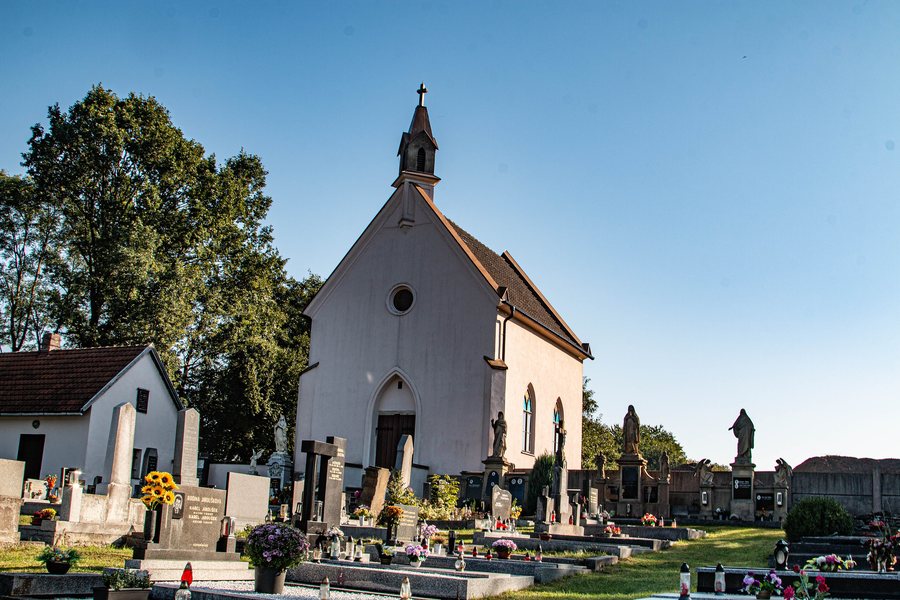
The Kostel sv. Prokopa church was consecrated on 8 December 1906 and built in the Gothic Revival style. The Prokop bell in the Kostel sv. Prokopa church was acquired in 1753.
The Kaple sv. Josefa chapel was built in 1898 and contains a painting of Saint Joseph donated by Josef Šár.
The Socha sv. Jana Nepomuckého was erected on 27 June 1826 and is a state-protected cultural monument.
The statue of Prokop is a protected monument and life-sized. Processions continue to take place there every year.
The dates and the different types of objects allow for an objective classification according to building history, religious connection and heritage protection. Those interested in cultural details can distinguish between architectural form, furnishings, sculpture and continuing religious practice.
The different types of objects each have their own focus: churches and the chapel represent sacred buildings, while the bell and painting represent furnishings. Statues and memorial sites mark public symbols whose impact can be understood through their form, material and chronological context. In this way, building history, religious practice and public commemoration appear side by side as distinguishable aspects, without merging into a single type of place.
Memorial Sites
The Památník Obětem válek commemorates the men who did not return from the battlefields of the First World War. It includes a lion made of Hořice sandstone.
Following its reconstruction in 2014, the grounds of the Památník Obětem válek were landscaped as a park and made fully accessible.
The Sousoší Nejsvětější trojice is made of sandstone, was acquired in 1887 and has been a cultural monument since 1996.
The stone memorial mound Pomník svobody is located in the central part of Dlouhá Třebová and was erected in 1924.
The Pomník svobody complex contains three bronze emblems of Jan Hus, Jan Žižka and Tomáš G. Masaryk.
At the memorial sites, you can focus on historical commemoration, material or the design of public symbols.
For Dlouhá Třebová, hotels can be classified according to travel dates, room category and cancellation conditions. These three details provide an objective basis for comparing different travel plans and make differences in the desired flexibility visible, without limiting the selection to a particular type of accommodation.
Additional places to consider include Damníkov, Vlckovice, Hrušová, Kraliky, Dobříkov, Vyprachtice, Pastviny and Řetová.
Transport and Cycle Path
Dlouhá Třebová has good bus and rail connections with Ústí nad Orlicí and Česká Třebová. For practical planning, this provides two different types of transport to consider: public transport and cycling.
A cycle path runs through Dlouhá Třebová, connecting Ústí nad Orlicí with Česká Třebová.
For the broader travel overview: Okres Ústí Nad Orlicí.

