
Rejštejn: Hotels and Accommodations
Accommodation in Rejštejn
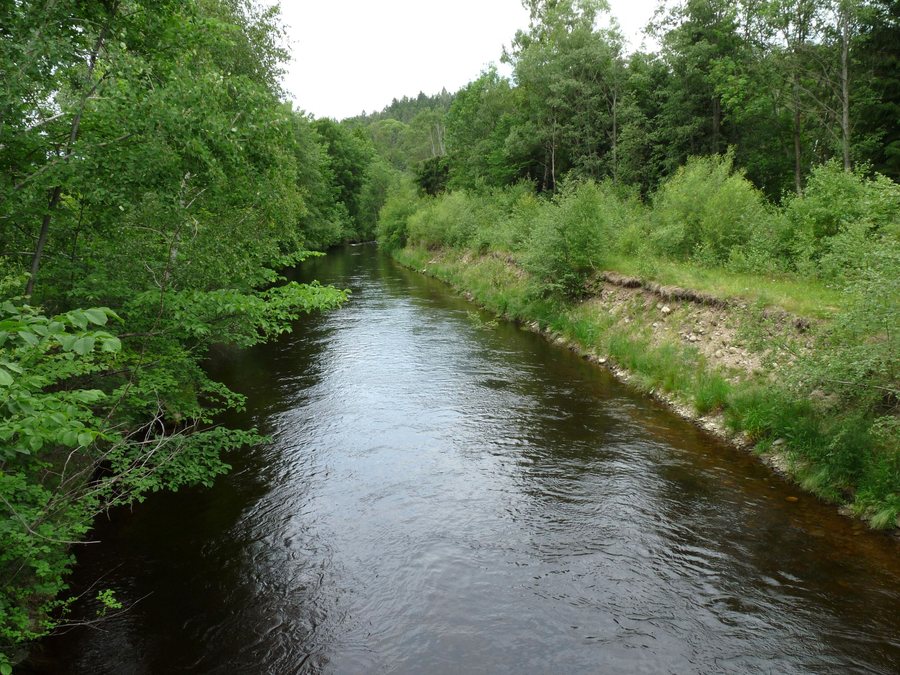
Rejštejn lies in the Otava Valley, where the Losenice flows into the Otava. Its historical development can be traced back to gold panning and gold mining; in 1584, the town was elevated to a royal mining town.
History and Culture
The Baroque Church of St. Bartholomew features a carved acanthus altar and a Gothic bell from the late 14th century. It was first built in 1579 by miners. The villa of the Spaun family in Rejštejn dates from 1904 and was designed by Leopold Bauer; it can only be viewed from a distance.
The iridescent Art Nouveau glass from the glassworks in Klášterský Mlýn became world-famous. A statue of St. John of Nepomuk from 1883 stands on the road to Kvilda. Several novels and short stories by Karel Klostermann are connected with Rejštejn.
Trails and Landscape
The ascent to Maierova Skála begins in the center of Rejštejn. The round trip is approximately 2 km long and has an elevation gain of about 160 m.
A red-marked hiking trail leads from Rejštejn after two kilometers to the former rafters’ inn K Myším Domkům and continues toward Čeňkova Pila. Cycle Route No. 331 between Sušice and Kvilda also passes through Rejštejn. Bus connections operate to Sušice, Srní, and Modrava.
Water and Surroundings
The Čeňkova Pila–Rejštejn paddling section on the Otava is suitable only for experienced paddlers with appropriate equipment and gear. The Čeňkova Pila national technical monument is located near Rejštejn; its preserved interior is accessible as part of a guided tour.
The mountains Snĕžne jámy, Huťská hora, Březník, and Vysoký are located near Rejštejn. In the wider regional area around Rejštejn, there is a museum listed under the name “Frauenau, Glass Museum.”
To the higher-level travel overview: Klatovy District.
More destinations
More places within the same destination:

.jpg)