
Výčapy: Nature and Local History
Accommodation in Výčapy
Nature and Local History in Výčapy
In Výčapy, the Hošťanka nature reserve, the Sokolovna, archaeological finds and sacred buildings represent different facets of the village. A sports field is also one of its recreational features. The view thus extends from nature and local history to sporting and cultural topics.
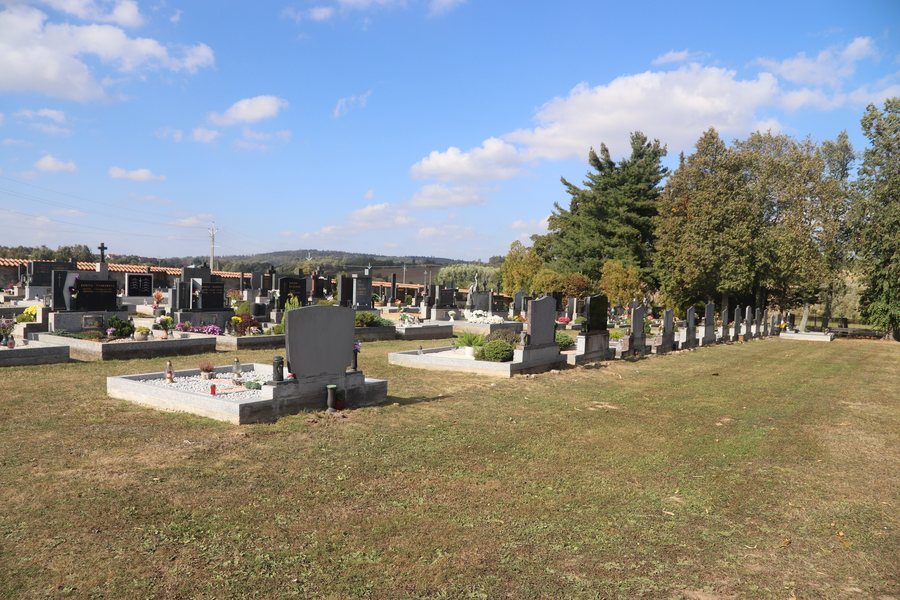 File:Overview 2 of graves at cemetery in Výčapy, Třebíč District.jpg
Photo: Jiří Sedláček via Wikimedia Commons, CC BY-SA 4.0
File:Overview 2 of graves at cemetery in Výčapy, Třebíč District.jpg
Photo: Jiří Sedláček via Wikimedia Commons, CC BY-SA 4.0
The Hošťanka Forest
The Hošťanka nature reserve was first designated on 24 April 1996. It comprises a forest stand of varying ages, dominated by the native silver fir. The forest is therefore not characterized by a uniform age; different age classes form part of its described composition. The silver fir is classified as a native tree species. For observing nature in connection with Výčapy, the focus is therefore on the protected status, the structure of the forest and the dominant tree species.
The Sokolovna and Archaeological Traces
The Sokolovna in Výčapy is used for sporting and cultural activities. Amateur dramatics have been associated with the Sokolovna in Výčapy since 1922. The Sokolovna in Výčapy was ceremonially opened on 10 September 1922. These three details place the building both in the context of community life and at a specific point in history. Archaeological surveys in the centre of Výčapy uncovered pottery finds from the Late Hallstatt period in the 5th century BC, as well as medieval pottery from the 12th to the 15th century. The finds thus range from the Late Hallstatt period to the Late Middle Ages.
Chapels, Dates and Local Features
Kaplička na Láně is considered the oldest building in Výčapy. The Chapel of Saints Cyril and Methodius in Výčapy was built in 1885 in the Neo-Baroque style. The master bricklayer Ignác Suchánek and master carpenter František Trojan from Lesonice were responsible for its construction; the Chapel of Saints Cyril and Methodius was built at a cost of 1,100 gulden. The Chapel of Saints Cyril and Methodius was consecrated on 26 October 1890. The year of construction, architectural style, craftsmen involved, construction costs and consecration date mark different stages in the history of this building.
The first written mention of Výčapy dates from 1104. Výčapy is also home to a statue of Saint Florian dating from 1754, and there are several crosses in Výčapy. Some houses in Výčapy are said to have underground passages leading as far as the municipality of Šebkovice. These underground passages belong to the traditional account and are identified as such by the word “are said to”. The statue, crosses and chapels thus provide various historical and religious points of reference within the village.
For recreational activities, Výčapy has a sports field. The Sokolovna in Výčapy is additionally used for sporting and cultural activities. Together with the historic buildings and archaeological traces, this creates an overview in which sporting, cultural and historical topics each retain their own place.
More Places for Planning
For further orientation, Mastník, Cidlina, Dolní Lažany, Police, Bochovice, Litovany, Lhánice and Slavíkovice are also available.
For the higher-level travel overview: Třebíč District.

