
Bakonykoppány
Accommodation in Bakonykoppány
The Rómer Flóris Memorial Trail and the Szent Borbála Church offer two different starting points for planning your trip to Bakonykoppány: a trail that can be walked in either direction, and a local building with a clearly dated history. If you would like to explore other landscape and cultural themes as well, the wider North Balaton destination offers further ideas of its own.
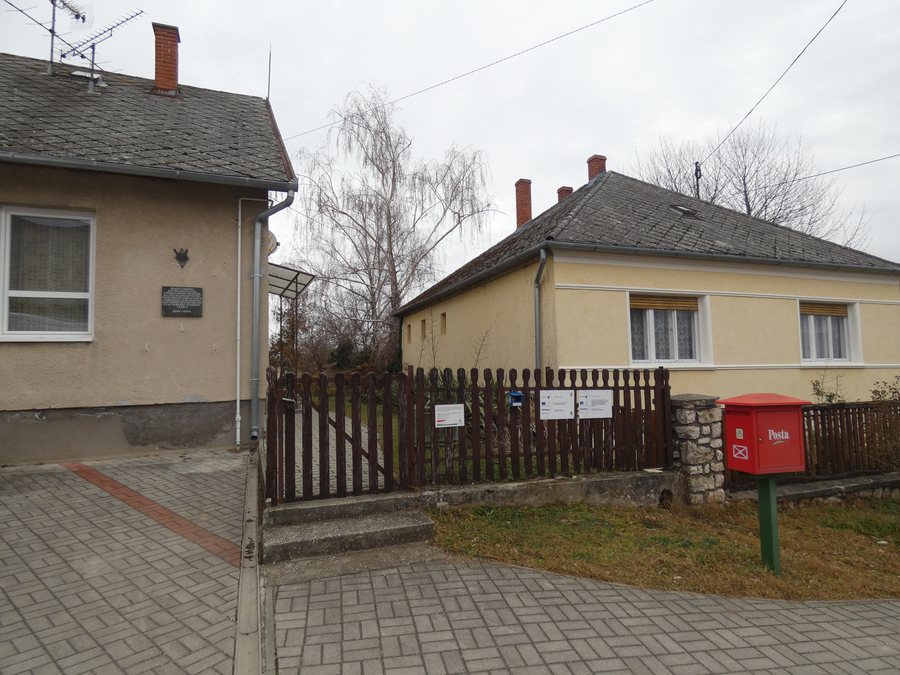 File:Rómer Flóris Emlékút pecsételőhely Bakonykoppány 18 kerítés.jpg
Photo: Ocsovai Mária via Source, CC BY-SA 4.0
File:Rómer Flóris Emlékút pecsételőhely Bakonykoppány 18 kerítés.jpg
Photo: Ocsovai Mária via Source, CC BY-SA 4.0
Bakonykoppány facts at a glance
- The Rómer Flóris Memorial Trail can be walked in either direction.
- The trail is marked with green bars. Between the Kerteskői Gorge and Zoltay Spring, the markings change to a red cross.
- The Szent Borbála Church was built by the Cistercian Abbey of Zirc in 1730–1732.
How do you find your way along the Rómer Flóris Memorial Trail?
Since the trail can be walked in either direction, you can choose which way to go when planning your walk. The change in trail markings is also important for navigation: the trail is marked with green bars, with one explicitly noted exception between the Kerteskői Gorge and Zoltay Spring. There, follow the red cross markings.
Trail markings can change. Check them before setting out, and use an up-to-date Bakony hiking map for orientation. This will help you take both the described markings and the differently marked section into account without confusing the two.
What does the Szent Borbála Church tell you about Bakonykoppány?
The Szent Borbála Church is a local landmark with a specific historical timeframe: the Cistercian Abbey of Zirc had it built between 1730 and 1732. These dates provide a factual reference for your plans if you would like to explore the local history as well as the trail. The building is therefore a different subject from the trail markings: here, the focus is the construction history of a named building; there, it is route navigation.
What landscapes can you discover in North Balaton?
In the wider North Balaton destination, Tapolcai-tavasbarlang and Hegyestű offer different geological themes. Boat trips are available in the Tapolca Cave, which also has the guided “Csodálatos karszt” (“Wonderful Karst”) exhibition. The Tapolcai-tavasbarlang is part of a cave system beneath the town that has so far been explored over a length of 14.6 kilometres. The boat trip, exhibition and geological context each offer a different focus.
Hegyestű is a 337-metre-high mountain between Zánka and Monoszló. Its exposed inner face reveals part of a basalt volcano that was active around eight million years ago. At the western edge of the quarry site, visitors can use a panoramic information board to identify the surrounding hills. A rock garden featuring characteristic rock types from Transdanubia adds another dimension to the landscape. The site offers both a geological perspective on basalt and a guide to the surrounding hills.
What cultural and hands-on activities are there in the region?
The cultural attractions in the wider North Balaton destination also vary in subject. In Bakonybél, the interactive exhibition at Pannon Csillagda explores space travel and astronomy. Szent Mauríciusz Monostor dates back to a monastery founded in 1018 in what is now Bakonybél, at the suggestion of the monk Günther and by King Stephen I. These two examples appeal to different interests: astronomy on the one hand and monastic history on the other.
In Herend, the Porcelain Museum features a permanent exhibition and changing exhibitions on the history of the manufactory. The visitor centre and mini-manufactory complement this theme, offering insights into porcelain making, techniques and traditions of applied art; in workshops, visitors can handle porcelain clay and a brush for painting. The Levendula Ház on the Tihany Peninsula, by contrast, explores the formation of the peninsula and lavender cultivation. A craft workshop and an experience garden add to the activities on offer there.
Discover more destinations: Homokbödöge, Bakonyság, Döbrönte, Farkasgyepű, Pápa, Bakonyszücs, Lovászpatona and Pápakovácsi.
FAQ
Can the Rómer Flóris Memorial Trail be walked in either direction?
Yes. The trail is mostly marked with green bars; between the Kerteskői Gorge and Zoltay Spring, follow the red cross markings instead. Check the markings before setting out and use an up-to-date Bakony hiking map.
When was the Szent Borbála Church built?
The Cistercian Abbey of Zirc built the church in Bakonykoppány between 1730 and 1732.
What can you experience in the Tapolcai-tavasbarlang?
In the wider North Balaton destination, boat trips are available in the cave. There is also the guided “Csodálatos karszt” exhibition.
Go to the wider travel overview: Pápai.

