
Taliándörögd: Church Architecture, Landscapes and Culture
Accommodation in Taliándörögd
Taliándörögd brings together distinctive church architecture, a hill that defines the village, and a cycling route that passes through the community. When planning your trip, you can explore culture, landscapes and outdoor activity as separate themes.
Taliándörögd at a glance
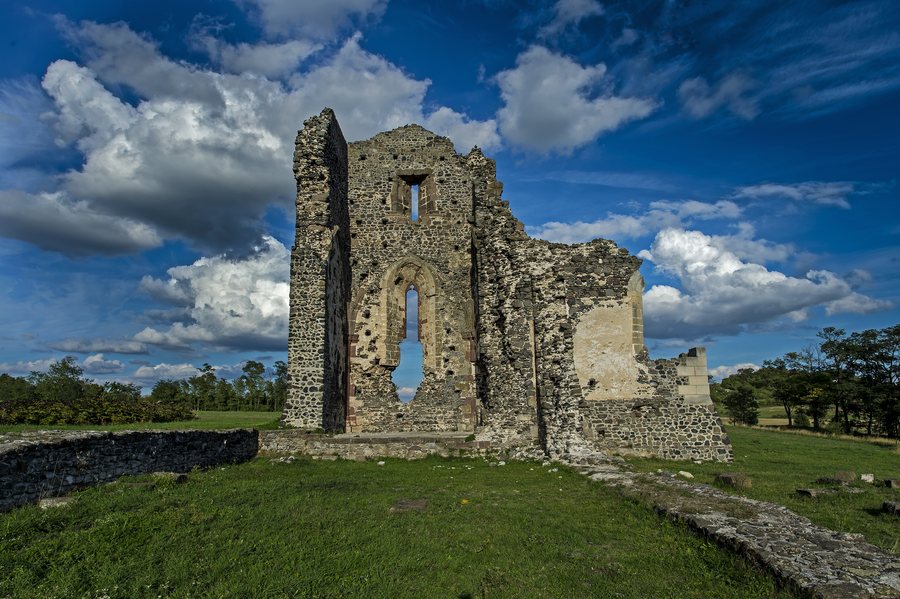
The Szűz Mária Neve templom stands on a hill above the main road. The 323 m-high Tik-hegy lies in the western part of the Dörögdi Basin and provides shade for Taliándörögd. A 29 km cycling tour starts and ends in Kapolcs and passes through Taliándörögd, among other places. Historical records mention a chapel dedicated to the Virgin Mary in what was then Alsódörögd in 1339, and a stone church in 1347.
What is noteworthy about the churches and buildings?
The layout of the Szűz Mária Neve templom makes it a clear architectural landmark: the east-facing building has a long, flat-ended choir that is narrower than the nave. It also has a west tower, a sacristy at the northeast corner and an entrance porch on the south side. The Szent-András Chapel is on the north side of the nave. It is oriented north–south and has a polygonal end.
The Roman Catholic rectory at Kossuth utca 30 also has distinctive architectural features: the building is L-shaped and late Baroque. For a walk focused on architectural forms, the church, chapel and rectory offer different examples, each with its own distinct features.
The older historical references concern Alsódörögd, now Taliándörögd: a chapel dedicated to the Virgin Mary is documented there in 1339, and a stone church is mentioned in 1347. These dates provide a historical context for the village. They should be distinguished from the description of the present-day church building.
What experiences bring together landscapes, culture and cycling?
Tik-hegy is a landmark in the landscape around Taliándörögd. It is 323 m high and lies in the western part of the Dörögdi Basin, directly connected to the village by providing it with shade. Together with the churches, it shapes the area’s sense of place in a different way: the architecture stands on the hill, while the mountain lies in the basin.
A longer cycling trip can be explored via the 29 km loop from Kapolcs. The route passes through Taliándörögd, Öcs, Pula, Nagyvázsony and Vigántpetend before returning to Kapolcs. Taliándörögd is one section of the loop, not its stated starting or ending point. If you plan to ride this route, check the current route conditions before setting out.
Culture is also part of the village’s character. LéleKzet Református Udvar has been a venue for the Művészetek Völgye festival for more than two decades. At the edition held from 24 July to 2 August 2026, the programme included collaborative creative activities, an exhibition by textile artist Richter Sára and performances. These included, among others, the Gryllus testvérek, Zsongom, Rajkai Zoltán, Balla Gergely, Vecsei H. Miklós and the Cimbali Band with Herczku Ágnes. The dates and programme items listed refer to this edition.
What other themes does the wider Balaton North destination include?
As a regional context, the wider Balaton North destination offers other distinct themes. Boat trips are available in the Tapolcai-tavasbarlang, and a guided exhibition focuses on karst. The cave is part of a cave system beneath the town that has so far been explored to a length of 14.6 km. These cave and exhibition themes belong to the wider destination, not to Taliándörögd.
Hegyestű offers another perspective on the region: the 337 m-high mountain lies between Zánka and Monoszló. Its inner face reveals the structure of a basalt volcano that was active around 8 million years ago; at a viewpoint, a panorama board helps visitors identify the surrounding hills. In Herend, meanwhile, the focus is on porcelain and applied arts: the Porcelain Museum has a permanent exhibition and changing exhibitions about the history of the manufactory. In workshops, visitors can handle porcelain clay and a brush for painting.
How can you tailor your accommodation search to your trip?
First, consider which themes are most important for your stay: the church architecture in Taliándörögd, the cycling tour described here, or a look at other attractions in the wider Balaton North destination. This helps you tailor your search to your own travel plans, rather than inferring accommodation features from a single excursion theme.
Discover more destinations: Tapolca, Badacsonytördemic, Szentbékkálla, Ábrahámhegy, Balatonederics, Szigliget, Lesencetomaj and Révfülöp.
FAQ
Where is the Szűz Mária Neve templom?
It stands on a hill above Taliándörögd’s main road.
What historical dates are recorded for Alsódörögd?
A chapel dedicated to the Virgin Mary is documented in what is now Taliándörögd in 1339; a stone church is mentioned there in 1347.
How long is the cycling tour described?
The loop from Kapolcs is 29 km long. It passes through Taliándörögd, Öcs, Pula, Nagyvázsony and Vigántpetend before returning to Kapolcs.
What was on the programme at Művészetek Völgye 2026 in Taliándörögd?
From 24 July to 2 August, the programme at LéleKzet Református Udvar included collaborative creative activities, a textile exhibition and several performances.
To the wider travel overview: Tapolcai.

