
Discover Kaišiadorys
Accommodation in Kaišiadorys
A 5 km walking route through Kaišiadorys leads, among other places, to the railway station and the old water tower. Together with the Brazauskų namai-muziejus and the 1860 viaduct, it offers a tangible cultural and architectural focus for planning your trip.
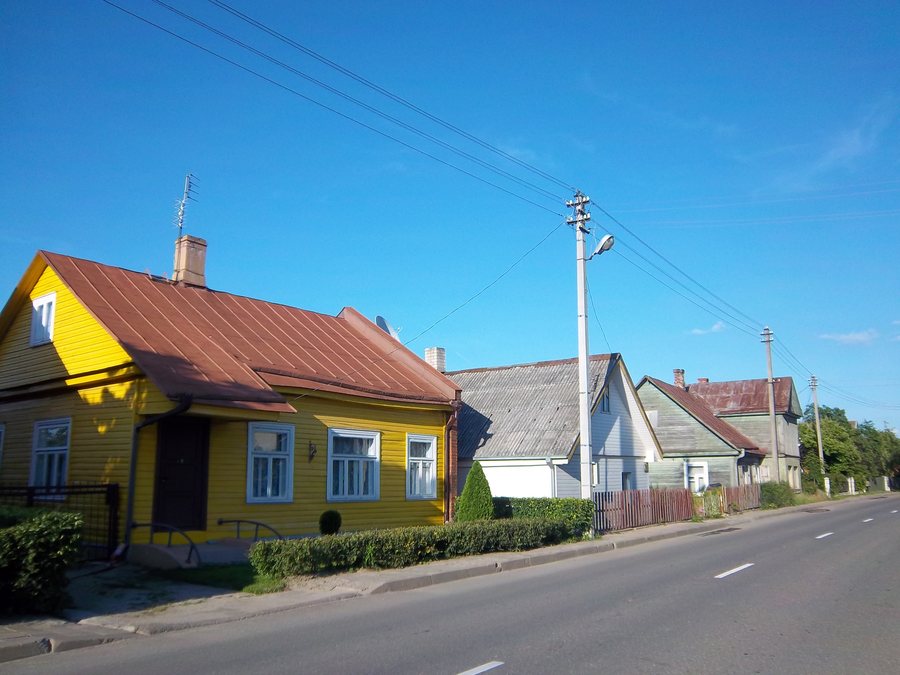 File:Vytauto didziojo g.JPG
Photo: Almantas Steckevičius at Lithuanian Wikipedia via Wikimedia Commons, Public domain
Kaišiadorys at a Glance
- The walking route through Kaišiadorys is 5 km long and leads, among other places, to the railway station and the old water tower.
- The water tower at the railway station was built in 1883; its architect was E. E. Frykas.
- The viaduct at the railway station dates from 1860.
- The Brazauskų namai-muziejus preserves the family’s furniture, photographs, manuscripts, and books.
- Nearby, an educational program introduces visitors to the preparation and eating traditions of Kakorai.
How should you think about the walking route?
The route is an exploration experience in its own right: rather than choosing just one building as your destination, follow a 5 km route through Kaišiadorys that includes, among other places, the railway station and the old water tower. You can plan the route’s distance as a separate segment of your day; your walking time will depend on your pace and breaks. Check current route conditions locally if you plan to take the walk.
Which buildings are at the railway station?
The viaduct at the railway station dates from 1860, while the water tower there was built in 1883. There are 23 years between the two dates. The water tower also has an architect’s name associated with it: E. E. Frykas. This makes it possible to match each date to the corresponding building: 1860 for the viaduct and 1883 for the water tower. These are two specific points of reference for exploring the area’s architectural history, distinct from the length of the walking route.
What cultural topics does the museum add?
The Brazauskų namai-muziejus broadens the focus beyond buildings: the family’s furniture, photographs, manuscripts, and books have been preserved. The collection thus includes furnishings, visual materials, and written materials. If your cultural interests extend beyond architecture, the museum offers a tangible connection to a family. Its different types of objects offer varied points of interest, while the walking route and the buildings at the railway station focus on the route and architecture.
What can you expect from the Kakorai program?
Near the destination, the Žasliai Traditional Crafts Center offers an educational program on the preparation and eating traditions surrounding Kakorai. Participants prepare Kakorai filled with carrots and onions together with Nijolė Adukonienė, then taste them with a sauce made from crispy pieces of pork, onions, butter, and sour cream. The program combines learning about the dish with preparing and tasting it together, making it a different kind of experience from visiting a museum collection or seeing buildings. Participation details may change. Confirm them in advance if you plan to include the program in your itinerary.
Discover more destinations: Piliuona, Kaunas, Rumšiškės, Garliava, Kulautuva, Jonava, Kėdainiai, Šiluva
FAQ
How long is the walking route through Kaišiadorys?
The walking route is 5 km long and leads, among other places, to the railway station and the old water tower. Check current route conditions locally if you plan to take it.
What items are preserved at the Brazauskų namai-muziejus?
The family collection includes furniture, photographs, manuscripts, and books.
What happens during the Kakorai program?
Nearby, Kakorai are prepared together with Nijolė Adukonienė and tasted with a sauce. Participation details may change.
For the broader travel overview: Kaunas District.

