
Hîncești District: Historic Sites, Nature and Wine
Accommodation in Hîncești District
Hîncești District combines historic sites, museums, protected natural areas and regional wine culture. This means that your travel planning does not result in a single mandatory itinerary, but rather a choice of different themes: architecture and cultural remembrance, landscapes and flora, local history or special places for a varied route.
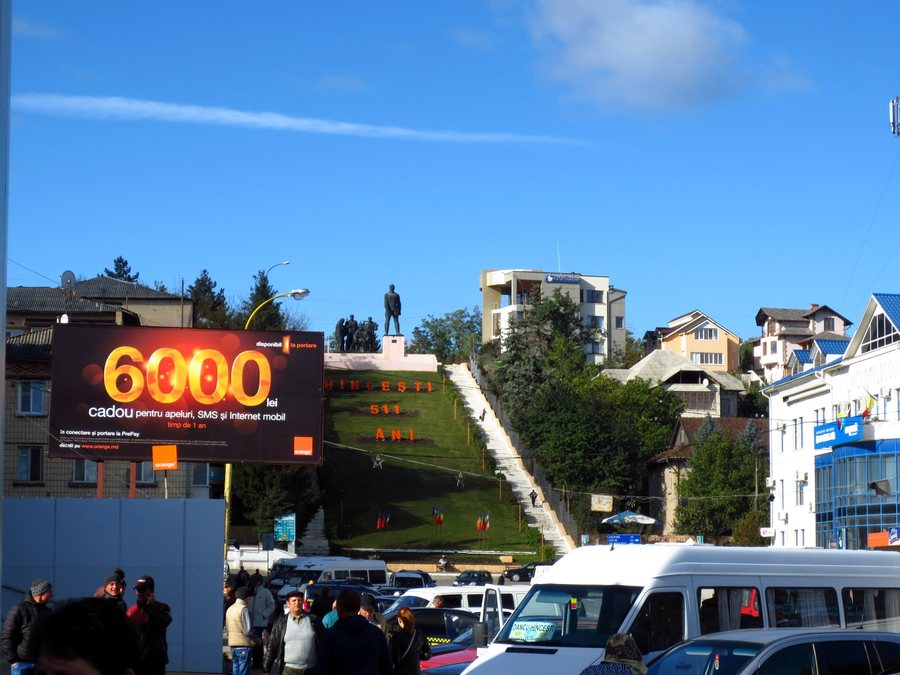 File:Hîncești, Monumentul lui Grigorii Ivanovici Kotovski.JPG
Photo: Nixalsverdrus via Wikimedia Commons, CC BY-SA 3.0
File:Hîncești, Monumentul lui Grigorii Ivanovici Kotovski.JPG
Photo: Nixalsverdrus via Wikimedia Commons, CC BY-SA 3.0
In the upper reaches of the Cogîlnic River, nine ponds lie one after another in a cascade between the Cuvioasa Parascheva Monastery and the village of Ciuciuleni.
The “Pădurea Hîncești” Emerald site comprises two state-protected areas: the Pădurea Hîncești landscape reserve and the Logănești nature reserve for medicinal plants. They preserve 29 rare plant species and 19 animal species with national and international protection status.
More than 160 varieties of roses grow on the grounds of Casa Trandafirilor in Lăpușna. The History and Ethnography Museum in the village of Ciuciuleni has 12 exhibition halls.
Which historic sites shape the region?
The Manuc Bey Mansion in Hîncești is a historic and architectural complex built between 1858 and 1861 in the French Neoclassical style. The complex includes a hunting lodge built in 1881 in the style of French villas, based on a design by the architect Alexandru Bernardazzi.
Following restoration between 2013 and 2015, Manuc Bey was open to the public for guided tours, exhibitions and cultural events.
In Lăpușna, the princely court complex has a cellar dating from the 16th century. The cellar is the only fully preserved part of the complex. Also in Lăpușna, the present-day Church of the Holy Archangels Michael and Gabriel was built in 1819 on the foundations of an older princely church.
The wooden church in Cotul-Morii dates from 1812 and is considered one of the oldest wooden churches in Moldova. A Geto-Dacian settlement was surrounded by defensive trenches.
Which museums provide insight into history and everyday life?
The Negrea Village Museum is dedicated to the material everyday life of earlier generations through its collection. Its holdings include tools, textiles, furniture, icons and weaving utensils from the 18th and 19th centuries.
The History and Ethnography Museum in Mingir has existed since 2014 and displays looms, a traditional living room and everyday objects. Mingir is also home to a monument commemorating more than 900 residents who died during the famine of 1946–1947.
The “C. Tănase” House Museum in Nemțeni displays the writer’s published and posthumous works, as well as personal belongings, photographs and paintings reflecting his life and work. Those who select cultural sites by theme can distinguish literary and biographical history here from the ethnographic collections in Negrea and Mingir.
Which natural areas differ from one another?
The Nemțeni Forest Reserve covers 20.9 hectares and is known for its groves of old oaks. The Izvorul Nemțeni hydrological natural monument covers 0.5 hectares and is located in the center of the village of Nemțeni.
The Sărata-Galbenă Forest Reserve is a state-protected reserve for medicinal plants covering an area of 220.9 hectares. In the “Pădurea Hîncești” Emerald site, a landscape reserve and a nature reserve for medicinal plants complement each other. For your personal selection, you can therefore distinguish between forest landscapes, plant reserves, bodies of water and smaller natural monuments.
The nine cascading ponds lying one after another in the upper reaches of the Cogîlnic add another distinctive landscape feature. Their location is defined by their relationship to the Cuvioasa Parascheva Monastery and the village of Ciuciuleni.
Which experiences and regional themes suit your plans?
Hîncești District is particularly suitable for combining different interests when planning a themed trip. Historic buildings and museums appeal to travelers who choose places not only for their landscapes but also for their cultural significance. The reserves and natural monuments offer a different focus, while the rose collection in Lăpușna provides a clearly defined botanical attraction.
The Hîncești Winery is located in the Codru wine region and was founded by Manuc Bey in the 19th century. The zipline in Hîncești is considered the highest and longest in Moldova.
When choosing a hotel in Hîncești District, the planned thematic focus of your trip is therefore a particularly useful point of reference. Would you like to combine historic sites and museums, include nature reserves, or take wine and distinctive landscape features into account?
If you would like to consider additional destinations for your selection, you can also compare Hîncești, Causeni, Dubasari, Călărași District, Straseni, Ștefan Vodă District, Făleşti and Rezina.
FAQ
When was the Negrea Village Museum opened?
The Negrea Village Museum was officially opened on May 18, 2016, International Museum Day.
How large is the Sărata-Galbenă Forest Reserve?
The Sărata-Galbenă Forest Reserve covers 220.9 hectares and is a state-protected reserve for medicinal plants.
What is known about the Hîncești Winery?
To the main travel overview: Moldova.

