
Rezina on the Dniester: Nature, Culture and Archaeological Traces
Accommodation in Rezina
Rezina combines the riverside landscape of the Dniester with gorges, natural formations, sacred sites and archaeological traces.
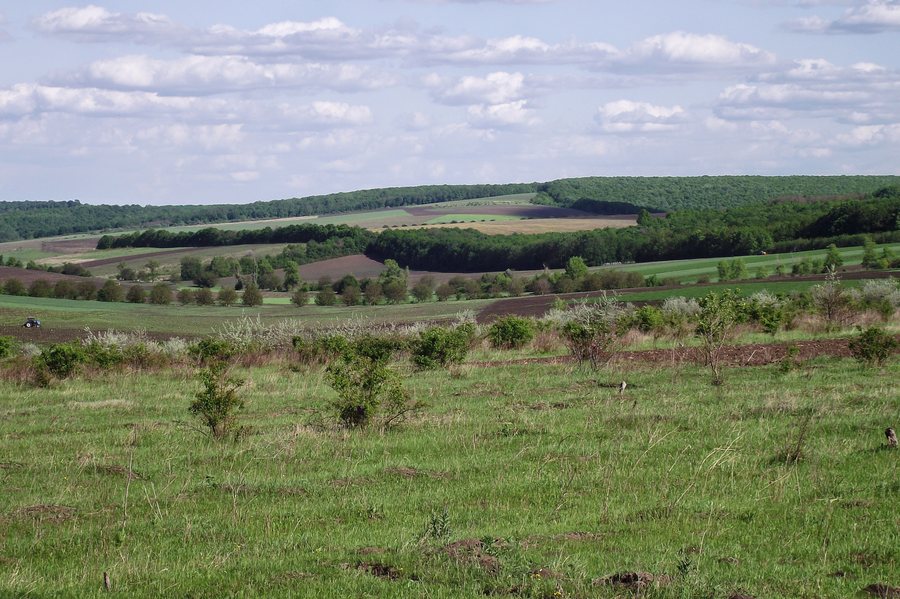 File:Rezina District, Moldova - panoramio (61).jpg
Photo: Анатолий Зубанюк via Wikimedia Commons, CC BY 3.0
File:Rezina District, Moldova - panoramio (61).jpg
Photo: Анатолий Зубанюк via Wikimedia Commons, CC BY 3.0
The city of Rezina stretches for 13 km along the banks of the Dniester. Its landscape is also characterised by three deep gorges with impressive scenery.
The Saharna Nature Reserve is located on the Dniester Plateau. There, the Saharna and Stohnaia streams form a large natural amphitheatre. Another pronounced landscape formation is the “Great Ciorna Gorge” on the Ciorna River. It is approximately 4 km long, while its highest slope reaches more than 200 m.
Which landscapes can you discover in Rezina?
In the Țipova Landscape Reserve, it is possible to hike to waterfalls. This hike offers views of the Dniester, rocks and gorges.
The surroundings of Saharna also add to this natural character. The large natural amphitheatre between Saharna and Stohnaia describes a landscape in which watercourses and the plateau are directly connected. The Ciorna Gorge adds a different accent: here, the length of the river section and the height of the slopes are the central features.
In the village of Trifești, a unique complex of springs with five sources was redesigned in 2006. This site adds a smaller, clearly defined feature to the natural attractions.
Which cultural and historical themes shape the region?
Rezina is home to the “Țîpova-Saharna” museum complex. The archaeological stele “Cetăţuia getică”, dating from the 4th–3rd century BC, is also located in Rezina.
The “Vatra Rezinei” complex includes the foundation stone “Piatra de temelie” and the chapel “Acoperământul Maicii Domnului”. At Saharna Monastery, religious significance takes centre stage: it is one of Moldova’s largest pilgrimage centres, and the relics of Saint Macarius are kept there.
Several archaeological sites make the region’s history more tangible. At the Getic fortification of Saharna Mare, a previously unknown entrance flanked by a bastion was discovered. Archaeological investigations at Saharna “Țiglău” uncovered a double burial dating from the 10th–9th century BC. A citadel approximately 70 metres in size was also discovered at the Saharna “Rude” archaeological site.
The rock monastery in Țîpova, in Rezina District, was selected for restoration and conservation work.
Which regional features add to the stay?
At Pripiceni-Răzeși, the complete, six-metre-high skeleton of a Dinotherium Gigantisimus was discovered; it lived there approximately five million years ago. This discovery brings a geological perspective to the region that clearly differs from the medieval, religious and Getic themes. It broadens the view from the visible landscape to the area’s long history of development.
A project modernised 20 km of public roads and improved access to Lalova and Țîpova Monastery.
What does this mean when choosing a hotel in Rezina?
For those interested in culture and history, the stele, museum complex, archaeological sites and monasteries are important. For nature enthusiasts, the Dniester riverbank, gorges, Saharna amphitheatre, Ciorna Gorge and waterfalls are the main attractions.
For regional orientation, you can also visit Lalova and Riscani as well as Glodeni District, Balti, Făleşti, Orhei District, Ștefan Vodă District and Sîngerei District on this page.
FAQ
How many cascades does the Saharna stream form?
The Saharna stream forms 22 cascades. The largest is called “Groapa Țiganului”, is 4.5 m high and has a 10 m deep basin.
When did the Easter song festival “Hristos a Înviat!” take place?
The Easter song festival “Hristos a Înviat!” took place for the 17th time on 22 April 2025 in Țîpova and is considered a popular tradition.
What religious significance does Saharna Monastery have?
Saharna Monastery is one of Moldova’s largest pilgrimage centres. The relics of Saint Macarius are kept there.
What was discovered at Pripiceni-Răzeși?
The complete, six-metre-high skeleton of a Dinotherium Gigantisimus was discovered at Pripiceni-Răzeși. This animal lived there approximately five million years ago.
What is known about the railway tunnel in Țipova?
In Țipova, there is a railway tunnel carved into the rock through which a railway line runs.
To the main travel overview: Moldova.

.jpg)