
Soroca District: Culture, Dniester Landscapes and Nature Experiences
Accommodation in Soroca District
Soroca District combines sites of cultural and historical significance with river landscapes, museums, nature observation and religious traditions. If you are planning your trip independently, you will find a range of different focuses here: historic buildings in Soroca, landscapes along the Dniester, hiking destinations in the Rudi–Arionești Gorge, and regional events centred around apples and handicrafts.
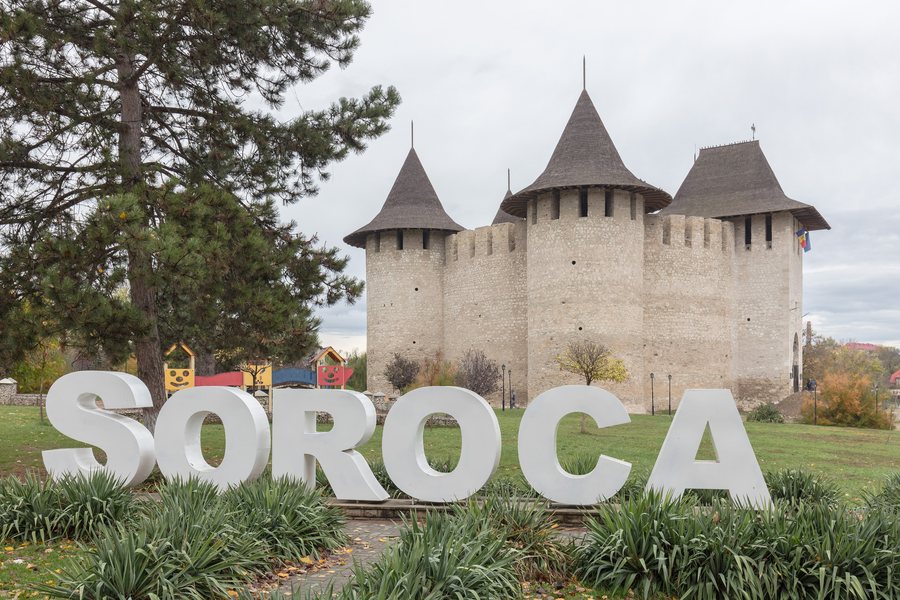 File:Fuerte de Soroca, Soroca, Moldavia, 2023-11-01, DD 10.jpg
Photo: Diego Delso via Wikimedia Commons, CC BY-SA 4.0
File:Fuerte de Soroca, Soroca, Moldavia, 2023-11-01, DD 10.jpg
Photo: Diego Delso via Wikimedia Commons, CC BY-SA 4.0
Soroca District is part of the cross-border cultural-tourism route Voivode Stephen the Great and Saint. Visitors to Soroca District can learn about the sights in nine museums. These include museums in Soroca, Cosăuți, Cremenciug, Șolcani, Bădiceni, Vasilcău, Vădeni, Stoicani and Dubna.
For closer regional orientation, the directly adjacent subregion is Soroca. The region combines sites of cultural and historical significance with landscape features: fortresses and sacred buildings represent the cultural heritage, while riverbanks, forests, gorges and the Unguri-Holoșnița Ramsar Site offer nature experiences.
Which historic places give the journey its character?
The Soroca Fortress represents the medieval and early modern history of the region. Stephen the Great initially had it built from wood in the 15th century. In the 16th century, Petru Rareș rebuilt it in stone. The fortress has a completely circular ground plan and five defensive towers.
Another cultural and historical landmark is The Candle of Gratitude. The structure was built from Cosăuți stone, is almost 30 metres high and contains a small chapel. It stands on a high hill overlooking the Dniester and is shaped like a gigantic candle.
Which museums complement the historic sites?
The Soroca History and Ethnography Museum has existed for more than a century.
Where do river landscapes and hiking destinations come together?
Rudi Monastery lies on the right bank of the Dniester and is surrounded by old forests and steep cliffs. The Holy Trinity Church of Rudi Monastery was built between 1770 and 1777 in a medieval Moldavian architectural style.
The Rudi–Arionești Gorge is part of the Rudi–Arionești Landscape Reserve and is suitable for hiking and photography. The gorge is also home to Piatra Țiganului and the Stânca Răutului viewpoint.
The historical connection of Cosăuți is also shaped by its landscape. The historic Cosăuți Skete was located 1.5 km from the source of the Iorginți stream. Iorginți is a right-bank tributary of the Dniester. The skete was situated in a gorge bounded by hills on three sides and by the Dniester to the north.
Which nature experiences can be combined with culture?
The Unguri-Holoșnița Ramsar Site offers opportunities for nature observation, ecotourism, rural tourism and active tourism.
Which regional aspect does the National Apple Festival showcase?
Soroca hosts the National Apple Festival every year. At the festival, visitors can see exhibitions featuring fresh apples and products made from them. The 14th edition in 2025 brought together apple producers, companies from the processing industry and folk artisans.
How can you plan your accommodation focus?
When choosing a hotel in Soroca District, you can first decide on the focus of your days. For a culture-oriented trip, the Soroca Fortress, The Candle of Gratitude, museums and sacred buildings take centre stage. For a landscape-focused stay, the Dniester, old forests, the Rudi–Arionești Gorge and the Unguri-Holoșnița Ramsar Site are the obvious themes.
For further regional comparisons, you can also consider Cahul District, Hîncești District, Edineț District, Anenii Noi, Orhei District, Rezina and Chisinau.
FAQ
What can be found in the Cosauti History and Ethnography Museum?
The Cosauti History and Ethnography Museum is located in the building of the village’s first secular school. Built in 1896, the building is a historic monument, and the museum continues to operate there. The permanent exhibition includes archaeological, geological, numismatic and ethnographic objects.
How many steps lead to the top of The Candle of Gratitude?
Visitors reach the top of The Candle of Gratitude via 657 steps. From there, they get a panoramic view of Soroca and the surrounding area.
When is the image of the Virgin Mary celebrated at the monastery in Inundeni?
At the “Icoana Maicii Domnului «Bucuria tuturor scârbiților»” Monastery in Inundeni, this image of the Virgin Mary is celebrated every year on 6 November.
What was the scale of the procession around Soroca District?
The participants in the procession with the icon of the Dormition of the Mother of God around Soroca District covered approximately 200 km. On the eleventh day of the procession, they passed through the parishes of Regina-Maria, Bulboci and Căinarii Vechi.
For the higher-level travel overview: Moldova.

