
Anenii Noi between the Dniester, wine and remembrance
Accommodation in Anenii Noi
Anenii Noi combines riverside landscapes, wine, nature observation and very different forms of remembrance culture. The Dniester, the Codru Wine Route, fossils near Calfa, the Pădurea Hîrbovăț Landscape Reserve and museums in several localities create a destination that is particularly easy to explore according to personal interests.
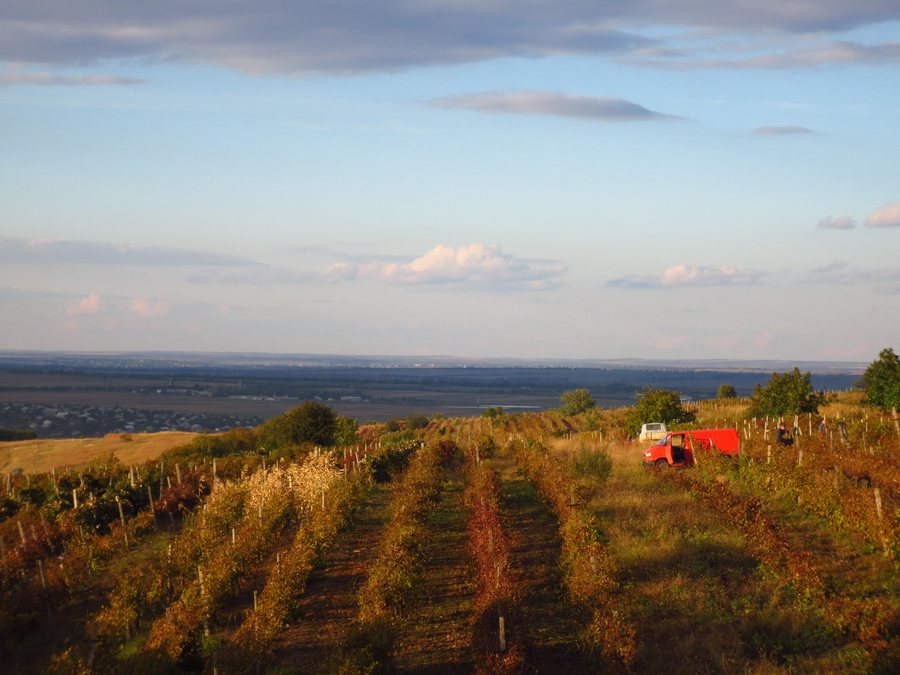
Anenii Noi District lies in the region of Moldova’s wine route. The Dniester is navigable in Moldova; river cruises offer views of geological strata, ancient fortresses and orchards.
Natural attractions include the Pădurea Hîrbovăț Landscape Reserve between Hîrbovăț and Bulboaca, as well as the paleontological site of Calfa in Anenii Noi District. The fossil deposits at Calfa preserve the remains of mammals, birds, reptiles, fish, mollusks and various plants that accumulated at the foot of a rock face 10 to 12 million years ago. The fossil complex includes three newly discovered species: Hipparion sarmaticum Lungu, Lagomerix flerovi Lungu and Cervavites bessarabiensis Lungu. The Calfa fauna collection is considered one of the richest, most diverse and oldest collections from the Middle Sarmatian in Europe and includes more than 40 vertebrate species.
What nature and photography subjects characterize the region?
Near Cobusca Nouă there is a one-kilometer-long lavender field. Visitors come to view the landscape and take photographs; when they leave, they receive a small aromatic bouquet of flowers. Near Troița Nouă there is also a large field of red poppies that is suitable for photo sessions. Both places therefore represent short, strongly visual nature experiences, while Calfa and Pădurea Hîrbovăț are experienced more through their geological and botanical features, respectively.
The Dobrudja pear grows naturally in the Pădurea Hîrbovăț Landscape Reserve. In Mereni there is a horse-breeding farm for Belgian horses, established in 2010.
What is there to see in Mereni?
The Museum of History and Ethnography in Mereni is housed in a former building of the “Rejep” People’s Bank, constructed between 1910 and 1911. The building was made from a distinctive mixture of clay, horsehair and bird eggs and has a floor laid with terracotta from Germany. The unusual construction method and historic floor give the museum building itself a distinct architectural profile. The museum is accredited; the accreditation is dated July 12, 2023.
Mereni’s cultural offerings include an open-air museum complex dedicated to the victims of communism. The Mereni monument “Trenurile Marii Dureri” commemorates the deportation trains on which tens of thousands of people from Bessarabia were taken to Siberia under inhumane conditions. The immersive installation “Coridorul Morții” is a 35-meter-long tunnel symbolizing the suffering and dehumanization of those condemned and deported. These places address history not only through texts or collection items, but also through spatial forms of remembrance.
The names of local heroes who remained on the battlefields during the war from 1941 to 1945 are engraved in granite on the Aleea Memoriei. Mereni is also home to the wooden windmill of Dealul, also known as Mahalaua Țiganilor. It is over 8 meters high and has original millstones. The metal cross on the pole in Mereni is 38 meters high. Those interested in regional history, memorial sites and traditional architectural forms will therefore find several clearly distinct themes here.
The Museum of History and Ethnography in Mereni also hosted an exhibition about the traditional shirt with Altiță and its embroidery techniques.
Which other cultural sites should be included in trip planning?
The monument at the Șerpeni Bridgehead commemorates Soviet soldiers who fell during the Iași–Chișinău Operation in 1944. The “Sfânta Treime” Archiepiscopal Monastery Complex is located in Troița Nouă. Varnița is also home to the historic site “Camp of King Charles XII of Sweden.” Since September 15, 1992, it has held the status of a branch museum of the National History Museum of Moldova.
How are wine and regional culture connected?
The Dionysos-Mereni winery offers visitors tours of the production areas and insights into the technological processes involved in winemaking. The winery also displays rare winemaking equipment and exhibits from the 19th century. This allows the wine region to be explored both through the production process and through historic equipment.
Castel Mimi in Bulboaca is a local architectural monument built toward the end of the 19th century. The tourist complex includes a museum and an art gallery for young artists, as well as several creative workshops, including workshops for folk art and cooking. Wine, architecture, handicrafts and culinary arts are therefore brought together in one complex.
The Codru Wine Route leads to Castel Mimi. There, visitors can tour the castle and have lunch or dinner at the Bufnița Albă restaurant.
How do you choose accommodation for Anenii Noi?
The region’s localities are spread across Mereni, Bulboaca, Calfa, Hîrbovăț, Speia, Șerpeni, Troița Nouă and Varnița. If you are looking for a hotel in Anenii Noi, you should therefore first decide whether your focus is on the Dniester and landscapes, fossils, museums and memorial sites, wine or photographic subjects.
For a further comparison of regional travel destinations, you can also consider Soldanesti, Drochia District, Glodeni District, Făleşti, Straseni, Rezina, Sîngerei District and Cahul District.
FAQ
Which places does the Dniester pass through in the Anenii Noi region?
In the Anenii Noi region, the Dniester passes through the areas of Delacău, Gura Bîcului, Puhăceni, Speia, Șerpeni and Telița.
What does the Museum of History and Ethnography in Hîrbovăț offer?
The museum includes an ethnographically designed room in the style of a traditionally decorated Moldovan peasant home. It serves to collect, study, preserve and, in particular, exhibit cultural heritage for the information, education and recreation of the general public.
When was the Museum of History and Ethnography in Speia founded?
The Museum of History and Ethnography in Speia was founded in 1981.
What status does the Camp of King Charles XII of Sweden have?
The historic site in Varnița has held the status since September 15
To the higher-level travel overview: Moldova.

