
Wolsztyn County: Lakes, Culture and Hotels
Accommodation in Wolsztyn
Wolsztyn County in Greater Poland combines lakes and terrain shaped by the Ice Age with cultural sites in Wolsztyn and traces of the Cistercians. When planning a trip, it is worth distinguishing between water activities, museum visits and smaller towns. A hotel in the county seat is not automatically the most convenient location for every destination in the county. First decide which places you want to visit, then compare the actual addresses of the accommodations.
Wolsztyn County at a glance
- The landscape forms date back to the most recent glaciation, which ended around 15,000 years ago.
- 42 percent of the 21,450-hectare Przemęt Landscape Park lies within the county.
- The Konwaliowy Kayaking Route is a 37-kilometer circular route on the lakes of the landscape park.
- Wolsztyn has museums devoted to Robert Koch, Marcin Rożek and the folk architecture of western Greater Poland.
- Churches in Kaszczor, Wieleń and Przemęt reveal different traces of the Cistercians.
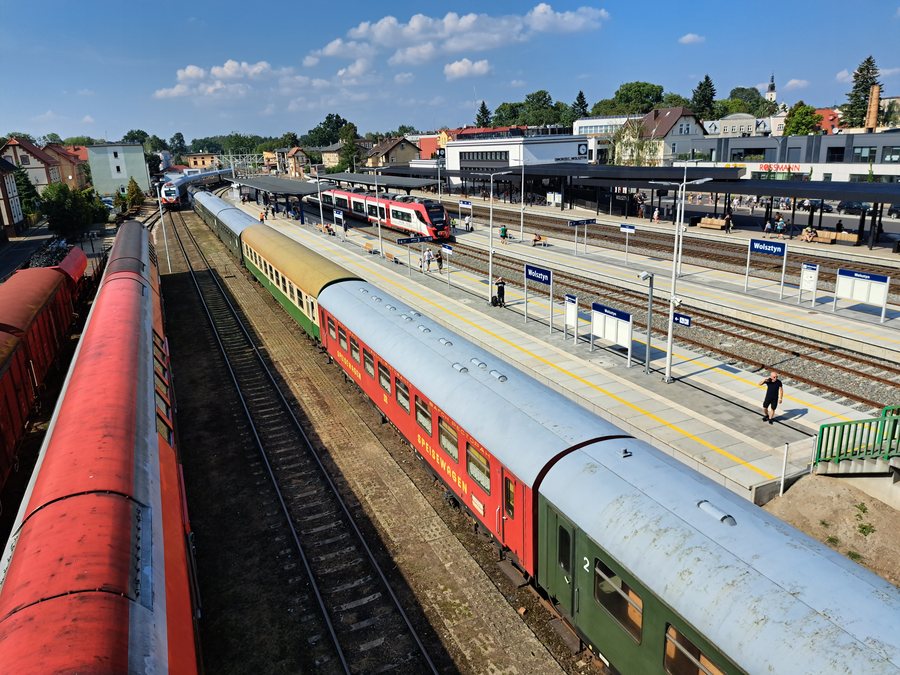
- Passenger trains run from Wolsztyn to Poznań, Leszno and Zbąszyń.
Lakes and postglacial landscapes
The county lies in an area shaped by the most recent glaciation, giving it varied terrain. Przemęt Landscape Park was established in 1991 to protect this postglacial landscape and the local natural environment. It covers a total area of 21,450 hectares, only 42 percent of which lies within Wolsztyn County. If you are looking for accommodation for a visit to the landscape park, first identify the specific part of the park you want to visit rather than assuming that all park destinations are within the county.
The Konwaliowy Kayaking Route runs across the park’s lakes as a 37-kilometer circular route. It starts and ends in Wieleń and can be paddled in either direction. Kayak rentals and information about organizing the trip are available there. The length of the route calls for careful planning; on its own, it does not indicate how long the trip will take, what the water conditions will be or whether kayaks will be available on the day of your visit. If the water route is your main reason for visiting, you can look for accommodation near the confirmed starting point.
A different perspective is offered by the 30-meter-high wooden observation tower on Winnica Hill near Siekowo and Kluczewo. It has 147 steps. This precise figure can help you assess the visit in light of your own mobility. Check the tower’s current opening status and condition before climbing. In Olejnica, a trail marked with arrows between stations is also described; an information board and map are located at the entrance. Here, too, the description is not a substitute for current information about the trail.
Wolsztyn and its cultural sites
The Robert Koch Museum in Wolsztyn commemorates Koch’s work as a district physician from 1872 to 1880. It is located in two rooms on the ground floor of a building dating from 1842 to 1846. The Marcin Rożek Museum is housed in a villa built according to the artist’s designs at ul. 5 Stycznia 34; Rożek lived there from 1934. The house has a garden with the artist’s works that extends down to the lake. These museums have different themes and buildings. Check their current visiting hours separately.
On the western shore of Jezioro Wolsztyńskie, an open-air museum recreates the layout of a Greater Poland linear village across 3.5 hectares. Visitors interested in folk architecture, art and the history of medicine can find three different reasons to visit museums in and around Wolsztyn. The road between Poznań and Zielona Góra passes through the town; passenger trains connect Wolsztyn with Poznań, Leszno and Zbąszyń. Check specific timetables and connections for your travel date.
Cistercian traces and other places
In Kaszczor, the late-Baroque Church of St. Wojciech was built between 1764 and 1777 to replace an older wooden church. A former Protestant church building in the village was restored in 2011 and now serves as a gallery and concert hall. In Wieleń stands the Church of the Nativity of Mary, built by Cistercians in the 18th century; in Przemęt, the Baroque Church of St. John the Baptist was partially rebuilt after a fire. These building histories show why visiting the churches is different from a trip focused solely on the lakes. The regional Wielkopolska Cistercian Route includes Wieleń-Przemęt and Obra among other monastic sites; the route as a whole does not lie only within this county.
For a more detailed search for places within the county, visit the pages for Wolsztyn, Godziszewo, Boruja, Tuchorza, Kopanica and Solec Nowy. Other place pages include Barchlin, Bucz, Wilcze, Chorzemin and Grójec Mały. These names help you choose a location; without additional information about the places, no particular attraction or hotel quality can be attributed to them.
FAQ
Where does the Konwaliowy Kayaking Route start?
The 37-kilometer circular route starts and ends in Wieleń. Kayak rentals and information about organizing the trip are available there; check current conditions separately.
What museums are there in Wolsztyn?
The available information about the area describes the Robert Koch Museum, the Marcin Rożek Museum and an open-air museum devoted to the folk architecture of western Greater Poland. They cover different subjects.
Is all of Przemęt Landscape Park located in Wolsztyn County?
No. Of its 21,450 hectares, 42 percent lies within the county. Therefore, its precise location matters when choosing accommodation near a particular park destination.

