
Dobrzejewice: Church and Local History
Accommodation in Dobrzejewice
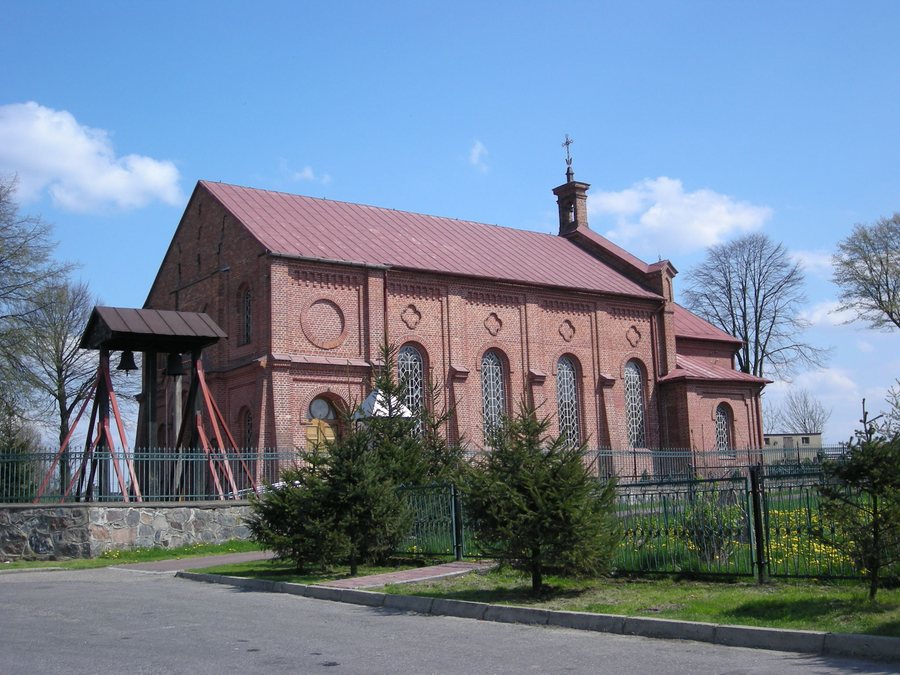
The Church of St. Lawrence gives Dobrzejewice a tangible cultural point of reference: the Neo-Gothic brick building was constructed at the end of the 19th century and contains older Rococo furnishings. A former cholera cemetery and a single hiking trip add historical memorial and travel connections to this picture.
Dobrzejewice at a glance
- The single-nave Church of St. Lawrence was built in the Neo-Gothic style between 1888 and 1893.
- It replaced an older wooden church, probably dating from the 14th century, which was destroyed toward the end of the 19th century.
- The Rococo furnishings include a high altar, two side altars, a pulpit, and a baptismal font.
- The former cholera cemetery was located by a forest; the graves had no headstones.
What does the Church of St. Lawrence tell us about the town?
The building’s history leads from an older wooden predecessor to a brick building from the late 19th century. The former church probably dated from the 14th century; it was destroyed toward the end of the 19th century. This dating remains an estimate, while the construction years of the Church of St. Lawrence are given as 1888 to 1893. The term Neo-Gothic helps place it in time: the church is not a medieval building but was constructed in the late 19th century as part of a later revival of Gothic forms.
The tower is also part of the building’s history. The church once had a tower, which was destroyed during the First World War. Different periods therefore sit side by side: the presumed medieval wooden church, the Neo-Gothic brick building, and the loss of the tower in the 20th century.
Which Rococo details are part of the furnishings?
The furnishings refer to an earlier stylistic period than the church building itself. The 18th-century Rococo high altar comes from Włocławek Cathedral. Two Rococo side altars from the second half of the 18th century are dedicated to St. Anthony and St. Anne. They are joined by a Rococo pulpit and a Rococo baptismal font.
The upper part of the altar contains a painting of St. Lawrence from the late 18th century, with repoussé silverwork. Repoussé metal is shaped into a relief by working it from the reverse. This makes it possible to appreciate this craft detail without specialist knowledge. The different pieces belong to the same style but serve different purposes within the church furnishings. If you would like to see the furnishings in person, check in advance whether a visit to the church is possible.
What historical traces and activities are there?
The former cholera cemetery was located by a forest, and the graves had no headstones. The statue of St. Tekla was returned to its former location after almost 80 years. A memorial cross with two crossbeams, called a karawaka, was also erected there. The name refers to the distinctive shape of the cross and helps distinguish this memorial from a simple cross.
A hike also offers a tangible connection to the place, though it relates to a single past date: on May 20, 2023, a hike in the PTTK series “Family Hikes with PTTK” went from Dobrzejewice via Brzozówka to Złotoria. The route was about 16 kilometers long. The date and distance describe this hike; they are not details of a current event.
Another point of reference is the Orlik sports field by the school complex in Dobrzejewice, at Dobrzejewice 57 b. If you plan to use it, check the current booking terms in advance.
Discover more destinations: Lulkowo, Dzikowo, Papowo Toruńskie, Stary Toruń, Złotoria, Czernikowo, Wielka Nieszawka, Rogówko.
FAQ
Which parts of the church are in the Rococo style?
The high altar, two side altars, the pulpit, and the baptismal font are in the Rococo style. The side altars are dedicated to St. Anthony and St. Anne.
What is a karawaka?
It is the name for the memorial cross with two crossbeams at the former cholera cemetery in Dobrzejewice.
What was the route of the hike to Złotoria?
On May 20, 2023, the hike, about 16 kilometers long, went from Dobrzejewice via Brzozówka to Złotoria.
Go to the broader travel overview: Toruński.

