
Discover Żychlin
Accommodation in Żychlin
Żychlin brings together tangible evidence from several centuries and places that have been modernized as part of the Old Town revitalization. If you are choosing accommodation based on your cultural and urban history interests, these details offer an informative first impression of the town.
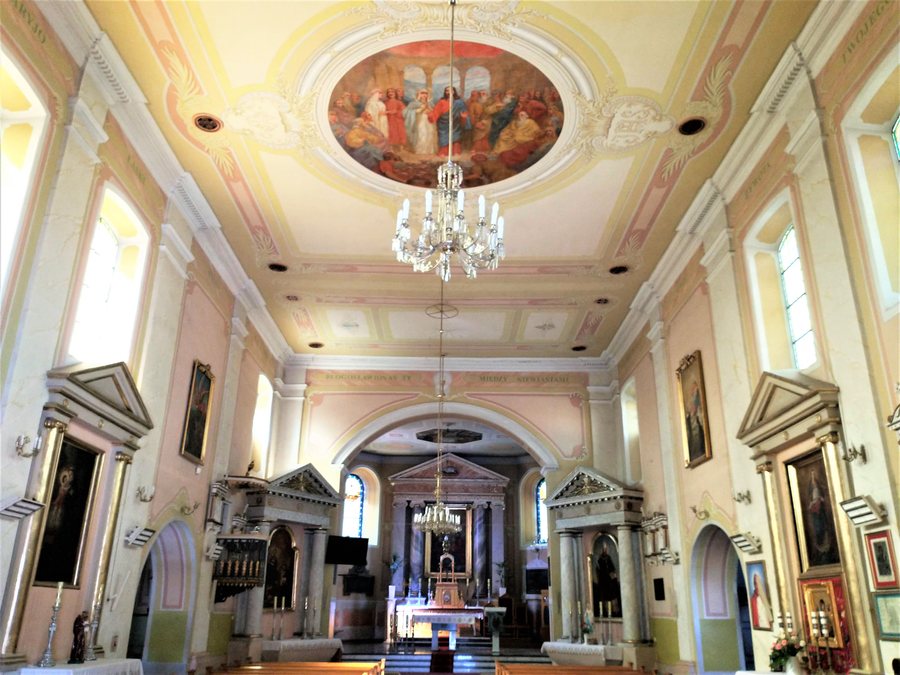 File:Saints Peter and Paul church in Żychlin (4).jpg
Photo: MOs810 via Wikimedia Commons, CC BY-SA 4.0
File:Saints Peter and Paul church in Żychlin (4).jpg
Photo: MOs810 via Wikimedia Commons, CC BY-SA 4.0
Żychlin at a glance
- The Jewish cemetery at 53 Łukasińskiego Street was established in the 18th century.
- The late Baroque Church of Saints Peter and Paul was built between 1772 and 1782 and has an 11-stop organ dating from 1899.
- The bell tower dates from the first half of the 19th century and is listed in both the register of monuments and the monument inventory.
- The town park at Plac Jana Pawła II and the municipal tenement buildings at Plac 29 Listopada were modernized as part of the Old Town revitalization.
Which historical details shape Żychlin?
The Church of Saints Peter and Paul offers several clearly dated points of reference for exploring local history. Its construction period runs from 1772 to 1782; describing it as late Baroque also identifies its style. If you are interested in historic church architecture, you can consider these two facts together without treating the construction period and style as the same characteristic.
Another detail with a specific date is the 11-stop organ from 1899. Its date comes after the church's construction period, extending the building's historical timeline. Together with the bell tower's date—the first half of the 19th century—this offers a comparison between three details: the church's construction period, the organ's later date and the period when the tower was built. The tower is also listed in both the register of monuments and the monument inventory.
The Jewish cemetery is another historical point of interest in Żychlin. It is located at 53 Łukasińskiego Street and was established in the 18th century. This lets you distinguish between religious architecture, a bell tower with designated monument status and a historic Jewish cemetery when choosing what to explore. These details describe different places and should not be combined into a single site or walking tour.
What is included in the Old Town revitalization?
The Old Town revitalization encompasses two different types of places here: the town park at Plac Jana Pawła II and municipal tenement buildings at Plac 29 Listopada. Both were modernized as part of this project. The park represents a public open space, while the tenement buildings are residential properties, so the modernization did not concern the same type of place.
If you are interested in urban development, you can consider these details alongside the historical landmarks. This keeps the historically dated buildings and the more recent modernization context as distinct topics. The specific square names help identify each correctly: Plac Jana Pawła II is home to the town park, while the municipal tenement buildings are at Plac 29 Listopada.
What interests suit a stay in Żychlin?
The details mentioned are of particular interest to travelers who include cultural and historical topics in their choice of destination. If you are focusing on architecture, the late Baroque church, its construction period and the organ offer specific points of interest. Those who want to compare different kinds of historical places can also consider the cemetery and the bell tower. Information about the Old Town revitalization adds modernized public and municipal spaces to this perspective.
Choosing a hotel or other accommodation is a separate decision; the topics covered here can help you decide how well Żychlin matches your interests in culture and urban history.
For further research in the directory, you can also find listings for Strzelce, Krzyżanów, Szubina, Kutno, Zgórze, Krośniewice, Chochołów and Zarębów.
FAQ
When was the Church of Saints Peter and Paul built?
It was built between 1772 and 1782 and is late Baroque.
What kind of organ does the church have?
The church has an 11-stop organ dating from 1899.
When was the Jewish cemetery established?
The Jewish cemetery at 53 Łukasińskiego Street was established in the 18th century.
For the main travel overview: Kutno.

.jpg)