
Kutno
Accommodation in Kutno
Kutno brings together urban history, literary events and a wide range of leisure activities. Which of these aspects interests you most can help you decide whether Kutno is the right destination for your stay.
Kutno at a glance
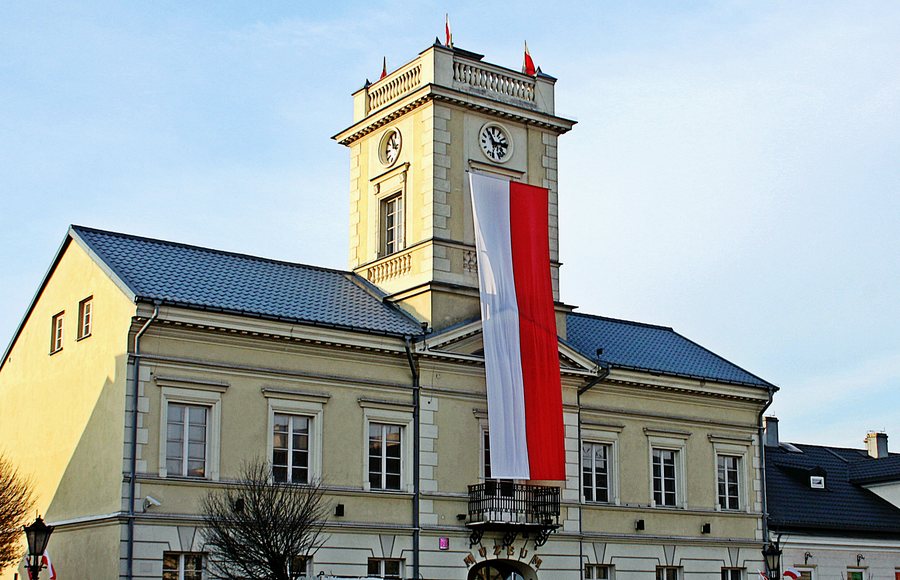
Kutno’s cultural attractions include the Pałac Saski, the Regional Museum in the neoclassical town hall and the present-day Centrum Teatru, Muzyki i Tańca in the former town theatre. The city is also the setting for several festivals. The aquapark offers sports and leisure pools, as well as other sports and swimming facilities.
What do Kutno’s historic buildings tell us?
The Pałac Saski was built in 1750 on the orders of King Augustus III as a palace for postal and travel purposes. Today, it is considered a surviving architectural testament to the Polish-Saxon union. Its construction date and original function give the building a specific historical context: it was built as a palace for postal services and travel, not solely as a residence. If you are interested in architecture and urban history, it offers a particular focus for a trip to Kutno.
The Zespół Pałacowy Gierałty also offers a glimpse of historic interiors: its salon retains wooden wall panelling and a fireplace. The comprehensive revitalisation of the complex was completed in 2019. The restored neoclassical town hall houses the Regional Museum, where mementos and documents relating to the city’s history are on display. These places offer different perspectives, from preserved details in a salon to an exhibition connected with the city’s history.
Which cultural and literary themes shape Kutno?
The former town theatre is now the Centrum Teatru, Muzyki i Tańca, the Centre for Theatre, Music and Dance. Another literary connection is the Festiwal im. Szaloma Asza, organised by the Municipal and County Library. It commemorates the Jewish writer Szalom Asz, who was born in Kutno. If you are interested in literature, you can consider this event alongside the historic buildings as a distinct cultural aspect of the city.
Kutno also hosts the nationwide, long-standing Festiwal Jeremiego Przybory „Stacja Kutno“. The Festiwal Złoty Środek Poezji includes a competition for debut poetry collections. The city currently describes it as the largest of its kind in the country. Together with the commemoration of Szalom Asz, these events reflect different literary connections: a writer born in Kutno, a festival honouring Jeremi Przybora and a competition for new poetry collections.
Which urban and leisure options can you compare?
The Old Town includes the renovated Królewska Street and Plac Marszałka Józefa Piłsudskiego, which are popular for walks and relaxation. This gives you a different way to experience Kutno than exploring museums, historic buildings or literature. When choosing your destination, you can consider whether you would prefer to focus on these urban experiences or on a particular cultural theme.
Aquapark Kutno includes a sports pool and a leisure pool, as well as a climbing wall and two indoor water slides. There is also a sauna, a steam room, a bowling alley, and fitness and squash rooms. Its facilities range from swimming and slides to other sports and leisure activities. If you are considering Kutno as a place to stay, these specific interests may influence your decision to spend time in the city.
For comparison with other destinations: Zgórze, Zarębów, Żychlin, Szubin, Krośniewice, Strzelce, Chochołów and Krzyżanów.
FAQ
When was the Pałac Saski built?
The Pałac Saski was built in 1750 on the orders of King Augustus III as a palace for postal and travel purposes.
What is there at Aquapark Kutno?
Facilities include a sports pool, a leisure pool, two indoor water slides, a climbing wall, a sauna and a steam room.
Which literary events are associated with Kutno?
Kutno hosts the Festiwal Jeremiego Przybory „Stacja Kutno“ and the Festiwal Złoty Środek Poezji. The Festiwal im. Szaloma Asza commemorates the writer Szalom Asz, who was born in Kutno.
For the main travel overview: Kutno.

