
Staniszów: Historic Residences and Trails to Góra Witosza
Accommodation in Staniszów
Staniszów combines historic buildings with a hilly landscape and trails to Góra Witosza. This gives you options for planning your trip, whether you are interested in culture or want to spend time outdoors.
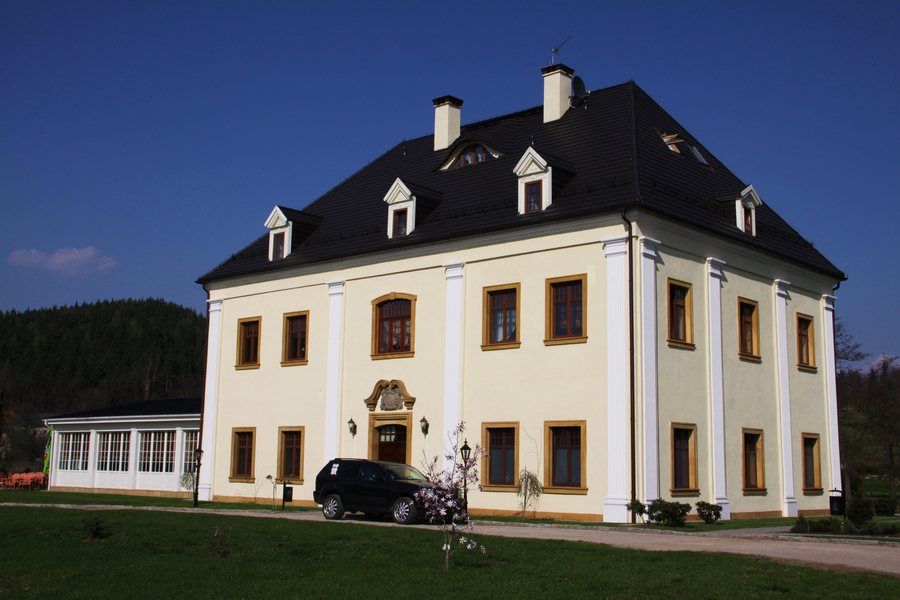 File:Dolina ogrodów i pałaców - Staniszów pałac na wodzie 01.JPG
Photo: Takasamarasa via Source, CC BY-SA 3.0 pl
File:Dolina ogrodów i pałaców - Staniszów pałac na wodzie 01.JPG
Photo: Takasamarasa via Source, CC BY-SA 3.0 pl
Staniszów at a glance
- Staniszów is located in the Wzgórza Łomnickie hills, in the Kotliny Jeleniogórskiej area.
- Góra Witosza is a 484 m-high hill known for its granite rock formations and panoramic views of the Karkonosze Mountains.
- Historic buildings include the Gothic Kościół Przemienienia Pańskiego church and several residences.
- Easy hiking trails lead to Góra Witosza, including the yellow trail from Staniszów.
Which historic buildings define Staniszów?
Kościół Przemienienia Pańskiego dates from around the turn of the 16th century. It is a Gothic church and thus an example of the village’s older architectural history. Those interested in historic ecclesiastical architecture will find a different focus here than at the residences of Staniszów.
Pałac Staniszów traces its origins to a Renaissance manor house from the second half of the 16th century. In 1787, at the instigation of Prince Henryk XXXVIII of Reuss, it was extensively converted into a Baroque residence. Its different building phases make it a subject of interest for travelers curious about the evolution of historic architecture. Pałac Staniszów is also a venue for cultural events such as concerts, opening receptions, and exhibitions organized by Fundacja Forum Staniszów.
How does Pałac Na Wodzie differ from Pałac Staniszów?
Pałac Na Wodzie is another residence in Staniszów, located in Staniszów Dolny. It dates from the late 18th century and is set amid a pond and landscaped park. According to chroniclers, the building was constructed in the second half of the 18th century; Heinrich XXXVIII von Reuss began its construction in 1786. The house was formerly called Dwór Staniszów Dolny.
Pałac Na Wodzie is located in the Jelenia Góra Valley Cultural Park, also known as the Valley of Palaces and Gardens. This name indicates the cultural setting of the residence. The landscaped park around Pałac Staniszów is a separate feature: it encompasses the surrounding forests, the distinctive rock formations of Góra Witosza, and the artificial castle ruins on Grodna Hill.
What nature and hiking experiences does the area offer?
Góra Witosza combines a clearly stated elevation with a distinctive landscape: the hill is 484 m high and is known for its granite rock formations and panoramic views of the Karkonosze Mountains. Easy hiking trails lead to the top, including the yellow trail from Staniszów. If you would like to combine your stay with outdoor activity, this route gives you a specific starting point for planning. The elevation refers to the hill, not the length or duration of a hike.
The artificial castle ruins on Góra Grodna are another notable historic feature of the area. Built in 1806, they served as a hunting pavilion. Together with the forests and rock formations, they form part of the landscaped park around Pałac Staniszów. Staniszów is also home to the ruins of Zamku Księcia Henryka, with a notable viewpoint. This site can also be reached from Marczyce and Sosnówka.
To explore places beyond Staniszów, you can also visit the pages for Karpniki, Marczyce, Jelenia Góra, Gruszków, Łomnica, Stara Kamienica, Podgorzyn, and Piechowice.
FAQ
How high is Góra Witosza?
Góra Witosza is a 484 m-high hill in Staniszów.
Which hiking trail leads to Góra Witosza from Staniszów?
The easy hiking trails include the yellow trail from Staniszów.
When was Pałac Staniszów converted into a Baroque residence?
The Renaissance manor house was converted in 1787 at the instigation of Prince Henryk XXXVIII of Reuss.
What were the castle ruins on Góra Grodna built for?
The artificial ruins were built in 1806 and served as a hunting pavilion.
For the broader travel overview: Jeleniogórski.

