
Discover Świebodziński: city history and the region’s lakes
Accommodation in Świebodziński
Świebodziński has a strong focus on city history: in Świebodzin, an almost medieval layout, a town hall and churches come together. In the wider Świebodziński County, lakes and rivers add to the picture. This lets you distinguish between urban culture and the landscapes of the wider travel area when planning your trip.
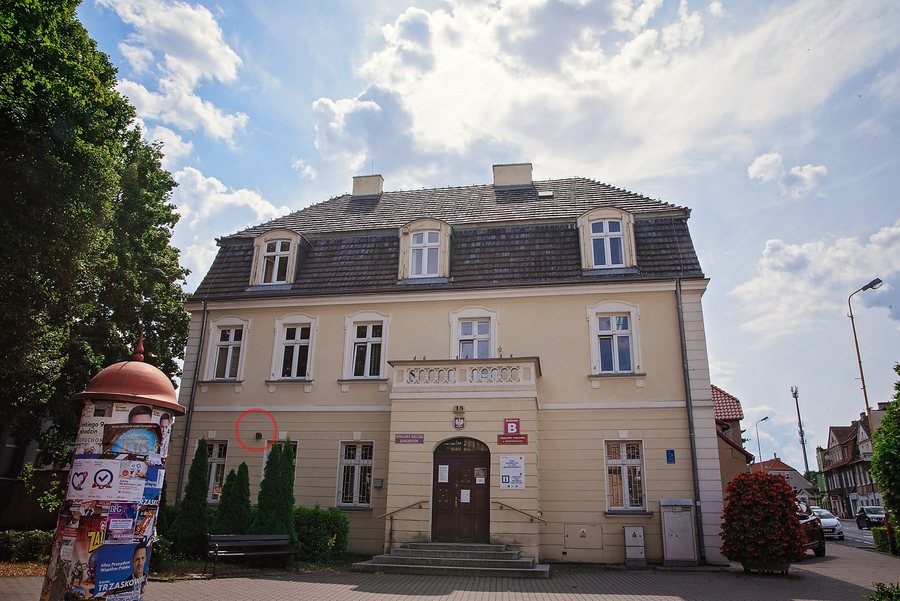 File:Budynek B powiat swiebodzinski Pilsudskiego 18.jpg
Photo: Anna Zielińska via Wikimedia Commons, CC BY 3.0
Quick facts about Świebodziński as a destination
- Świebodzin’s historic center preserves an almost medieval town plan with a rectangular market square.
- The town hall was probably built as a two-aisled structure in the second half of the 14th century; its cellars retain barrel vaults made of fieldstone.
- The Church of St. Michael the Archangel was built mainly in the second half of the 15th century as a three-aisled hall church with a pentagonal choir.
- The Christ the King Monument reaches a total height of 52.5 meters together with the hill.
What does the town plan tell us about Świebodzin?
The historic center is arranged around a central, rectangular market square. Streets lead to it at right angles; this clear layout defines the almost medieval town plan. The historic urban fabric is considered one of the region’s most valuable urban ensembles. If you are interested in urban planning and historic town forms, here is a tangible place to start: the relationship between the market square and the street network.
The town hall also connects its architectural context with a surviving detail. It is believed to have been built in the second half of the 14th century. Barrel vaults made of fieldstone from this early construction phase survive in the cellar. In addition to its dating, the vaults give the town hall a distinctive architectural feature, without making the dating certain.
Which churches and architectural forms define the town?
The Church of St. Michael the Archangel combines a date in the second half of the 15th century with a clearly described layout: three aisles and a pentagonal choir. The term “hall church” adds information about its building type. Together, the architectural form and choir shape help place the church in its architectural context.
The Church of NMP Królowej Polski, a former Protestant church, has a different building history. It was built in the Neo-Gothic style. Original stained-glass windows survive inside, including one bearing the coat of arms of Świebodzin.
What other historic features are there?
Three towers, sections of the town wall and a moat survive from the town’s fortifications. The best-preserved sections are along Parkowa, Okrężna and Szpitalna Streets. These details identify both the surviving structures and the streets where the fortifications are best preserved.
Christ the King is an Art Deco statue. The figure is 33 meters tall, and the crown measures 3 meters; together with the hill, the monument reaches a total height of 52.5 meters.
How do the town’s history and the county’s landscape differ?
Lakes and rivers are important points of reference when looking at the wider travel area. Lake Niesłysz, also known as Niesulickie, is the largest lake in Świebodziński County, with a water surface of 486.2 hectares; its islands cover 10.4 hectares. Lake Trześniowskie, also known as Ciecz, measures 185.7 hectares. The county’s major rivers include the Pliszka, Paklica, Obra Leniwa and Ołobok.
Sailing and rowing take place on Lake Niesłysz; ice sailing is also possible there in winter, and divers visit the lake. Check seasonal conditions and facilities locally. The “Odkryj Powiat Świebodziński” app features questing routes as well as hiking and cycling trails in the county. Its route coverage may change with updates. This information relates to the wider travel area and complements the town’s architectural monuments with other interests to consider when planning your trip.
This gives your search a thematic focus without equating urban attractions with the region’s natural offerings.
Discover more destinations: Szczaniec, Lubrza, Zawisze, Schwiebus, Niedźwiedź, Rokitnica, Zbąszynek, Mostki, Łagów, Kłodnica.
FAQ
What is the layout of Świebodzin’s historic town center?
A rectangular market square forms the center. Streets lead to it at right angles; the town plan is described as almost medieval.
What is notable about Świebodzin’s town hall?
It was probably built as a two-aisled structure in the second half of the 14th century. Its cellar retains barrel vaults made of fieldstone from the early construction phase.
What are the churches’ distinctive features?
St. Michael’s is a three-aisled hall church with a pentagonal choir, dating from the second half of the 15th century. NMP Królowej Polski is a former Protestant, Neo-Gothic church with original stained-glass windows still intact.
Which lakes are mentioned in Świebodziński County?
The largest is Niesłysz, also known as Niesulickie, with a water surface of 486.2 hectares. Trześniowskie, also known as Ciecz, covers 185.7 hectares.
For an overview of the wider travel area: Lubusz.

