
Brzostowa: Discover a Historic Townscape
Accommodation in Brzostowa
Brzostowa combines a preserved historic rural settlement layout with striking buildings and a park with a varied design. If you include culture and rural townscapes in your travel plans, you will find several different points of interest here.
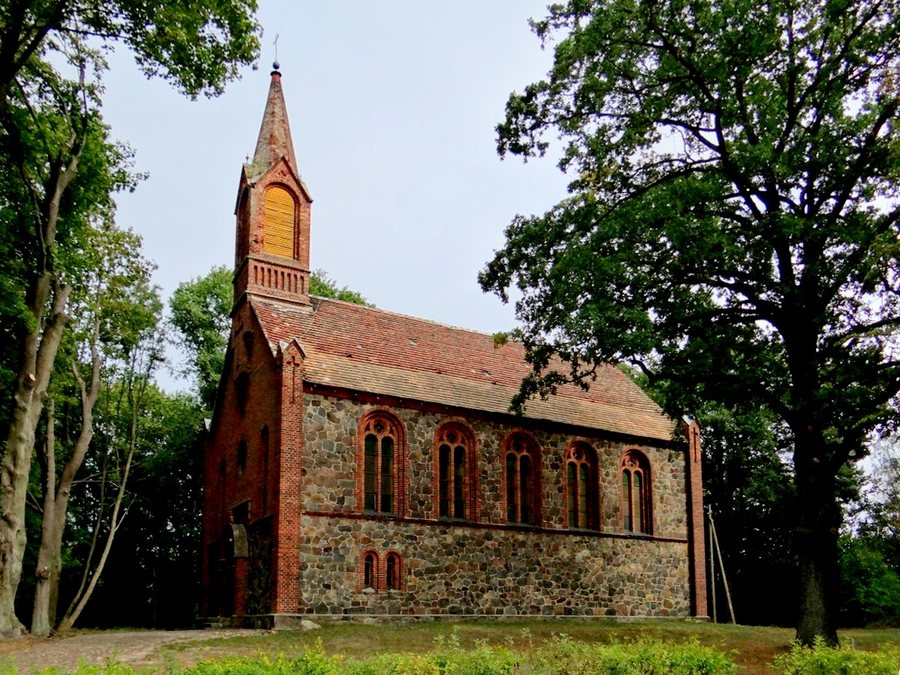 File:Brzostowa - Kościół św. Franciszka (1869) 8.jpg
Photo: Gorofil via Wikimedia Commons, CC BY-SA 4.0
File:Brzostowa - Kościół św. Franciszka (1869) 8.jpg
Photo: Gorofil via Wikimedia Commons, CC BY-SA 4.0
Brzostowa: key facts
- The historic rural settlement layout is preserved, clearly legible, and valuable.
- A Neo-Renaissance palace stands in the western part of the village; the residential building is not generally open to the public.
- St. Francis Church is a Neo-Gothic brick building dating from 1869.
- The park covers more than two hectares and includes a pond, a viewing mound, a clearing, tree-lined avenues, and circular groups of trees.
- A stone wall dating from the 17th century surrounds the church grounds.
How can you recognize the historic townscape?
Brzostowa has not only individual historic buildings but also a preserved rural settlement layout. It is considered clearly legible: its historic character is therefore evident in the townscape as a whole, not just in one particular building. This gives you a broader cultural perspective when planning your trip. You can understand the village both through its architectural history and through the traditional form of rural settlement.
This distinction is useful when comparing destinations based on your interests. If you are mainly interested in architecture, the palace and church are the specific points of reference. If you are more interested in how a historic place took shape as a settlement, the preserved layout offers a distinct perspective. Both perspectives are part of Brzostowa’s character, but they are not the same.
Which buildings define its architecture?
The palace stands in the western part of Brzostowa and was built in the Neo-Renaissance style. The residential building is not generally open to the public; bear this restriction in mind if you are planning your stay around the buildings. St. Francis Church offers a different architectural accent: it was built in 1869 as a brick building in the Neo-Gothic style. Neo-Renaissance and Neo-Gothic refer to different historical styles. Together with the respective building types—the palace and the church—they show two distinct facets of the local architectural history.
The dates also provide a clear timeline: the church is dated to 1869, while the stone wall around the church grounds dates from the 17th century. This wall is a separate historic feature of the grounds; it should not be confused with the church building itself. This makes it easier to distinguish the buildings and their different historical layers.
What landscape features does the park have?
The park in Brzostowa covers more than two hectares. It has a variety of features: alongside the pond and clearing, there is a viewing mound, tree-lined avenues, and circular groups of trees. These different forms give you several concrete aspects to use when describing the park landscape—from the open space to the circular groups of trees.
When comparing the park with the buildings, it is worth considering these landscape features as a distinct aspect of the village: the palace and church represent architectural themes, while the park is a varied green space. The two perspectives complement one another, without requiring you to combine them into a single itinerary. Brzostowa therefore offers a clear thematic framework both for those interested in cultural history and for those interested in designed landscapes.
How should you consider Brzostowa when looking for accommodation?
When choosing a hotel for your trip, the local themes can help you compare Brzostowa with other destinations: the historic settlement layout, the architecture, and the park each offer a different focus. Consider whether a traditional townscape, historic architectural styles, or a landscape with a variety of park features matters most to you. This keeps your decision grounded in the destination’s features.
Discover more destinations: Dluzek, Chlebice, Żary, Czaple, Dobrzyń, Sieniawa Żarska, Lipinki Łużyckie, Lubsko.
FAQ
Where is the palace in Brzostowa?
The palace stands in the western part of Brzostowa. The residential building is not generally open to the public.
What is notable about St. Francis Church?
It is a brick building in the Neo-Gothic style, built in 1869. A stone wall dating from the 17th century surrounds the church grounds.
What features does the park have?
The park covers more than two hectares. Its features include a pond, a viewing mound, a clearing, tree-lined avenues, and circular groups of trees.
Go to the main travel overview: Sorau.

_8.jpg)