
Komańcza – Cultural History and Hiking Trails
Accommodation in Komańcza
If you are comparing cultural history and hiking for a trip to Komańcza, specific places and trails offer useful points of reference.
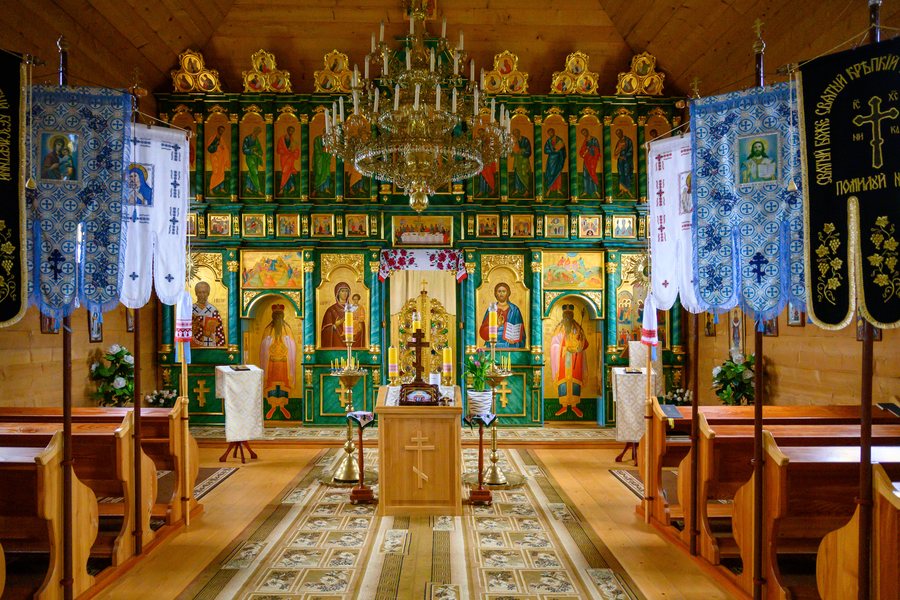 Komańcza, Cerkiew Opieki Matki Bożej w Komańczy (1802-2006)
Photo: Daniel.zolopa via Wikimedia Commons, CC BY 4.0
Komańcza, Cerkiew Opieki Matki Bożej w Komańczy (1802-2006)
Photo: Daniel.zolopa via Wikimedia Commons, CC BY 4.0
Komańcza facts at a glance
- Cardinal Stefan Wyszyński was interned at the Monastery of the Sisters of the Holy Family of Nazareth in Komańcza from October 29, 1955, to October 28, 1956.
- Built in 1802, the Greek Catholic Church of the Protection of the Mother of God has been Orthodox since 1963 and is one of three examples of Eastern Lemko, so-called Osławian, wooden ecclesiastical architecture.
- The nature and history trail passes through Komańcza and forms a circular route about 9 km long.
Which places offer insight into the past?
Wyszyński’s time at the monastery is associated with precise dates: he was interned there from October 29, 1955, to October 28, 1956. The small museum by the monastery preserves furnishings, liturgical vestments, personal memorabilia, and photographs from that period. The collection brings his time there to life through different kinds of mementos.
The churches also offer different historical points of reference. The Greek Catholic Church of the Protection of the Mother of God was built in 1802 and has been Orthodox since 1963. In 1988, it was solemnly blessed and consecrated to mark the 1,000th anniversary of the Baptism of Rus’. As an Eastern Lemko, so-called Osławian, example, it stands alongside the churches in Rzepedź and Turzańsk. The Latin Rite parish church was consecrated in 1927 and dedicated to Saint Joseph; its patronal feast is on March 19.
Which hiking trails can you compare?
The trail descriptions differ in their routes and the destinations they mention. The red Komańcza–Krynica hiking trail leads northwest from Komańcza and reaches viewpoints on Jawornik at 665 m and Tokarnia at 777 m. The described section of the green Komańcza–Sieniawa hiking trail starts next to the railway station and follows a paved road to Dołżyca. These details give you specific guidance on direction, surface, and waypoints, although the two descriptions do not cover comparable sections of trail.
Another option is the nature and history trail: it is described as a circular route about 9 km long and explores the pre-war history of the Lemkos, Poles, Roma, and Jews who lived there. It combines a specific route length with a cultural and historical theme. When comparing trails, you can consider whether viewpoints, the described paved section, or the combination of a circular route and local history matters most to you.
How can you choose a focus for your trip?
When planning your trip, you can treat the historical sites and hiking trails as different interests. The monastery’s history and the churches provide dates, religious context, and architectural details; the trail descriptions, by contrast, specify routes, viewpoints, or the themes of a circular walk. These facts allow you to compare themes but do not provide information about specific hotel amenities.
Discover more destinations: Czaszyn, Zagórz, Tyrawa Solna, Pastwiska, Siemuszowa, Mrzygłód, Kalnica, Długie.
FAQ
When was Stefan Wyszyński interned in Komańcza?
He was interned at the Monastery of the Sisters of the Holy Family of Nazareth from October 29, 1955, to October 28, 1956.
What does the small museum by the monastery preserve?
Its collection includes furnishings, liturgical vestments, personal memorabilia, and photographs from Wyszyński’s time there.
Which church is associated with the patronal feast on March 19?
The March 19 patronal feast belongs to the Latin Rite parish church, which was dedicated to Saint Joseph in 1927.
Return to the main travel overview: Sanok.

_01973.jpg)